

Let's be real: in 2026, keeping kids connected to grandparents can feel like you're fighting against every algorithm designed to capture their attention. Between Roblox notifications, YouTube shorts, and whatever the current TikTok trend is, getting kids to sit still for a phone call with Grandma can feel impossible.
But here's something that actually works: books about grandparents, or better yet, books that grandparents and grandkids can read together. Not the saccharine "grandma bakes cookies" books (though some of those are fine), but stories that genuinely explore the relationship between generations, preserve family history, or create shared experiences that don't involve screens.
These books do double duty. They give kids a framework for understanding why their grandparents matter, and they give grandparents a way to connect that doesn't require them to understand what "rizz" means or why their grandkid keeps saying "Ohio" about everything.
Here's what we know from research on intergenerational relationships: kids who have strong connections with grandparents show better emotional regulation, higher self-esteem, and more resilience. Grandparents provide perspective, unconditional love, and often a different parenting style that can be refreshing for everyone involved.
But maintaining those connections takes work, especially when:
- Grandparents live far away
- You're co-parenting with different family dynamics
- Your kids are in that phase where anyone over 30 seems ancient
- Screen time is eating up all the time that used to be for phone calls or visits
Books create a shared language. They give kids and grandparents something to talk about beyond "how's school?" They preserve stories that might otherwise get lost. And honestly, they're one of the few activities where having grandparents who aren't digital natives is actually an advantage—nobody needs to troubleshoot WiFi to read a book together.
For Younger Kids (Ages 3-7)
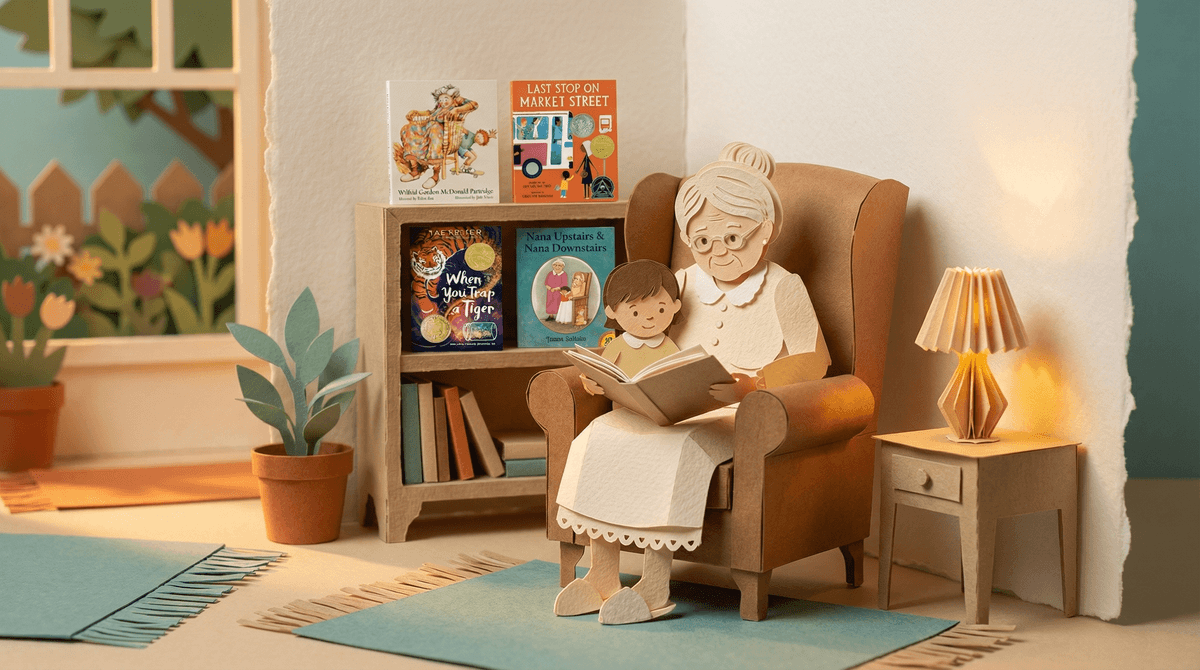
Wilfrid Gordon McDonald Partridge by Mem Fox is the gold standard here. It's about a kid who helps an elderly neighbor find her memories, and it's a beautiful entry point for talking about memory, aging, and why old people sometimes forget things. Perfect for kids with grandparents experiencing memory issues.
Nana Upstairs & Nana Downstairs by Tomie dePaola handles death and aging with such gentleness. It's the book you want before you need it, if that makes sense.
Last Stop on Market Street by Matt de la Peña features a grandmother who shows her grandson how to see beauty in everyday life. It's also one of the few books that shows urban life and public transportation as normal and good, which is refreshing.
For Middle Readers (Ages 8-12)
When You Trap a Tiger by Tae Keller won the Newbery for good reason. It weaves Korean folklore with a story about a girl trying to save her sick grandmother. It's magical realism that actually respects kids' intelligence.
The Year of the Dog by Grace Lin features a Taiwanese-American girl navigating identity with help from her grandmother's stories. Great for families dealing with cultural heritage questions.
The Thing About Luck by Cynthia Kadohata is about a Japanese-American girl who has to help her grandparents with wheat harvesting. It's funny, it's real, and it shows grandparents as full people with their own struggles, not just cookie-dispensers.
For Families to Create Together
Tell Me Again About the Night I Was Born by Jamie Lee Curtis works for any age because it's designed to be personalized. Kids ask to hear the story over and over, and grandparents often have different details than parents do.
Grandparent memory books (the fill-in-the-blank kind) can be hit or miss, but The Grandparent Book by Todd Parr is actually engaging for kids to help fill out, not just a dusty keepsake.
For long-distance grandparents: Video call book clubs work surprisingly well. Grandparent reads the book on their own, kid reads it (or you read it to them), then they video call to discuss. It gives structure to the call beyond awkward silence.
For in-person visits: Let grandparents be the ones to read these books. It creates a special ritual that's just theirs. Your kid might be squirmy when you read, but somehow becomes a perfect angel when Grandpa does it.
For preservation: Record grandparents reading these books on video. Seriously. Do it now. You can use your phone. Future you will be grateful beyond measure.
For difficult conversations: Books like The Invisible String help kids understand that connection doesn't require physical presence. Useful for deployed military grandparents, those dealing with illness, or just distance.
Look, I'm not going to pretend that a video call with Grandma reading a book isn't a screen. It is. But there's a difference between passive consumption and interactive connection. A grandparent reading on video is using the screen as a tool for relationship, not as a replacement for it.
That said, don't default to digital when in-person is possible. The physical book, the physical presence, the ability to snuggle up together—that's the point. Screens should be the bridge when geography or health makes in-person impossible, not the default because it's easier.
Here's what I've seen work: Books give grandparents and grandkids a shared story in a world that's increasingly divided by technology. They create traditions, preserve memories, and provide a framework for difficult conversations about aging, death, cultural heritage, and family history.
The best time to start building these connections is now, before you're in crisis mode dealing with a sick grandparent or trying to explain death to a kid who's never thought about it. These books are preventive medicine for family relationships.
Start with one book. Read it together or separately, then talk about it. Let it be imperfect. Let grandparents read it "wrong" or skip pages or add their own commentary. The point isn't the perfect reading—it's the connection.
This week: Pick one book from this list and order it. If you're not sure which one, go with Wilfrid Gordon McDonald Partridge for younger kids or When You Trap a Tiger for older ones.
This month: Schedule a time for your kid and their grandparent to read it together, whether in person or over video call.
This year: Start a tradition of grandparent book picks. Let grandparents choose books from their childhood to share, even if they're dated or weird. The stories they tell about why they picked it are often more valuable than the book itself.
And if you want more specific recommendations based on your family's situation, Find books for your grandparent-grandkid dynamic . Every family is different, and the right book can make all the difference.