

Building Healthy Screen Time Habits: A Parent's Guide to Balance
Look, if you're reading this, you've probably already had at least one meltdown (theirs or yours, maybe both) over screen time. Maybe it was the iPad tantrum at dinner, or the "just five more minutes" that turned into an hour, or the discovery that your kid has been watching YouTube Shorts at 2am. Welcome to digital parenting in 2026, where the rules are made up and the screen time limits don't matter—except they do, and we're all just figuring this out as we go.
Here's the thing about screen time: it's not actually about the minutes. I know, I know—that sounds like the kind of thing someone says right before they tell you their kid doesn't have limits and "self-regulates beautifully" (narrator: the kid does not self-regulate beautifully). But stick with me.
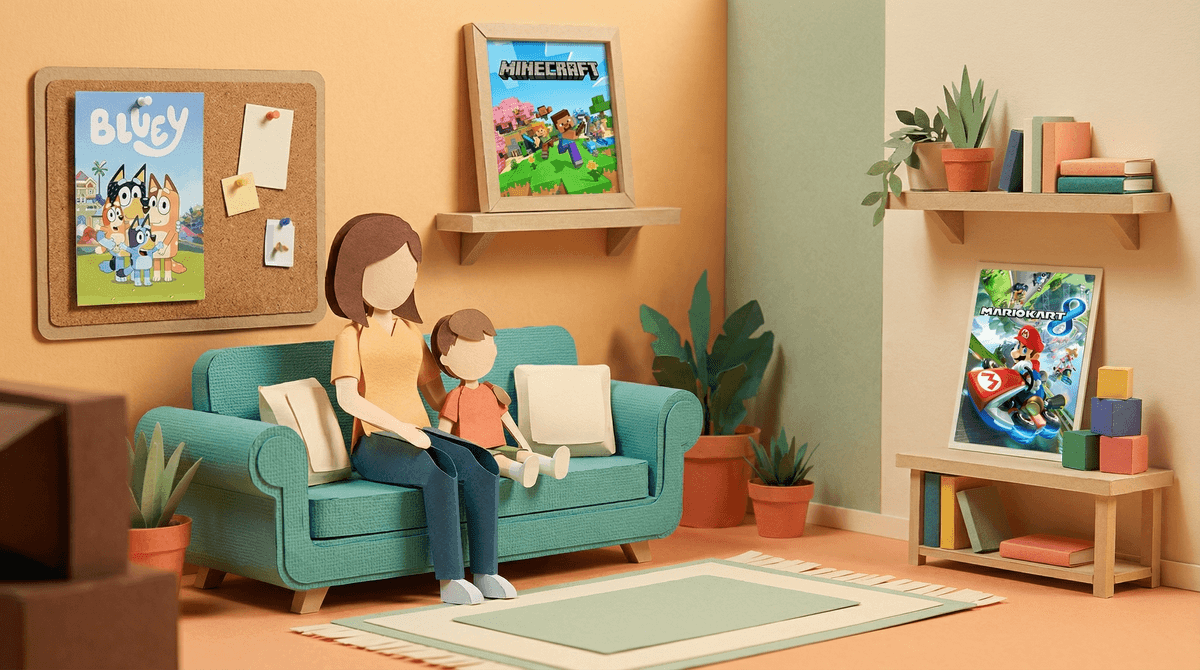
The American Academy of Pediatrics used to give us nice, clean numbers. Two hours for this age, one hour for that age. It was simple. It was also basically impossible to follow and didn't account for, you know, reality. A kid watching Bluey with their parent and talking about the emotions in the episode is having a completely different experience than a kid zombie-scrolling through YouTube Shorts alone in their room at midnight.
So what should we actually care about?
The Four Things That Matter More Than Total Minutes:
-
What they're consuming - There's a massive difference between Minecraft (creative, problem-solving, often social) and whatever algorithmic nightmare the YouTube homepage is serving up today.
-
How they're consuming it - Passive watching vs. active engagement. Alone vs. with others. Background noise vs. focused attention.
-
What it's replacing - Is screen time eating into sleep? Physical activity? Face-to-face friendships? Homework? Or is it replacing... staring at the ceiling?
-
How they act after - Do they transition smoothly or does every screen session end in a meltdown? Are they energized or zombified?
Let's be real about why building good screen habits feels like trying to nail jello to a wall:
The tech is designed to be addictive. Infinite scroll, autoplay, variable reward schedules—these aren't bugs, they're features. Your kid isn't weak-willed; they're up against billion-dollar companies whose entire business model depends on capturing attention.
Everyone's doing something different. Your kid's friend has no limits. Another friend isn't allowed screens at all. Most families are somewhere in the messy middle, making it up as they go and feeling guilty about all of it.
We're exhausted. Sometimes the iPad IS the parenting break you need to not lose your mind. That's not failure, that's survival.
The rules keep changing. Just when you figure out Roblox, suddenly everyone's on some new app you've never heard of.
Okay, so what do you actually DO? Here are the strategies that work for real families (not the Instagram-perfect ones, the ones with Goldfish crumbs in the couch cushions):
Start With Structure, Not Limits
Instead of "two hours a day" (which you'll never track consistently anyway), try time-based boundaries:
- No screens during meals (this includes parents—yes, you)
- No screens in bedrooms after bedtime
- No screens during the first/last hour of the day
- Screen-free family time on [specific day/time]
These are easier to enforce because they're about WHEN, not HOW MUCH. You're not counting minutes; you're protecting specific times.
Make the Default "Ask First"
Rather than trying to monitor every second, flip the script: screens require permission, not freedom requires permission. This doesn't mean you say no to everything—it means the default is check-in, not free-for-all.
For younger kids (ages 5-10), this might be literal: "Can I watch something?" For older kids (11+), it might be more like a daily check-in: "What's your plan for screens today?"
Quality Over Quantity (For Real Though)
Not all screen time is created equal. Here's a rough hierarchy:
High Value:
- Video calls with family/friends
- Creative work (making videos, coding, digital art)
- Active gaming with friends (Mario Kart, Among Us)
- Educational content they're genuinely interested in
- Watching a movie together as a family
Medium Value:
- Solo gaming with clear endpoints
- Watching shows with actual plots and character development
- Social media with friends (yes, really—connection matters)
Low Value:
- Infinite scroll anything (TikTok, YouTube Shorts, Instagram Reels)
- Random YouTube rabbit holes
- Games designed purely around loot boxes and grinding
- Background TV nobody's watching
This doesn't mean ban the low-value stuff entirely—sometimes our brains need junk food. But be honest about what it is.
Build In Transitions
The biggest screen time battles happen at the END, not the beginning. Kids (and honestly, adults) are terrible at stopping something engaging. So build in transitions:
- Warnings: "10 minutes left, then we're done"
- Natural endpoints: "You can finish this episode/level/game"
- What's next: "After this, we're going to [specific activity]"
- Timers: Let the timer be the bad guy, not you
For younger kids, visual timers (like the Time Timer) work great. For older kids, phone alarms they set themselves create more buy-in.
Have a Plan for Boredom
Here's an uncomfortable truth: a lot of screen time happens because we don't have a better answer to "I'm bored."
You don't need to be their entertainment director, but you do need to make non-screen options viable:
- Keep books, art supplies, and toys accessible (not buried in the closet)
- Have a list of "boredom busters" on the fridge
- Normalize boredom as something we sit with, not immediately fix
- Make outside time as frictionless as possible
Model What You Want to See
Your kids are watching how YOU use screens. If you're on your phone during dinner, at every red light, and while they're trying to talk to you, guess what message they're getting?
This isn't about perfection—it's about awareness. Try:
- Putting your phone in another room during family time
- Announcing when you're using screens for work vs. leisure
- Talking about your own struggles with phone addiction (yes, it's addiction)
- Having your own screen-free times
Ages 5-8: At this age, you're still in full control of access. Use it. Set up devices with parental controls, curate what's available, and be present during screen time when possible. This is the age to build the foundation—they should expect that screens require permission and have clear time boundaries.
Ages 9-12:
The tween years are about gradually increasing autonomy while maintaining guardrails. They can probably handle more independence in choosing content, but you should still know what they're accessing. This is when you start teaching them to self-monitor: "How do you feel after playing that game for an hour?" Start conversations about how algorithms work and why apps are designed to keep them scrolling.
Ages 13+: Teens need privacy and autonomy, but they also need guidance. Your role shifts from gatekeeper to consultant. Focus on the big stuff: sleep, schoolwork, real-world friendships. Have ongoing conversations about digital wellness, not just rules. And honestly? If you haven't built some foundation before now, it's going to be really hard to suddenly impose limits.
This deserves its own guide (and we have one: when to give your kid a phone), but the short version: a phone is not a right, it's a responsibility.
If you do give a phone:
- Start with significant restrictions and earn freedom
- No phones in bedrooms at night (charge them in a common area)
- Location sharing is non-negotiable
- You get to spot-check, especially at first
- Social media is a separate conversation from having a phone
Consider alternatives like a smart watch or basic phone before jumping to a full smartphone.
Sometimes despite your best efforts, screen time becomes a massive problem. Here are signs you need to reset hard:
- Screens are the first thing they think about when they wake up
- Major meltdowns every time screens end
- Lying about or hiding screen use
- Grades, sleep, or friendships are suffering
- They've lost interest in things they used to love
If this is happening, you might need a full reset: a week or two of minimal/no recreational screens to break the habit loop. Yes, it will be hell. Yes, it's sometimes necessary. Here's how to do a screen time reset without destroying your family.
Good screen time habits aren't about being perfect or hitting some magic number of minutes. They're about being intentional. They're about making sure screens enhance your kid's life rather than replace it.
Some days you'll nail it. Some days the iPad will babysit while you make dinner and answer work emails and try to remember if you fed the dog. Both of these days are fine.
The goal isn't to eliminate screens—that's not realistic and honestly not even desirable in 2026. The goal is to make sure that when your kid looks back on their childhood, they remember building forts and playing outside and family game nights, not just the glow of a screen.
Start small. Pick ONE thing from this guide to try this week. Maybe it's no screens at dinner. Maybe it's a 30-minute warning before bed. Maybe it's just having a conversation about what they're watching and why they like it.
And if you want to dig deeper into your family's specific situation, take our quick survey to see how your screen habits compare to other families in your community and get personalized recommendations that actually fit your life.
You've got this. (Most days. Some days you've got this. That's enough.)