

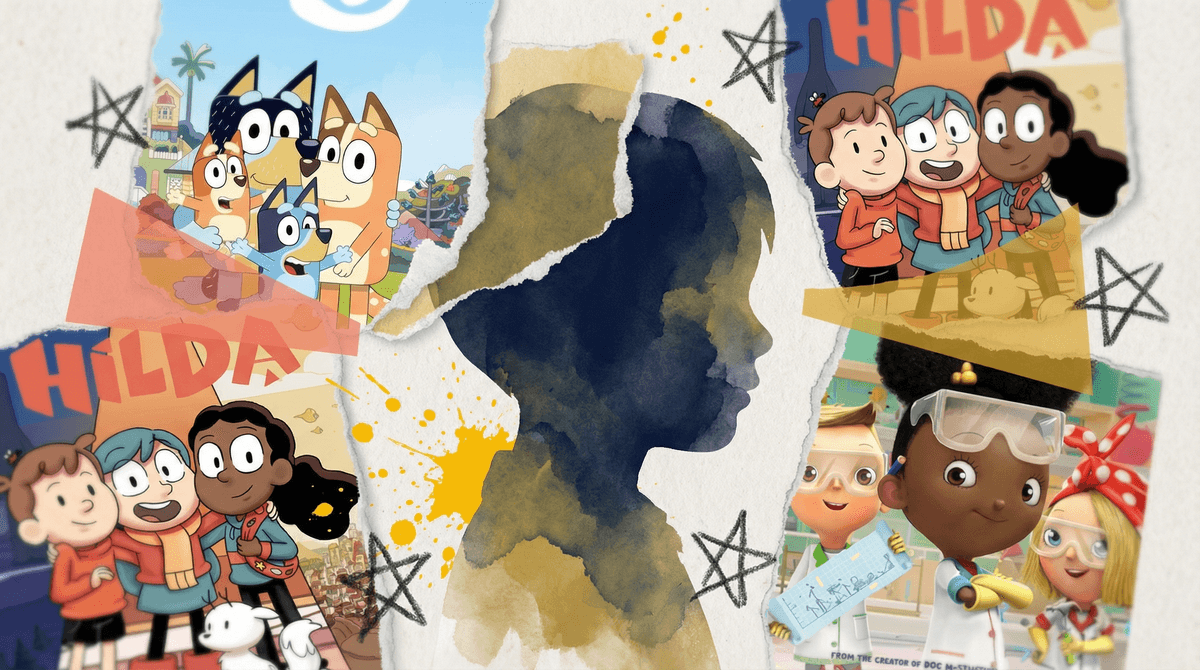
Look, we've come a long way from the days when every princess needed rescuing and every boy had to be obsessed with trucks and dirt. But if you think gender stereotypes in kids' entertainment have disappeared, I've got news: they've just gotten sneakier.
Gender stereotypes in media are the repeated patterns that tell kids what boys "should" be like and what girls "should" be like. The brave adventurer is almost always a boy. The nurturing caretaker is almost always a girl. Boys solve problems with action and strength. Girls solve problems with kindness and looking pretty. And don't even get me started on how non-binary kids are barely represented at all.
The thing is, these patterns aren't just annoying—they're actually shaping what your kid believes is possible for them. When your daughter watches 47 shows where girls are obsessed with fashion and relationships, or your son sees endless content where boys never cry or express vulnerability, those messages sink in deep.
Here's what the research tells us: kids who consume media with rigid gender roles are more likely to have limited ideas about what careers, hobbies, and behaviors are "for them." A 2016 study found that heavy TV viewers held more stereotypical views about gender roles than light viewers.
And it starts early. Like, really early. By age 5, many kids have already internalized messages about what boys and girls "should" do. By middle school, these beliefs can affect everything from what classes they take to what activities they try to how they express emotions.
The tricky part? A lot of modern kids' content looks progressive on the surface. Sure, we've got more female protagonists now. But count how many times the "strong female character" is still defined by her appearance, still needs a romance subplot, or still has to be "not like other girls" to be interesting. Or notice how many boys in kids' shows are mocked for being sensitive, artistic, or interested in "girly" things.
In Shows and Movies:
- Female characters who are "strong" but still have to be pretty, thin, and romantically desirable
- Male characters whose only emotional range is angry, funny, or stoic
- Girl characters whose main storylines revolve around friendship drama, appearance, or romance
- Boy characters whose main storylines revolve around competition, adventure, or being "the best"
- The "tomboy" who has to reject all feminine things to be cool
- The sensitive boy who's portrayed as weak or a punchline
In Games:
- Default characters being male (looking at you, Minecraft Steve)
- Female characters designed with impossibly proportioned bodies
- "Girl games" being all about fashion, cooking, or caretaking
- Voice chat culture in multiplayer games that can be absolutely brutal to girls
In YouTube Content:
- Toy channels that are heavily gender-segregated
- Gaming channels where female gamers face constant harassment
- "Boys vs. Girls" challenge videos that reinforce stereotypes as humor
First: you're not going to find perfectly gender-neutral content, and that's okay. The goal isn't to ban everything with a princess or a superhero. The goal is to build media literacy so your kid can recognize and question these patterns.
Ages 3-7: This is when kids are actively forming their understanding of gender. They're also incredibly literal—if they see that all the doctors in their shows are men and all the nurses are women, they'll assume that's how it works. Diversity in what they watch matters a lot right now.
Good picks: Bluey (where Dad is emotionally present and Mom has a career), Daniel Tiger's Neighborhood (which normalizes boys expressing feelings), Ada Twist, Scientist (girls in STEM without making it a "girl power" thing).
Ages 8-12: Kids this age are starting to notice and sometimes push back against gender norms, but they're also incredibly susceptible to peer pressure and "fitting in." They might suddenly reject things they loved because they're "for babies" or "for girls/boys."
This is a great age for content that explicitly challenges stereotypes: The Baby-Sitters Club (diverse girls with different interests and strengths), Avatar: The Last Airbender (where both boys and girls are powerful, vulnerable, and complex), Hilda (adventure without romance plots).
Ages 13+: Teens are developing their identities and often watching more "adult" content. The gender stereotypes here get more sophisticated—and more harmful. Think about how teen shows portray masculinity (often toxic), femininity (often one-dimensional), and relationships (often unhealthy).
The magic isn't in finding perfect content. It's in watching together and asking questions:
- "Why do you think all the scientists in this show are men?"
- "Have you noticed that the girl characters spend a lot of time talking about how they look?"
- "What would happen if the boy character cried when he was sad instead of getting angry?"
- "Do you know any girls in real life who are like this character? Any boys?"
When your kid makes a gendered statement ("That's a girl toy!"), get curious instead of corrective: "What makes it a girl toy? Could a boy play with it too? Why or why not?"
Call out the stereotypes you see—even in content you're enjoying together. "I love this show, but did you notice how the mom character is always worried and the dad character is always clueless? That's kind of a tired stereotype, right?"
Gender stereotypes in kids' media aren't going away tomorrow. But you can help your kid develop the critical thinking skills to recognize them, question them, and ultimately reject the ones that don't serve them.
The research is clear: kids with more flexible ideas about gender are happier, more creative, and more empathetic. They're free to pursue interests based on genuine passion rather than what they think they're "supposed" to like. They form better relationships because they're not locked into rigid roles.
-
Do a media audit. What are your kids watching most? What patterns do you notice in terms of gender representation?
-
Diversify their media diet. Make sure they're seeing boys who are nurturing, girls who are adventurous, and characters who don't fit into binary categories at all. Check out our guide to diverse kids' content.
-
Model flexibility yourself. Talk about your own interests that might not fit stereotypes. Point out real people in your life who challenge gender norms.
-
Make it a conversation, not a lecture. Kids tune out when we preach. They tune in when we're genuinely curious about what they think.
And remember: you're not aiming for perfection. Your kid is going to love some problematic stuff. That's fine. What matters is that they're learning to think critically about the messages they're consuming—and that they know their potential isn't limited by outdated ideas about what boys and girls "should" be.