

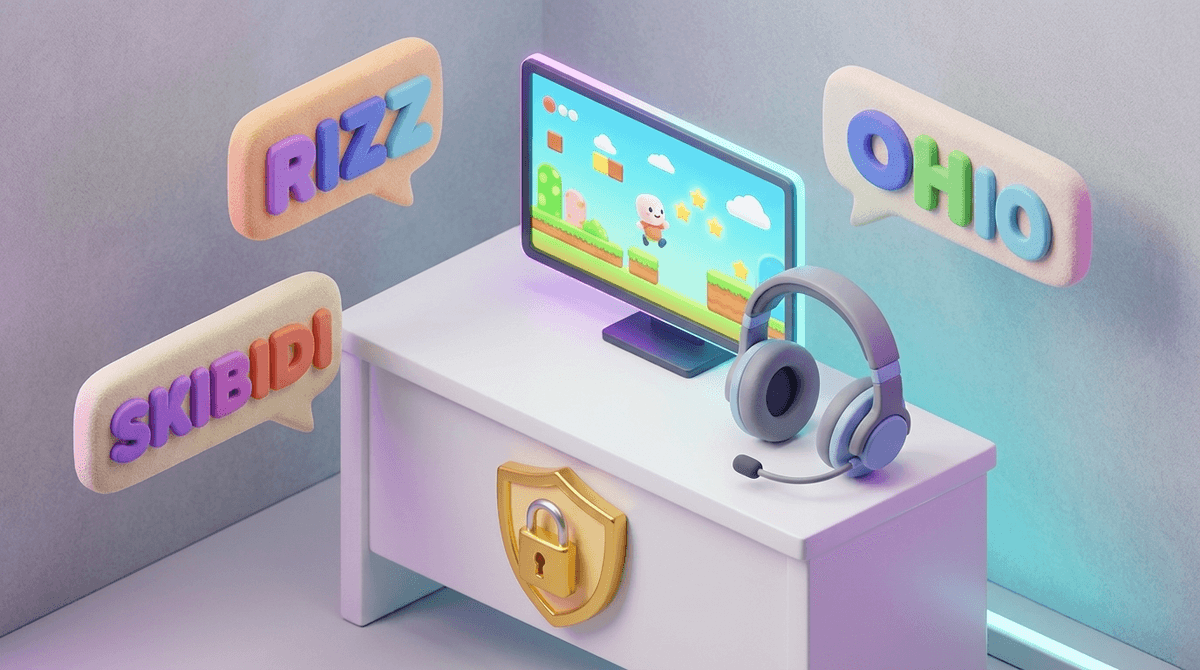
TL;DR: Fortnite is basically the digital version of a middle school hallway. The 2025 voice reporting system finally gives parents some teeth to fight back against toxicity, but the best defense is still a "Friends Only" filter and a solid understanding of why your kid just called a teammate "total Ohio."
- Quick Link: How to set up Fortnite parental controls
- Quick Link: Understanding gaming slang and "brain rot"
- Quick Link: Is Fortnite safe for kids?
If you’ve walked past your kid’s room lately and heard them shouting about "rizz," "skibidi," or "clipping" someone, you’ve encountered the social engine of Fortnite. Voice chat is the built-in feature that allows players to talk to their teammates in real-time.
In a Battle Royale game where 100 people drop onto an island, communication is a competitive advantage. But because Fortnite is free-to-play, it attracts everyone from six-year-olds on iPads to thirty-year-olds in professional gaming chairs. That mix is where things get... complicated.
For most kids, Fortnite isn't just a game; it’s a hangout spot. It’s where they go after school to catch up, much like we used to use AIM or just hang out at the mall. The voice chat makes it feel like a shared physical space.
However, the "open" nature of the chat means that if your child is playing "Fill" (where the game assigns them random teammates), they are essentially walking into a room with three strangers and a microphone. This leads to:
- Trash Talk: Which can range from playful ribbing to genuine verbal abuse.
- The "Squeaker" Effect: Older players often bully younger kids simply because their voices haven't dropped yet.
- Brain Rot Slang: You’ll hear a lot of "Ohio" (meaning weird or cringe), "Gyatt" (which you should probably look up here
 ), and "Sigma."
Epic Games finally addressed the "he-said-she-said" nature of online bullying with a robust voice reporting system. Here is how it works in 2026:
Fortnite now constantly records the last five minutes of audio on a rolling loop. This audio is stored locally on the device, not on Epic’s servers. If a player is being harassed and hits the "Report" button, that five-minute audio clip is encrypted and uploaded to Epic for a human moderator to review. If no report is filed, the audio is automatically deleted.
This is a game-changer. It means there is actual accountability for what people say. If a kid is being racist, sexist, or just overly toxic, there is a literal "receipt" of the conversation.
You don't have to just "hope for the best." Fortnite has some of the most granular parental controls in gaming. You can access these via the "Parental Controls" menu in the game settings, which should be protected by a 6-digit PIN that your kid doesn't know.
1. Voice Chat Permissions
You can set voice chat to:
- Everybody: Your kid can talk to and hear anyone. (Not recommended for younger kids).
- Friends & Teammates: Your kid can talk to people on their friend list and anyone the game "fills" into their squad.
- Friends Only: The "Gold Standard" for intentional parents. Your kid can only talk to people they have specifically added as friends.
- Nobody: Complete silence.
2. Filter Mature Language
While this doesn't catch everything (especially creative slang), it does a decent job of censoring the "standard" four-letter words in text chat. Voice chat, however, cannot be live-censored yet.
3. Voice Reporting Settings
For players under 18, voice reporting is often defaulted to "On." You can check this in the settings to ensure that if something happens, the evidence is there.
Parents often ask if they should just move their kids to Roblox to avoid the Fortnite toxicity.
Honestly? Roblox is often worse because its voice chat (Spatial Voice) is harder to monitor and the "experiences" are less regulated than a single game like Fortnite. At least in Fortnite, everyone is playing the same game. In Roblox, the social dynamics change every time they switch games.
- Ages 7-10: Voice chat should likely be OFF or strictly Friends Only with people you know in real life. At this age, kids don't have the emotional regulation to handle a 16-year-old screaming at them because they missed a shot.
- Ages 11-13: This is the "training wheels" phase. Friends Only is still the safest bet, but you might allow "Friends & Teammates" if you are in the room. This is the time to talk about what to do when someone starts being "toxic" (the "Mute" button is their best friend).
- Ages 14+: Most kids this age are using Discord to talk while they play Fortnite. This bypasses Epic's safety filters entirely. If your teen is on Discord, the conversation needs to shift from "controls" to "character."
The most important skill a kid can learn in Fortnite is how to Mute someone instantly.
Teach them that they don't owe a stranger their attention. If someone is being weird, mean, or just annoying, they don't need to argue back (which is what the troll wants). They just need to open the menu, click the name, and hit Mute.
Pro-tip: If your kid is wearing a headset, you can't hear what's being said to them. Occasionally, ask them to put the game audio through the TV speakers so you can get a "vibe check" on who they are playing with.
Instead of "Who are you talking to?", try these:
- "Anyone being a 'sweat' (someone trying too hard/being aggressive) in your lobby today?"
- "I heard Epic has a new voice reporting thing—have you ever had to use it?"
- "What’s the weirdest thing a 'random' has said to you lately?"
By using their language (even if you feel ridiculous saying "lobby" or "random"), you signal that you understand the world they’re playing in. You aren't a tourist; you're an informed guide.
Fortnite voice chat isn't inherently "evil," but it is unfiltered. In 2026, the tools to protect your kids are better than ever, but they require you to actually go into the settings and toggle them.
Don't rely on the game to parent for you. Set the voice chat to Friends Only, keep the Parental Control PIN secret, and keep the door open for conversations about the weird, wonderful, and occasionally toxic world of online gaming.
- Check the Settings: Open Fortnite tonight and ensure a Parental Control PIN is set.
- Verify Voice Reporting: Make sure it's set to "Always On" for that extra layer of accountability.
- Talk Slang: Read our guide on deciphering gaming slang so you know if "Ohio" is an insult or a location (hint: it's an insult).
- Explore Alternatives: If Fortnite is getting too intense, check out cozy games for kids like Minecraft (in Creative Mode) or Stardew Valley.