

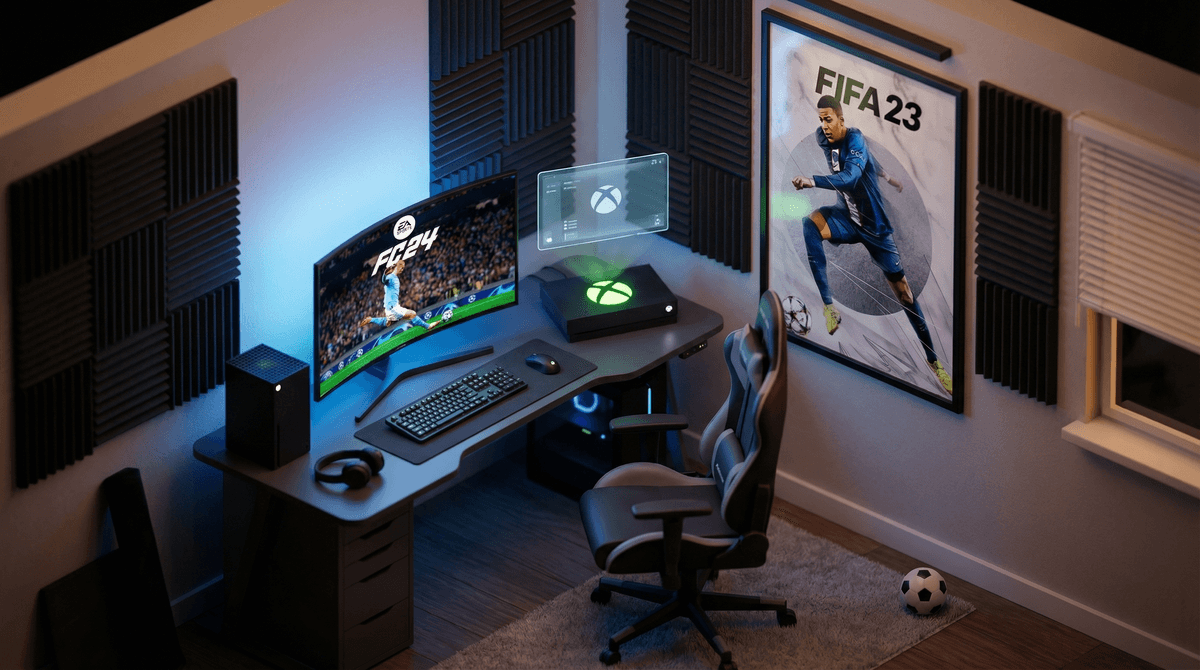
FIFA (now rebranded as EA Sports FC starting in 2024) is the world's most popular soccer video game series, and on Xbox, it's where millions of kids and teens compete, build teams, and connect with friends. The game simulates real-world soccer with actual players, teams, and leagues, featuring stunning graphics and incredibly realistic gameplay.
The big draw? Ultimate Team mode – where players build their dream squads by collecting player cards, competing in matches, and trading with others. Think fantasy football meets Pokémon card collecting, but with Messi and Ronaldo.
Here's what makes this different from just "a soccer game": FIFA on Xbox is an online ecosystem. Kids aren't just playing matches against the computer – they're competing in weekend tournaments, trading in a player marketplace, watching YouTube tutorials on team-building strategies, and yes, often asking for money to buy player packs.
It's social. For many kids, especially boys ages 10-17, FIFA is their primary way to hang out with friends online. They'll hop into voice chat, play matches together, and talk trash in the most affectionate way possible. It's the digital equivalent of shooting hoops in the driveway.
It feels real. The game updates constantly with real-world soccer events. When a player has an amazing game on Sunday, their FIFA card gets upgraded by Wednesday. Kids who don't watch traditional sports will suddenly know every player on Manchester City because of this game.
The collection aspect is genuinely engaging. Building a team from scratch, trading players, and finally packing that elite card creates legitimate excitement. There's real strategy involved in chemistry, formations, and team-building that can be intellectually stimulating.
Competition feels accessible. Unlike some games where you need lightning-fast reflexes, FIFA rewards soccer knowledge, strategic thinking, and practice. A kid who understands the sport can compete with older players.
Let's talk about the elephant in the room: FIFA Ultimate Team and microtransactions.
Ultimate Team uses a "pack" system where players open digital packs hoping to get valuable player cards. You can earn packs through gameplay, but you can also buy them with real money. And this is where things get complicated.
The mechanics are nearly identical to gambling. You spend money (or FIFA Points, which you buy with money), you get a randomized reward, and you're hoping for that dopamine hit of packing someone valuable. Research shows that loot box mechanics can be particularly problematic for developing brains.
The real numbers: A competitive team can easily require hundreds of dollars to build through packs, though it's possible to build decent teams without spending if you're patient and strategic. Many kids will ask for $20 here, $50 there, and before you know it, you've spent $300 on a game that resets every year when the new version comes out.
Some countries have actually investigated or banned Ultimate Team's loot box mechanics. Belgium and the Netherlands prohibit them entirely.
The game itself is rated E for Everyone (or PEGI 3 in Europe), which is accurate for the soccer gameplay. But the online interactions and financial systems add complexity that ratings don't capture.
Voice chat is unmoderated. When kids play online, they're exposed to other players via voice and text chat. This ranges from harmless banter to genuinely toxic behavior, racist language, and aggressive trash-talking. You can disable voice chat, but many kids won't want to since it's how they connect with friends.
The time commitment is real. Ultimate Team runs weekend tournaments (Friday-Sunday) where kids compete for rewards. These require playing 20-30 matches over the weekend to get the best rewards. It creates a FOMO dynamic that can be hard to manage.
Trading and market manipulation exists. There's a whole economy around buying low, selling high on player cards. Some kids develop genuine market analysis skills. Others get scammed or frustrated.
It's not all bad. Many kids genuinely learn about soccer, develop strategic thinking, and maintain friendships through FIFA. The question isn't whether it's "good" or "bad" – it's whether it fits your family's values and boundaries around money and time.
Ages 8-10: If you're considering FIFA for this age group, stick to offline modes like Career Mode or playing local matches against siblings. Ultimate Team's complexity and financial pressure aren't appropriate yet. Think of it like Rocket League – fun sports gameplay without the marketplace stress.
Ages 11-14: This is the core FIFA demographic. If you're allowing Ultimate Team:
- Set clear spending limits (consider zero-spend as a legitimate option)
- Discuss the pack odds openly – they're required to display them now
- Use Xbox parental controls to require approval for purchases
- Have conversations about randomized rewards and gambling mechanics
- Monitor weekend time commitments
Ages 15+: Teens can better understand the financial implications, but peer pressure intensifies. This is a good age to discuss opportunity cost – what else could that $50 buy? Some families have success with "you can spend your own money" policies, which creates natural limits.
If you're saying yes to FIFA:
-
Set up Xbox parental controls to require approval for all purchases. This prevents impulse buying and creates natural conversation moments.
-
Establish a budget together. Whether it's $0, $10/month, or something else, decide upfront. Some families do "birthday and holiday only" FIFA Points as gifts.
-
Create time boundaries. Those weekend tournaments are designed to be addictive. Maybe Friday night is fine, but Sunday afternoon is family time.
-
Disable voice chat with strangers in settings, or at least monitor it initially. Friends-only chat is a good middle ground.
-
Try Career Mode together. It's genuinely fun, has none of the microtransaction pressure, and can be a bonding experience if you're both into soccer.
If you're saying no or not yet:
Consider alternatives like Rocket League (soccer with cars, no gambling mechanics), Mario Strikers (arcade soccer fun), or even just watching actual soccer together and playing FIFA's offline modes without Ultimate Team.
FIFA on Xbox is a legitimate cultural phenomenon among kids, especially those who love soccer. The gameplay itself is impressive, the social connections are real, and there's genuine skill development happening.
But Ultimate Team's financial model is designed to extract money in ways that mirror gambling, and the time commitment can be intense. This isn't a "set it and forget it" game – it requires active parenting around money, time, and online interactions.
The good news? You can absolutely set boundaries that work for your family. Plenty of kids play FIFA with zero-spend policies and still have a blast. Others have reasonable budgets that don't break the bank. The key is going in with eyes open, having clear conversations upfront, and being willing to adjust as you see how it fits into your family's life.
Want to understand how FIFA compares to other games your kids are asking about? Check out guides for Fortnite, Roblox, and Minecraft to see how different games handle monetization and online play.