

Feel-Good Shows That Actually Feel Good: TV for 7-9 Year Olds
You know that feeling when your kid finishes a show and they're... fine? Not overstimulated, not asking weird questions about why everyone was yelling, just contentedly moving on to build a Lego castle or draw pictures of the characters they just watched? That's the sweet spot we're hunting for here.
The 7-9 age range is tricky. They've outgrown the truly little-kid stuff but aren't quite ready for the teen drama that dominates so much of kids' streaming. And honestly? With about 92% of families in our community using TV as part of their media diet, and average screen time sitting at around 4.2 hours per day, it really matters what's filling those hours.
Not all entertainment is created equal, and you've probably noticed this yourself. Some shows leave kids energized in a good way—inspired to create, play, or connect. Others leave them demanding snacks, picking fights with siblings, or weirdly anxious about nothing in particular.
Feel-good shows for this age typically share a few qualities:
- Conflict without cruelty - Problems get solved through creativity and kindness, not meanness or manipulation
- Characters who model emotional intelligence - Kids see feelings named, processed, and worked through
- Humor that doesn't rely on embarrassment - Laughs come from clever writing, not someone getting humiliated
- Pacing that lets kids breathe - Not every second is a dopamine hit competing for attention
- Stories that leave room for imagination - Kids can picture themselves in these worlds
In our community, 40% of families have kids using Netflix regularly, while 50% watch Disney+ together as a family. Another 32% use Amazon Prime Video with supervision. The good news? All three platforms have genuinely great options for this age group—you just need to know where to look.
Netflix
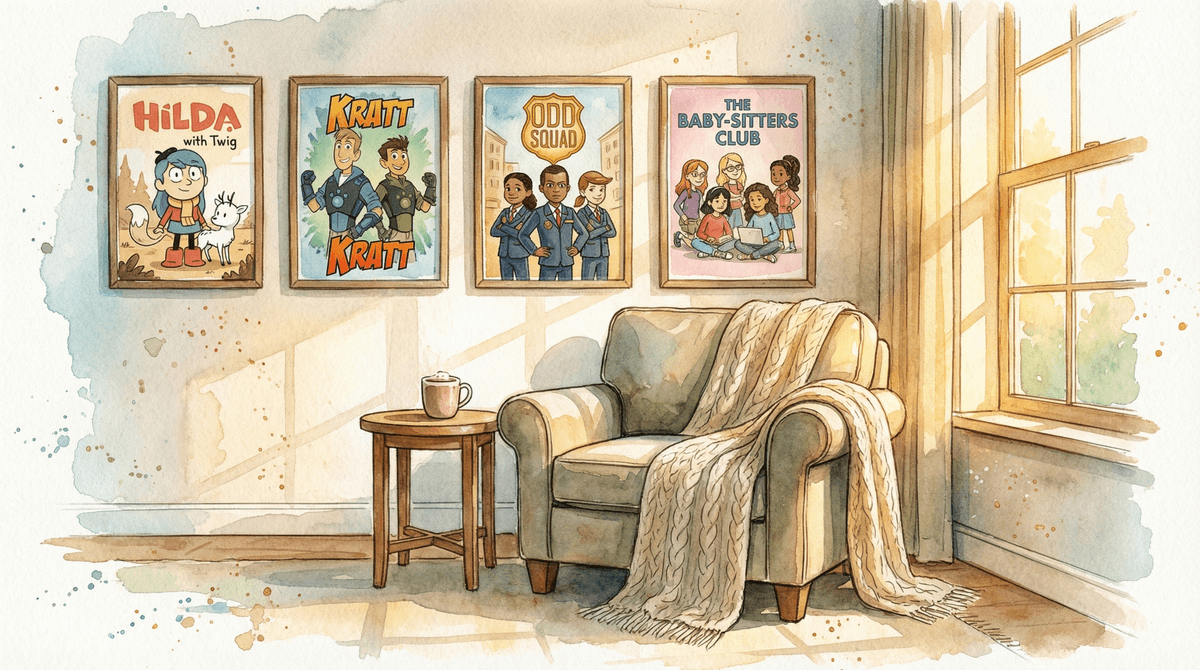
Hilda (Ages 7+) - This beautifully animated series follows a blue-haired girl navigating a world filled with magical creatures. It's gentle, creative, and deals with real friendship challenges and moving to a new place. The art style alone is worth it.
The Baby-Sitters Club (Ages 8+) - A modern update that handles middle-school friendship drama, family challenges, and growing up with remarkable emotional maturity. Great for kids on the older end of this range.
Gabby's Dollhouse (Ages 6-8) - For your younger 7-year-olds, this combines live-action and animation in a craft-focused, problem-solving world that's genuinely charming without being babyish.
Disney+
Bluey (Ages 4-9) - Yes, it's technically for younger kids, but this Australian series about a Blue Heeler family has become appointment viewing for entire families. The episodes are short (7 minutes), the humor works for adults, and the emotional lessons are sophisticated. Many 8 and 9-year-olds still love it.
The Mandalorian (Ages 8+) - Hear me out. For kids who can handle mild action (and whose families are Star Wars fans), this is essentially a space western about found family and doing the right thing. The violence is very "pew pew" laser blasters, not graphic.
Gravity Falls (Ages 8+) - Mystery, humor, and genuine heart. Twin siblings spend the summer with their eccentric great-uncle and uncover supernatural secrets. Some scary moments, but nothing traumatizing—just enough edge to feel exciting.
Amazon Prime Video
Just Add Magic (Ages 8+) - Three friends discover a magical cookbook and have to solve mysteries while navigating friendship and family. It's got mystery, magic, and genuinely good messages about loyalty and problem-solving.
Gortimer Gibbon's Life on Normal Street (Ages 7+) - This one flies under the radar but it's lovely—a group of friends in a neighborhood where slightly magical things happen. Think Stranger Things vibes without any of the scary parts.
PBS Kids (Free!)
Don't sleep on PBS. Wild Kratts (Ages 6-9) teaches actual science through adventure stories, and Odd Squad (Ages 7-10) makes math genuinely funny and cool. Both are free and ad-free—a rare combination.
Even "kids' shows" can have elements that don't feel great:
- Mean-girl dynamics disguised as comedy - Some shows normalize relational aggression as humor
- Adult jokes that go over kids' heads - These can make kids feel like they're missing something
- Frenetic pacing - If you feel exhausted watching it, imagine what it's doing to developing brains
- Consumerism as plot - Some shows are essentially 22-minute toy commercials
Want to know if a specific show is age-appropriate? The Screenwise list maker can give you detailed breakdowns.
The platform matters less than the approach. Whether you're in the 40% of families where kids choose their own Netflix content or the 50% who watch Disney+ together, here's what actually helps:
Co-watch when you can - Not every episode, but enough to know what they're absorbing and have conversations about it.
Create a "approved shows" list - Take 30 minutes to preview options and make a short list of pre-approved shows. Saves the "can I watch this?" negotiations every single time.
Use the "one episode" rule - Let them watch one episode of something new, then talk about whether it goes on the approved list. This teaches media literacy.
Balance solo and family viewing - Both have value. Solo viewing builds independence; family viewing creates shared culture and conversation opportunities.
Not every show needs to be educational, but every show your kid watches is teaching them something—about relationships, conflict resolution, humor, what's normal, what's exciting, what matters.
The shows listed here won't make your kid a better person on their own, but they also won't work against you. They're the ones that leave kids feeling good in a real way—not hyped up, not zoned out, just... satisfied. Like they spent time with characters they care about in worlds that make sense.
And in a media landscape that's increasingly designed to hijack attention and keep eyes glued to screens, finding content that respects your kid's developing brain and emotional world? That's worth the effort of being intentional.
Take the Screenwise survey to see how your family's viewing habits compare to others in your community and get personalized recommendations based on your specific situation.
Start with one new show this week - Pick one from the list above that matches your kid's interests and watch the first episode together.
Create your family's "yes list" - Involve your kids in building a pre-approved list of shows so you're not negotiating every viewing decision from scratch.
The goal isn't perfect media consumption—it's thoughtful media consumption. And that starts with knowing what's actually out there and what's worth your family's time.