

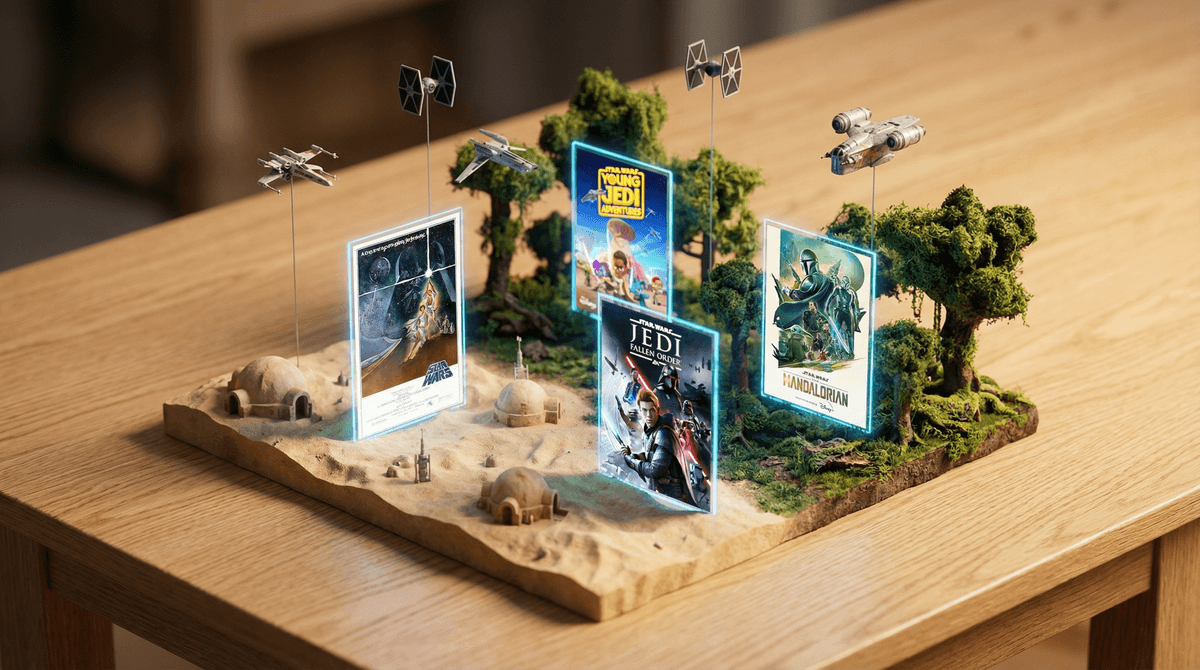
Okay, so you know Star Wars. Of course you do. Maybe you grew up with the original trilogy, or the prequels were your thing, or you got into it through The Mandalorian. But here's the thing: your kid's Star Wars experience is probably very different from yours.
Star Wars isn't just movies anymore. It's a sprawling multimedia empire that includes Disney+ shows, video games like Jedi: Fallen Order and Battlefront, LEGO sets, YouTube content, Fortnite crossovers, and an endless stream of memes. Your 8-year-old might know Baby Grogu better than Luke Skywalker. Your 12-year-old might be watching 45-minute YouTube deep dives about Ahsoka Tano's character arc without having seen a single original trilogy film.
And honestly? That's not necessarily a problem. But it does mean we need to understand what we're actually dealing with when Star Wars enters our home.
Star Wars hits different depending on age, and that's actually one of its strengths:
Ages 4-7: It's the visuals and the "cool factor." Lightsabers, space ships, cute droids, and Baby Yoda (yes, I know his name is Grogu, but let's be real). The stories are simple good vs. evil, which works perfectly for this age.
Ages 8-12: This is peak Star Wars age. Kids are old enough to follow complex storylines, get invested in characters, and start exploring the expanded universe. They're building LEGO sets, playing the games, and probably asking for a lightsaber for their birthday. The themes of friendship, bravery, and standing up to bullies resonate hard.
Ages 13+: Teens often dive deep into the lore, debate which trilogy is best (it's a whole thing), and engage with the more mature themes about war, politics, and moral ambiguity. Or they're ironically memeing about sand and the high ground. Both are valid.
The franchise offers something rare: a shared cultural language across generations. You can actually talk to your kid about something you both care about, even if you're coming at it from different entry points.
Here's where it gets tricky, because not all Star Wars is created equal:
The Movies
Ages 6+: The original trilogy (A New Hope, Empire Strikes Back, Return of the Jedi) is pretty tame by today's standards. Some intense moments, but nothing most elementary schoolers can't handle.
Ages 8+: The prequels have more political talk (read: boring for younger kids) and some darker moments. The Anakin-turns-into-Darth-Vader sequence in Revenge of the Sith is legitimately intense.
Ages 10+: The sequel trilogy (Force Awakens, Last Jedi, Rise of Skywalker) has modern action movie intensity. Not inappropriate, just more visually intense.
Ages 13+: Rogue One and Andor are grittier, more war-movie vibes. Characters die in less "clean" ways. These are fantastic, but they're definitely for older kids.
The Shows
Ages 4+: Young Jedi Adventures is specifically designed for preschoolers. It's like Star Wars meets Paw Patrol.
Ages 7+: The Mandalorian, The Book of Boba Fett, Ahsoka – these are generally family-friendly but have action violence. Check out our Disney+ guide for more on navigating the platform.
Ages 14+: Andor is prestige TV that happens to be Star Wars. It's slow-burn, politically complex, and deals with themes of oppression and rebellion in a very adult way.
The Games
This is where you need to pay attention. Star Wars games range from LEGO Star Wars (perfect for ages 6+) to Jedi: Fallen Order (ages 13+, with combat violence) to Battlefront II (online multiplayer with all the voice chat safety guidance that come with it).
Let me be straight with you: Star Wars itself is probably fine. But here's what actually deserves your attention:
The YouTube Rabbit Hole
Your kid watches one clip of "Darth Vader's best moments" and suddenly the algorithm is serving them hours of content. Some of it's great! Educational deep dives, behind-the-scenes stuff, fan theories. But some of it is just... content for content's sake. YouTube can be great or terrible, and Star Wars content is no exception.
What to do: Watch some videos with them. Subscribe to a few quality channels together. Talk about what makes a good video vs. just filler.
The Spending Trap
Between games, LEGO sets, Disney+ subscriptions, and in-game purchases, Star Wars can become expensive fast. That $10 skin in Fortnite for a lightsaber? Your kid wants it. Those Robux to buy a Star Wars outfit in Roblox? They definitely want it.
What to do: Set clear boundaries about spending. Maybe they can earn screen time or small purchases. Learn more about how in-game currency works and have real conversations about it.
The Fandom Drama
Star Wars fans can be... intense. And sometimes toxic. Your kid might encounter heated debates about which movies are "real" Star Wars, or worse, see adults being genuinely mean to actors or other fans online.
What to do: This is actually a great opportunity to talk about being a fan of something without making it your whole identity, and how to disagree respectfully.
Here's my hot take: Star Wars can actually be a parenting tool if you're intentional about it.
Co-Viewing Opportunities
Watching together gives you natural conversation starters about complex topics: What makes someone choose the dark side? Is violence ever justified? What does it mean to have hope when things look hopeless? These are big questions, but Star Wars makes them accessible.
Creative Play
Lightsaber battles in the backyard? Building LEGO sets together? Writing their own Star Wars stories? This is the good stuff. It's imaginative, active, and screen-free (mostly).
Reading Motivation
There are Star Wars books for every reading level. If it gets your reluctant reader to pick up a book, I'm calling that a win.
Star Wars isn't a red flag or a green flag – it's just a thing your kid is into, and like most things, it's what you make of it.
The real question isn't "Should my kid be into Star Wars?" It's "How is Star Wars fitting into our family's digital life?" Are they watching passively for hours, or are they engaged and creative? Are they spending all their money on Star Wars stuff, or learning to budget? Are they watching age-appropriate content, or have they stumbled into the darker corners of the internet?
You don't need to become a Star Wars expert (though it's honestly pretty fun if you're into it). You just need to be curious about what your kid is watching, playing, and talking about.
- Watch one episode of something they love with them this week. Just one. See what they're into.
- Set up a family media plan that includes Star Wars content but isn't dominated by it.
- Check the ratings before they dive into new Star Wars content. Common Sense Media is your friend here.
- Use Screenwise to understand how your family's Star Wars consumption compares to others in your community. You might be surprised.
May the Force be with you. (Sorry, I had to.)