

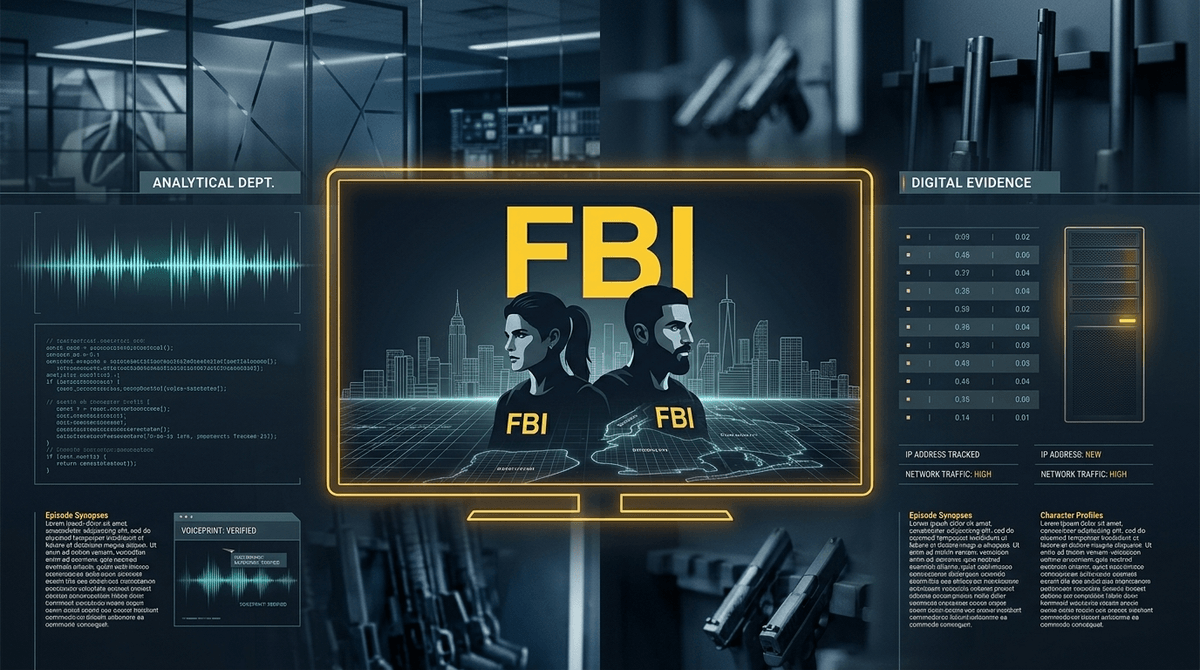
CBS’s hit drama FBI is a TV-14 network procedural, meaning it fits neatly into public broadcast rules, but it doesn't shy away from high-stakes tension, sudden explosions, and real-world terror threats. For most teens and mature tweens (around 12 and up), the show is highly manageable—the real question isn't about graphic gore, but whether they can handle the heavy, anxiety-inducing nature of the plots.
TL;DR
If your teenager wants to jump into the high-stakes world of CBS's FBI, the short answer is that it's generally fine for kids aged 12 and up who can process intense, real-world crisis scenarios. While network standards keep the graphic gore to a minimum, the show regularly deals with heavy themes like domestic terrorism, kidnappings, and biological threats. If they love the investigative puzzle but need a lighter vibe, check out Psych or browse our best TV shows for kids list for more family-friendly options.
Procedurals are the ultimate television comfort food, and executive producer Dick Wolf is the undisputed king of the recipe. The beauty of FBI is that it delivers a highly predictable, satisfying loop: a massive, terrifying crime happens in New York City, the team at 26 Fed mobilizes, and by the 44-minute mark, the bad guys are caught. This formula actually makes the show feel safer for teens than serialized, bleak streaming dramas where the dread builds over ten episodes without release.
The characters are easy to root for, led by Maggie Bell (Missy Peregrym) and OA (Zeeko Zaki). They are competent, deeply moral, and always trying to do the right thing, even when the system around them gets messy. The high-stakes action keeps kids hooked, but the predictability of the procedural format keeps the anxiety from sticking around after the credits roll.
Because FBI airs on CBS, it has to play by broadcast network rules. You won't see the stomach-churning, explicit gore of premium cable or streaming thrillers. There are no gratuitous sex scenes, and the language is kept to mild profanities like "crap" and "damn".
However, "network clean" doesn't mean "soft." The show deals with incredibly intense situations—think active shooters, chemical weapons, and children in danger. The violence usually consists of sudden gunfights, tactical breaches, and the occasional sight of a bloody crime scene or a covered body. The real intensity comes from the ticking-clock pressure of the plots, which can be genuinely stressful for younger viewers who struggle to separate fiction from the nightly news.
For instance, the Season 8 finale, "Defector," featured a terrifying bioweapon threat in the middle of New York City and a mass casualty event on an MTA bus. The episode highlights how the show builds suspense not through blood, but through the terrifying plausibility of its scenarios.
If your teen is already watching, don't sweat the content—use it to start some great conversations. The show frequently dips its toes into complex ethical territory that is perfect for a quick post-episode chat.
The Ethics of the "Greater Good" In the Season 8 finale, OA and Maggie are forced to deal with the NSA covering up a biological attack, ordering them to falsify their field reports for national security reasons. Ask your teen: Do you think the government should ever lie to the public to protect a larger secret? Where do you draw the line between following orders and doing what is morally right?
Anxiety and the News Procedurals often rip their plots straight from the headlines, which can make the world seem like a constant minefield of terror attacks and cyber threats. Talk to your teen about how FBI dramatizes these events for entertainment. Ask them: Does watching this make you feel more anxious about the real world, or does it just feel like a fun puzzle to solve?
If your kid is obsessed with the investigative thrills of FBI but you want to mix up their watchlist, here are a few great directions to go:
If you want to dial down the terror but keep the detective work, this is the gold standard. It’s a hilarious, pop-culture-obsessed comedy about a guy who pretends to be psychic to help the police solve crimes. It has all the satisfying procedural elements of FBI but with zero of the nightmare fuel.
For teens who love the intellectual puzzle of solving a case, this BBC adaptation is phenomenal. It's stylish, incredibly clever, and features Benedict Cumberbatch at his absolute best. It’s rated TV-14 and has some dark themes, but the focus is firmly on deductive reasoning and brilliant writing.
To find more age-appropriate dramas and thrillers, you can dive into our digital guide for middle school or check out our digital guide for high school to see what other parents are clearing for their teens.
Q: What age is the CBS show FBI appropriate for?
For most families, age 12 or 13 is the sweet spot. While it is rated TV-14, the lack of graphic gore and explicit sexual content makes it highly accessible for mature middle schoolers who can handle intense, real-world suspense.
Q: Is there sexual content or nudity in FBI?
No, there is virtually no nudity or explicit sexual content on the show. Romance is kept entirely PG-13, focusing on character relationships and workplace drama rather than physical intimacy, making it much tamer than many streaming dramas.
Q: Is FBI more violent than Law & Order?
They are very similar in terms of visual violence, as both are Dick Wolf productions on broadcast television. However, FBI deals more heavily with federal-level threats like terrorism, bomb plots, and bioweapons, which can feel larger-scale and more anxiety-inducing than the local street crimes of Law & Order.
Q: Is the show FBI based on real cases?
While the show frequently dramatizes real-world concepts—like cyber scams, domestic extremism, and cartel activities—the specific plots and characters are fictionalized for television drama.
If your teen is ready for a smart, fast-paced drama, FBI is a solid option that keeps the worst of streaming-era graphic content off the screen. Just keep an eye on how they handle the real-world anxiety of the plotlines.
