

Look, February rolls around and suddenly every parent gets the "oh crap, Black History Month" panic about wanting to do more than the same tired worksheet about MLK. And honestly? That instinct is good. But here's the thing: learning about extraordinary Black women in history shouldn't be a one-month scramble. It should be woven into how our kids understand the world year-round.
The good news is that there are genuinely amazing resources out there now—books, shows, podcasts, games—that tell these stories in ways that are engaging, age-appropriate, and actually interesting to kids. Not the sanitized, boring textbook versions. The real stories of women who changed everything, often while facing obstacles most of us can't imagine.
Here's what's wild: most kids can name maybe three Black historical figures, and they're usually all men. Ask them to name a Black woman scientist, mathematician, inventor, or civil rights leader, and you'll get blank stares or maybe Harriet Tubman if you're lucky.
This isn't because kids are incapable of learning these stories. It's because we're not telling them consistently. And when we do tell them, we often sanitize them so much that they lose their power.
Kids need to know that:
- Katherine Johnson did the math that got astronauts to the moon when NASA didn't trust computers
- Claudette Colvin refused to give up her bus seat at 15, nine months before Rosa Parks
- Mae Jemison became the first Black woman in space after being a doctor and Peace Corps volunteer
- Ida B. Wells risked her life investigating and documenting lynchings when no one else would
- Shirley Chisholm ran for president in 1972, decades before it became "acceptable"
These aren't just history lessons. They're stories about courage, brilliance, and refusing to accept the world as it is.
Ages 4-7: Picture Books That Don't Talk Down
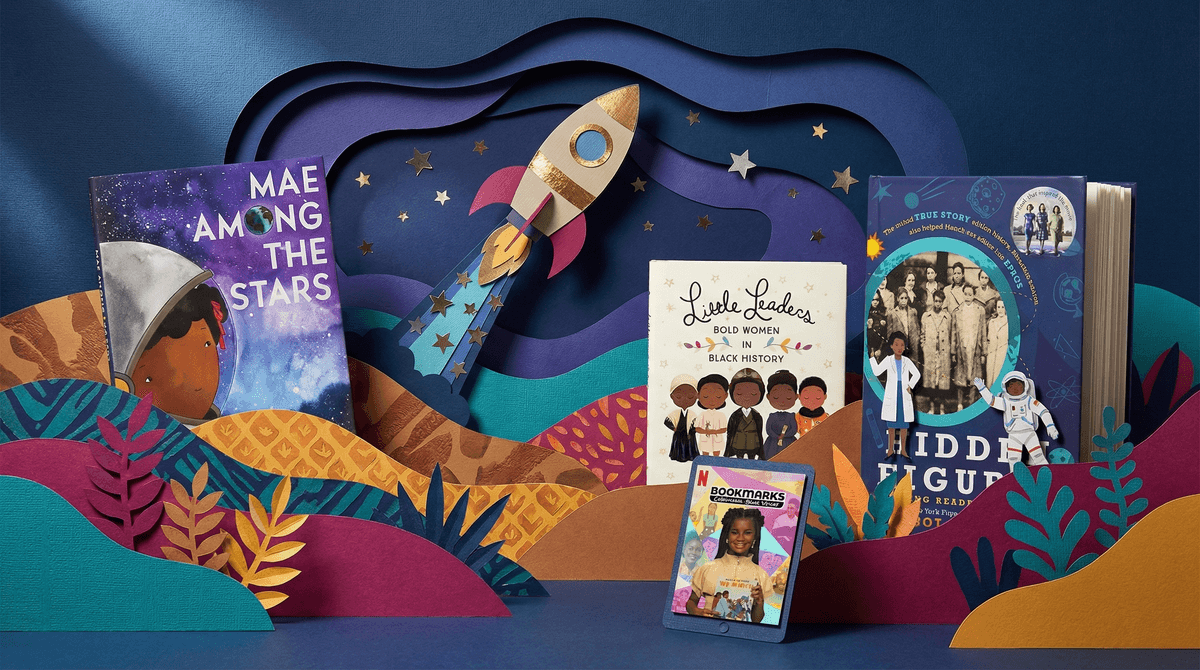
Mae Among the Stars by Roda Ahmed is about young Mae Jemison dreaming of space. It's sweet without being saccharine.
Little Leaders: Bold Women in Black History by Vashti Harrison has gorgeous illustrations and bite-sized bios of 40 women. Perfect for bedtime reading where you can do one or two at a time.
Hidden Figures: The True Story of Four Black Women and the Space Race is the picture book version, and yes, it works for this age. Kids love space, and this makes it accessible.
Ages 8-12: Chapter Books and Shows
Hidden Figures Young Readers' Edition by Margot Lee Shetterly is fantastic. It doesn't dumb down the math or the racism these women faced, but it's written for middle-grade readers.
She Persisted by Chelsea Clinton has a whole series now, and several books focus on Black women like Harriet Tubman, Oprah Winfrey, and Ruby Bridges.
The Good Night Stories for Rebel Girls series includes profiles of dozens of extraordinary women, many of them Black, with beautiful full-page illustrations.
For shows, Bookmarks: Celebrating Black Voices on Netflix has celebrities reading children's books by Black authors. It's short-form (perfect for attention spans) and genuinely engaging.
Ages 13+: The Real Stories
Hidden Figures (the movie) is rated PG and absolutely watchable with tweens and teens. The racism is shown but not gratuitously, and the math and science are celebrated.
The Immortal Life of Henrietta Lacks by Rebecca Skloot is heavy but crucial. Henrietta's cells changed modern medicine, and her family got nothing. This is the book that makes kids understand medical ethics and racial injustice in a concrete way.
Stamped: Racism, Antiracism, and You by Jason Reynolds and Ibram X. Kendi is a remix for young adults, and it weaves in stories of Black women throughout.
For podcasts, Brains On! has episodes about Black scientists and inventors that are genuinely fun to listen to. Wow in the World also features stories of Black inventors and scientists in their characteristic enthusiastic style.
Don't make it a "special event." The goal isn't to have one Big Conversation about race and history. It's to normalize these stories as part of regular life.
Let kids ask uncomfortable questions. If your 8-year-old asks why Katherine Johnson wasn't allowed to use the same bathroom as white people, don't deflect. Answer honestly and age-appropriately. "Because of racist laws that said Black people and white people had to be separate. Those laws were wrong and unfair."
Connect it to now. After reading about Shirley Chisholm, talk about current women in politics. After watching Hidden Figures, look up current Black women at NASA (there are many).
Use Screenwise if you're stuck on how to explain something. Seriously, See how to explain segregation to a 6-year-old or get recommendations for books about Black women scientists.
You don't need to be an expert. You just need to be willing to learn alongside your kids. It's okay to say "I don't know, let's find out together."
Your kids' schools are probably doing the bare minimum. Even in February. Don't rely on school to do this work. You can supplement at home without it being a whole production.
Representation isn't just for Black kids. All kids benefit from seeing diverse heroes and role models. White kids especially need to see that brilliance, courage, and leadership come in all colors.
Some of these stories are hard. They involve racism, violence, and injustice. That's okay. Kids can handle hard truths when presented age-appropriately. In fact, they should.
Teaching kids about extraordinary Black women in history isn't about checking a box during Black History Month. It's about expanding their understanding of who gets to be a hero, who gets to be brilliant, who gets to change the world.
Start with one book. One show. One conversation. You don't have to overhaul your entire curriculum. Just start weaving these stories into the regular rotation.
Because when kids grow up knowing that Black women have always been scientists, leaders, inventors, and heroes—despite every obstacle thrown at them—it changes how they see the world. And honestly, that's the whole point.
- Pick one book or show from the age-appropriate list above and add it to your rotation this week
- Explore more books about Black history for kids
- Check out educational podcasts for kids that feature diverse voices and stories
- Use Screenwise to find more media that aligns with your family's values around diversity and representation