

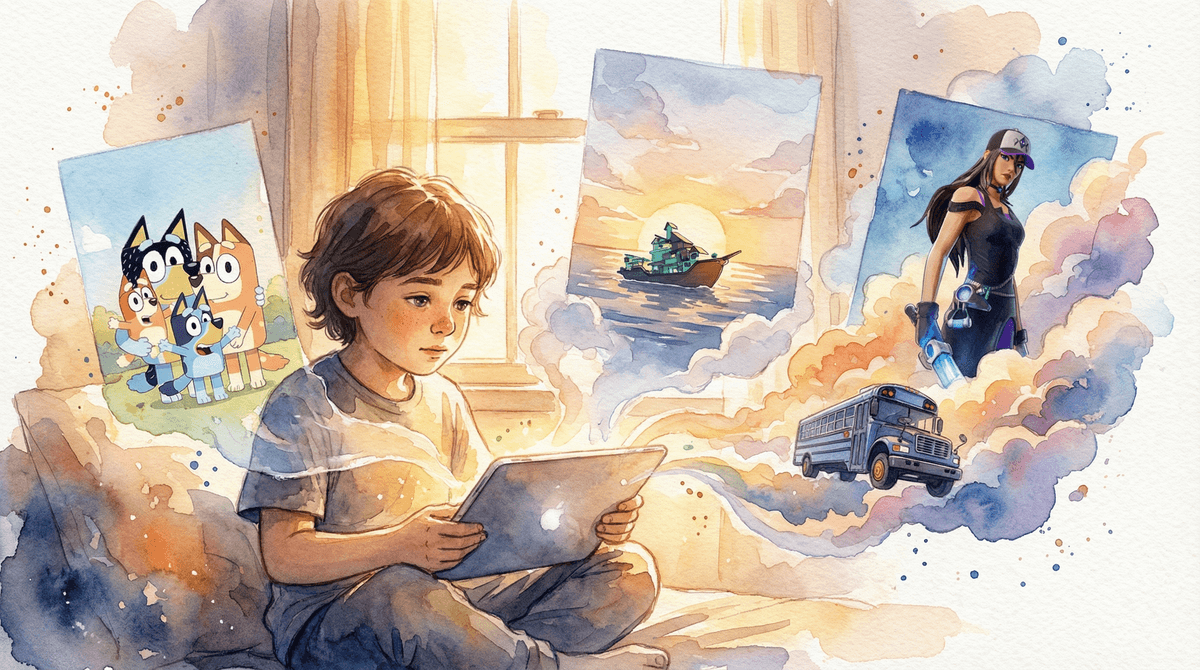
Empathy is the ability to understand and share someone else's feelings — to mentally step into their shoes and feel what they're experiencing. It's not just "being nice" or "feeling sorry" for someone. It's the deeper skill of recognizing emotions in others, imagining their perspective, and responding with genuine care.
And here's the thing: empathy is a skill, not a personality trait. Like learning to ride a bike or read, kids develop empathy through practice, observation, and real human interaction. Which is exactly why the digital world makes it so much harder.
When kids interact through screens, they're missing crucial information that helps them read emotions and develop empathy:
No body language. About 55% of communication is nonverbal — facial expressions, posture, hand gestures. When your kid is texting a friend or playing Fortnite with voice chat, they're missing all of that. They can't see their friend's face fall when they make a joke that lands wrong.
No immediate consequences. Online, you can say something hurtful, log off, and never see the impact. There's no friend crying in front of you, no awkward silence, no immediate feedback that what you said caused real pain. The disconnect between action and consequence makes it harder for kids to learn that their words have weight.
The disinhibition effect is real. People (including kids) say things online they'd never say face-to-face. The screen creates psychological distance that makes cruelty easier and empathy harder. Your sweet 10-year-old who would never insult someone at recess might type "you're trash" in a Roblox chat without thinking twice.
Curated realities. Social media shows highlight reels, not real life. When kids scroll through Instagram or TikTok, they're seeing performative emotions and manufactured moments, not authentic human experiences. This skews their understanding of what real feelings and real struggles look like.
Less practice with real faces. Babies and toddlers learn to read emotions by staring at their parents' faces for thousands of hours. When older kids spend hours looking at screens instead of faces, they're literally getting less practice reading human emotions. Some research suggests heavy screen use correlates with lower emotional intelligence scores, though causation is still being studied.
You might notice your kid:
- Struggling to pick up on when someone's upset in person
- Making jokes that seem tone-deaf or insensitive
- Having trouble understanding why their online comments hurt someone's feelings
- Seeming less affected by others' emotions than they used to be
- Preferring to handle conflicts over text rather than face-to-face (because it's easier to avoid the emotional discomfort)
None of this means your kid is doomed or that screens have "broken" their empathy. But it does mean they need intentional practice with real human connection.
Ages 5-8: At this age, empathy is just developing. Kids are naturally egocentric and learning to understand that others have different feelings and perspectives. Screen time should be minimal and co-viewed when possible. Watch shows like Bluey or Daniel Tiger's Neighborhood together and talk about how characters feel. "How do you think Daniel felt when that happened?"
Ages 9-12: This is prime empathy-building time, but also when many kids get their first phones and social media accounts. They're navigating complex social dynamics both online and off. Help them connect digital actions to real feelings: "When you didn't respond to Emma's message, how do you think that made her feel?" Encourage activities that require face-to-face collaboration — Minecraft is fine, but so is building an actual fort in the backyard with friends.
Ages 13+: Teens are capable of deep empathy but also dealing with intense social pressure and digital drama. They need space to make mistakes and guidance to learn from them. When they share screenshots of someone being mean online, resist the urge to just say "that's awful." Ask: "Why do you think they said that? What might be going on for them?" This doesn't excuse bad behavior, but it models empathetic thinking.
Model empathy about screen use itself. When you're annoyed at your kid for being on their phone at dinner, try: "I feel disconnected when we're not looking at each other during meals" instead of "You're always on that thing." You're teaching them to name feelings and connect behavior to emotional impact.
Create phone-free zones for real conversation. Car rides, dinner time, family game nights. Use these to actually talk about feelings, conflicts, and experiences. Here are some conversation starters that actually work .
.
Talk through online conflicts together. When your kid has drama in a group chat or a gaming argument, don't just confiscate the device. Sit with them and talk through it: "What was that person feeling? Why might they have reacted that way? How could you have said that differently?"
Prioritize face-to-face friendship time. Yes, even if it's inconvenient. Even if it means driving them places. Real-time, in-person interaction is irreplaceable for empathy development. Your 12-year-old playing Roblox with friends is social, but it's not the same as three hours at the skate park.
Choose media that builds empathy. Some shows and games actually help. Story-driven games like Spiritfarer or Unpacking create emotional connection. Shows like Avatar: The Last Airbender or Anne with an E feature complex characters dealing with real emotional struggles. Watch or play together and talk about it.
Don't demonize screens entirely. Your kid will tune you out if you act like phones are evil. Instead, help them see the nuance: "Screens aren't bad, but they make it harder to practice understanding people's feelings. That's why we need balance."
Empathy isn't dead in the digital age, but it does require more intentional cultivation. Screens aren't going anywhere, and they're not all bad — but they do create distance from the messy, complicated, face-to-face human interactions that teach kids how to truly understand and care about others.
The good news? Small, consistent efforts make a difference. Every real conversation, every conflict worked through in person, every moment of connection without a screen in the way is building that empathy muscle.
You're not trying to raise perfect kids who never say something mean online. You're trying to raise humans who can recognize when they've hurt someone, understand why it matters, and choose differently next time. That's empathy. And it's worth fighting for.
-
Audit your family's face-to-face time. How much uninterrupted, screen-free conversation are you actually having? If it's less than you'd like, pick one small change (no phones during dinner, Sunday morning walks, etc.).
-
Talk about a recent online conflict. If your kid has dealt with any digital drama lately, revisit it together. Not to punish, but to explore: What were people feeling? What was misunderstood? What could have been done differently?
-
Learn how to set up tech boundaries that actually stick — because empathy-building requires having the time and space for real connection.