

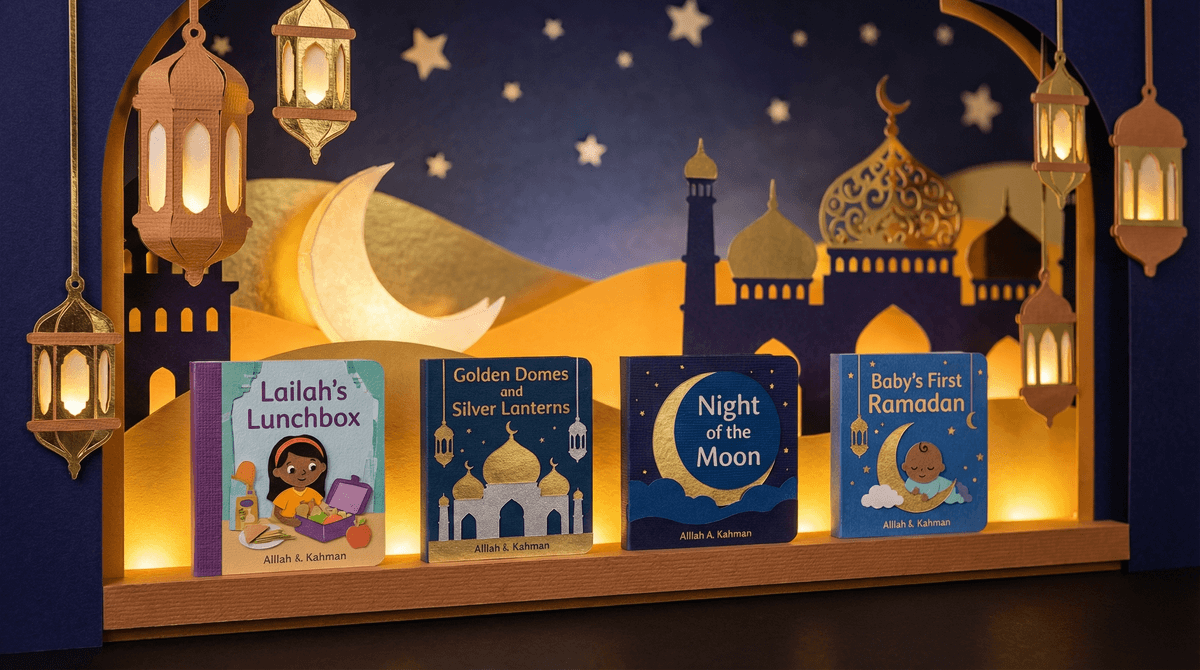
Eid books are children's literature that celebrates the two major Islamic holidays: Eid al-Fitr (marking the end of Ramadan) and Eid al-Adha (the Festival of Sacrifice). These books range from simple board books explaining what Eid is, to chapter books weaving Islamic values into engaging stories, to beautifully illustrated picture books that capture the joy, traditions, and spiritual significance of these celebrations.
For Muslim families, these books are a way to help kids see themselves reflected in the stories they read—something that's still frustratingly rare in mainstream children's literature. For non-Muslim families, they're a window into understanding classmates' and neighbors' traditions, which is pretty essential in our increasingly diverse communities.
The best Eid books don't just explain what happens during Eid (the prayers, the new clothes, the feasts, the gifts). They capture the feeling of it—the anticipation, the gratitude, the connection to something bigger than yourself, the pure chaos of extended family gatherings where someone's definitely going to spill biryani on the new outfit.
Here's the thing: representation in children's literature isn't just a nice-to-have. When kids see their traditions, their families, their celebrations reflected in books, it tells them their experiences matter. It builds identity and pride. And when kids don't see themselves in the stories around them, that absence speaks volumes too.
For Muslim kids specifically, the options have historically been pretty limited. You'd get maybe one Eid book at the library (if you were lucky), often self-published with questionable illustrations. The landscape has improved dramatically in the last 5-10 years, with major publishers releasing gorgeous, well-written Eid books by Muslim authors and illustrators. But we're still nowhere near the saturation of Christmas or Hanukkah books.
Beyond representation, these books serve a practical purpose: they help kids understand and articulate their own traditions. A 4-year-old might not be able to explain why their family fasts during Ramadan, but reading Golden Domes and Silver Lanterns together gives them language and context. A 7-year-old dealing with friends who don't understand why they're missing school for Eid can point to a book and say "this is what we do."
For non-Muslim families, building a diverse home library that includes Eid books (alongside books about Diwali, Lunar New Year, Passover, and other cultural celebrations) is part of raising kids who understand that their experience isn't universal. That different doesn't mean weird. That there are lots of ways to celebrate, believe, and belong.
For Ages 0-4:
Start with board books that introduce basic concepts. Under My Hijab by Hena Khan is a beautiful, rhyming introduction to the hijab and Muslim identity. It's Ramadan, Curious George does what Curious George does best—makes unfamiliar traditions accessible and fun for toddlers.
Lailah's Lunchbox by Reem Faruqi is technically for slightly older kids (ages 4-8) but works well as a read-aloud for preschoolers. It follows a girl fasting for the first time during Ramadan, navigating how to explain it to her classmates.
For Ages 5-8:
This is where the selection really opens up. The Proudest Blue by Ibtihaj Muhammad (yes, the Olympic fencer) and S.K. Ali is stunning—it follows a girl's first day wearing hijab to school, told from her younger sister's perspective. The illustrations alone are worth it.
Night of the Moon by Hena Khan captures the magic of Ramadan nights and Eid preparation. Mommy's Khimar by Jamilah Thompkins-Bigelow is a sweet story about a daughter playing dress-up with her mother's headscarves.
For Eid al-Adha specifically, A Party in Ramadan by Asma Mobin-Uddin and My First Eid by Sana Rafi are solid choices that explain the holiday's significance in age-appropriate ways.
For Ages 8-12:
Chapter books and middle-grade novels that weave Islamic identity into broader stories are gold here. Amina's Voice by Hena Khan (she shows up a lot because she's genuinely that good) follows a Pakistani-American girl navigating friendship, family, and identity. It's not specifically about Eid, but Ramadan and Muslim traditions are woven throughout.
The Gauntlet by Karuna Riazi is a fantasy-adventure where the main character happens to be a hijabi Muslim girl—representation without making her entire identity about being Muslim. Other Words for Home by Jasmine Warga is a beautiful, heartbreaking novel-in-verse about a Syrian refugee that includes Eid celebrations.
For nonfiction, The Proudest Blue has a companion guide, and It's Ramadan, Curious George includes educational back matter about Islamic practices.
These books aren't just for Muslim families. If your kid's class has Muslim students (and statistically, they probably do), reading Eid books together is a simple way to build understanding and empathy. It makes the Muslim kids in class feel seen, and it helps other kids understand why their friend is fasting or why they're celebrating on a different day than the school calendar acknowledges.
Not all Eid books are created equal. Some are clearly passion projects with more heart than polish. Others are beautifully produced but feel more like textbooks than stories. The best ones are just good books that happen to be about Eid—engaging plots, strong characters, gorgeous illustrations, and natural integration of Islamic traditions.
Representation behind the scenes matters. Look for books by Muslim authors and illustrators—they're going to get the details right and infuse the story with authenticity that non-Muslim creators often miss. This isn't gatekeeping; it's just acknowledging that lived experience shows up on the page.
Timing is flexible. You don't have to read Eid books only during Ramadan or right before Eid. Building them into your regular rotation year-round normalizes these celebrations and keeps them in your kids' awareness. That said, pulling out special Eid books during Ramadan can make the season feel more festive, the same way families break out Christmas or Hanukkah books in December.
Your library might have more options than you think. Many public libraries have expanded their diverse book collections significantly in recent years. If yours doesn't have Eid books, request them—libraries respond to patron requests, and you'll be helping future families too.
Building a meaningful Eid book collection is about more than checking a diversity box. It's about giving Muslim kids mirrors that reflect their experiences and non-Muslim kids windows into their neighbors' lives. It's about normalizing Islamic traditions in your home library the same way we've normalized Christmas, Easter, and secular holidays.
The good news? The quality and quantity of Eid books have exploded in recent years. You're not limited to one or two options anymore. You can build a collection that grows with your kids, from board books to middle-grade novels, from explaining what Eid is to exploring the complexities of Muslim identity in America.
Start with a few books that resonate with your family's age range and interests. Read them together. Talk about what's similar to your own celebrations and what's different. Let your kids ask questions. And if you're Muslim, let your kids see themselves as the heroes, the main characters, the ones whose stories matter enough to be told and published and celebrated.
Next Steps:
- Check your local library's collection and request titles they don't have
- Browse diverse book lists for Muslim representation

- Ask Muslim friends or your kids' Muslim classmates' parents for their family favorites
- Consider gifting Eid books to your child's classroom library (with teacher approval)