

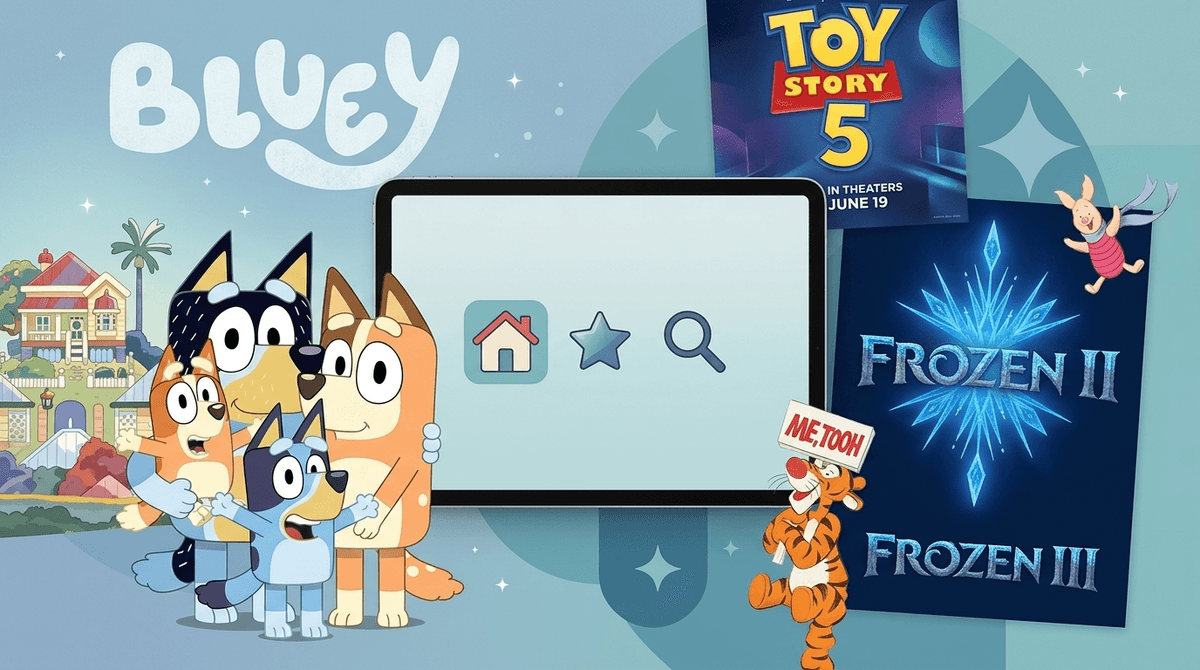
TL;DR: The 2026 Disney+ Survival Kit
- Best Low-Stim Pick: Bluey (the undisputed GOAT of family TV)
- Best "Old School" Calm: The Many Adventures of Winnie the Pooh
- 2026 Hype to Watch: Toy Story 5 and Frozen 3
- Safety First: Set up Junior Mode to filter out the PG-13 Marvel/Star Wars bloat.
Disney+ in 2026 is a different beast than it was when it launched. It’s no longer just a digital vault for old VHS tapes; it’s a massive, multi-headed monster that includes everything from Hulu content to gritty Marvel series. For parents of toddlers and preschoolers, the "Disney Diet" requires a bit of curation if you want to avoid the dreaded post-screen-time meltdown.
We are officially in the year of the "Mega-Sequel." If you have a child between the ages of 3 and 7, you are likely already hearing about Toy Story 5. While Pixar usually delivers, remember that these newer sequels often ramp up the "peril" and emotional complexity. If your kid is sensitive to "scary parts," you might want to revisit the original Toy Story first to gauge their reaction.
Then there’s Frozen 3. It’s going to be everywhere. The marketing is designed to make your kid feel like they’re missing out if they haven't seen it. My advice? Don't feel rushed to head to the theater if your little one isn't ready for a 90-minute dark room experience. It’ll hit Disney+ soon enough.

We talk a lot about "brain rot" in digital wellness circles. Usually, we’re referring to high-octane, fast-cut YouTube videos that fry a child’s dopamine receptors. But some Disney+ shows are guilty of this too. If a show has a scene change every three seconds and constant shouting, it’s going to make the transition away from the TV very difficult.
Here are the best shows for keeping the peace:
There is a reason why 90% of intentional parents start here. The colors are muted, the music is orchestral, and the pacing matches real life. It’s also one of the few shows that actually teaches parents how to play with their kids.
- Why it works: It’s low-stim but high-engagement.
This is a legacy pick that holds up beautifully. It uses puppets, slow movements, and direct address to the camera. It feels like a warm hug rather than a sensory assault.
Whether it’s the classic 1977 movie or the newer iterations, the Hundred Acre Wood is the ultimate "slow TV" for kids. There are no villains (except maybe a misunderstood Heffalump), and the stakes are usually just "Pooh needs honey."
While it’s a bit more "educational" in that early-2000s way, it uses classical music and famous art. It’s structured, predictable, and doesn't rely on slapstick violence for laughs.
Not every "Junior" show is created equal. Some are high-energy "junk food" that might be okay in moderation but often lead to behavioral spikes.
- Spidey and His Amazing Friends: Kids love it, and the themes of teamwork are great. However, it is fast. The action sequences are bright and loud. If your kid starts "web-slinging" (hitting) the dog after watching, it’s time for a break.
- Mickey Mouse Funhouse: It’s very loud. The dialogue is constant. It’s not "bad," but it’s definitely on the higher end of the stimulation scale compared to the older Mickey Mouse Clubhouse.
Disney+ updated their parental controls recently, and they’re actually pretty decent now. If you haven't touched your settings since 2024, do this today:
- Create a dedicated "Junior Mode" profile: This simplifies the interface and only shows content rated for the youngest viewers.
- Toggle the "Kid-Proof Exit": This adds a simple exit question (like "Enter the numbers 4, 9, 2") to prevent your toddler from accidentally clicking over into your profile where Deadpool is lurking.
- Check the Content Ratings: You can manually set a profile to G, PG, or TV-Y7. In 2026, Disney+ has integrated a lot of Hulu content, so if you don't have these locks on, your kid is one click away from The Bear.
You’ve probably noticed that when you turn off the TV, your kid sometimes acts like the world is ending. This isn't just "being a brat." When kids watch high-stimulation content, their brains are flooded with dopamine. When the screen goes black, that dopamine level drops instantly.
By choosing "low-stim" shows like Bluey or Puffin Rock (which is on Netflix, but similar in vibe), you’re keeping those levels more stable. It makes the "transition to dinner" much easier for everyone involved.
When your child asks to watch something that you know is too "fast" or "old" for them, try to avoid the "because I said so" trap.
- The "Brain Energy" Talk: "That show has a lot of fast lights and loud noises. It uses up all our 'calm brain energy' really fast. Let's watch something that keeps our brain energy steady so we can have fun at the park later."
- The "Wait Until You're Older" Talk: "I know Frozen 3 looks exciting! That movie has some big, scary feelings in it that are for older kids. Let's watch the first Frozen again and see if we're ready for the big one next year."
Disney+ is a tool, not a babysitter. In 2026, the platform is more crowded than ever, but it still holds some of the best-produced content for young children in existence.
Stick to the classics and the "slow" shows for the everyday "Disney Diet," and save the high-octane sequels for special family movie nights.
Check out our full guide on low-stimulation shows for toddlers
- Audit your profiles: Ensure your kids are in "Junior Mode."
- Try a "Slow Week": Swap out the high-energy superhero shows for Winnie the Pooh or Bear in the Big Blue House and watch how it affects their mood.
- Set a Timer: Use the "Off" button as a planned event, not a surprise.