

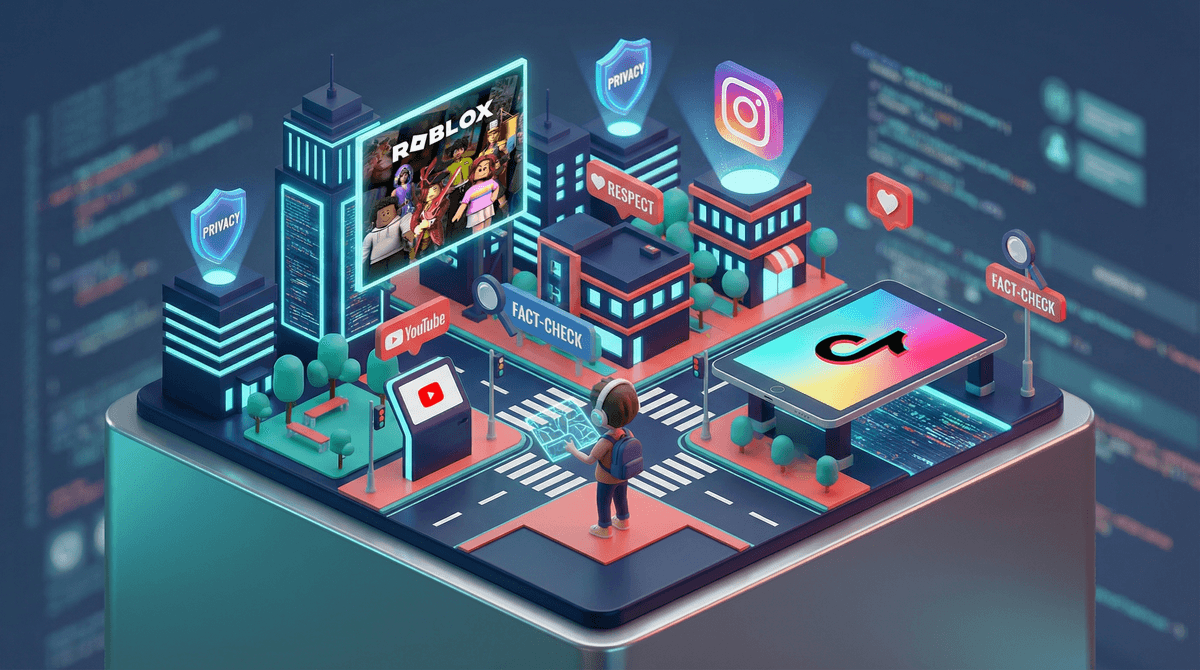
Digital citizenship is basically teaching kids to not be jerks online. But it's more than that — it's about helping them understand that their digital actions have real consequences, that there are actual humans on the other side of those screens, and that the internet isn't some lawless void where normal rules of decency don't apply.
Think of it like teaching table manners, but for the internet. Except the stakes are higher because a rude comment at dinner doesn't follow you around forever with screenshots.
The core skills include:
- Respecting others online (not just when adults are watching)
- Understanding privacy and digital footprints (that TikTok you posted at 13 might haunt you at 23)
- Recognizing misinformation (no, that's not a real news article, that's someone's uncle's Facebook rant)
- Managing their digital reputation (future colleges and employers are watching)
- Being critical consumers of content (just because it has 10 million views doesn't make it true or good)
Here's the thing: our kids are growing up in a world where "online" and "real life" aren't separate anymore. They're the same thing. That kid they're trolling in Roblox? Real person with real feelings. That photo they're sharing without permission? Real privacy violation. That comment section they're diving into? Real impact on their mental health and worldview.
The internet is permanent. And kids genuinely don't understand this yet. Their brains aren't wired to think long-term (thanks, prefrontal cortex development), so when they post something "funny" at 14, they're not thinking about how it might look when they're applying for jobs at 24.
Plus, the platforms are designed to encourage engagement, not kindness. Algorithms reward hot takes and drama, not thoughtful discourse. So we're fighting against systems that are literally incentivizing bad digital citizenship.
And let's be real: a lot of adults aren't great digital citizens either. Kids see grown-ups being terrible in comment sections, sharing misinformation, and treating online spaces like anything goes. We have to model better.
Ages 5-8: The Foundation Years
At this age, keep it simple and concrete:
- "We treat people online the same way we treat them in person" — this is the golden rule
- Teach them to ask before sharing photos of friends or family
- Introduce the concept that once something is online, it's hard to take back (use the toothpaste-out-of-the-tube analogy)
- Practice what to do if they see something that makes them uncomfortable (tell a trusted adult immediately)
Good starter content: Bluey episodes about kindness translate well to digital contexts, and podcasts like Brains On! occasionally cover tech topics in age-appropriate ways.
Ages 9-12: Building Critical Thinking
This is when they're starting to have more unsupervised online time, so level up:
- Talk about digital footprints — everything they post contributes to how people see them
- Introduce the concept of credible sources vs. random internet claims
- Discuss why it's easy to be mean online (lack of face-to-face feedback) and why we need to resist that
- Practice identifying clickbait, sponsored content, and manipulation
- Talk about the difference between privacy settings and actual privacy (nothing is truly private online)
This is also when they might encounter their first real online drama. Use it as a teaching moment about how conflicts escalate online in ways they wouldn't in person.
Ages 13+: Real-World Consequences
Teenagers need to understand the stakes:
- Colleges and employers look at social media — this isn't a scare tactic, it's reality
- Discuss how algorithms create echo chambers and why seeking diverse perspectives matters
- Talk about the permanence of digital content (screenshots exist, the Wayback Machine exists, nothing ever really disappears)
- Address the ethics of sharing others' content without permission
- Discuss the real harm of cyberbullying, doxxing, and pile-ons
They're also old enough to understand platform design and manipulation. Have conversations about how TikTok, Instagram, and YouTube are designed to keep them scrolling, and how that affects their behavior and values.
1. Model good digital citizenship yourself
Kids learn more from watching you than from any lecture. Are you:
- Fact-checking before sharing?
- Being respectful in comments sections (or better yet, avoiding toxic ones)?
- Asking permission before posting photos of others?
- Talking about what you see online with nuance and critical thinking?
If you're doom-scrolling and rage-posting, your kids will too.
2. Make it conversational, not lecture-y
Instead of sitting them down for "The Talk About Digital Citizenship," integrate it into everyday moments:
- See something weird online together? "Hmm, I wonder if that's actually true. How would we check?"
- Kid wants to post something? "Let's think about who might see this and how they might react."
- Drama in the group chat? "What do you think would happen if you said that to their face?"
3. Use real examples (age-appropriate ones)
Talk about actual situations:
- Influencers who lost sponsorships over old tweets
- Viral videos that ruined someone's life
- Misinformation that caused real-world harm
- People who built positive online communities
Make it real, not hypothetical.
4. Practice together
- Set up privacy settings together on their accounts
- Fact-check news articles together
- Review their digital footprint together (Google their name, see what comes up)
- Role-play how to respond to different online scenarios
"But everyone else is posting that!"
Yeah, and everyone else might regret it later. This is where you get to be the annoying parent who talks about critical thinking and long-term consequences. Ask: "If this was on the news tomorrow with your name attached, how would you feel?"
"It was just a joke!"
Online, tone doesn't translate. What seems like obvious sarcasm to you might read as genuine to someone else. Plus, "it's just a joke" is the defense of every bully ever. If it hurts someone, it's not funny.
"Why does it matter? No one knows it's me."
Anonymity isn't an excuse to be terrible. Also, anonymity online is mostly an illusion — people can usually figure out who you are. But more importantly, the kind of person you are when you think no one is watching? That's who you actually are.
"I didn't think anyone would see it!"
Everything online can potentially be seen by everyone. Private accounts aren't that private. DMs get screenshotted. "Close friends" stories get shared. Operate as if everything might become public.
Digital citizenship isn't about scaring kids away from the internet or turning them into perfect little angels online. It's about helping them understand that online spaces are real spaces with real people and real consequences.
The goal is to raise kids who:
- Think before they post
- Treat others with respect (even when they disagree)
- Question what they see and read
- Understand their digital actions have real-world impact
- Can navigate online spaces safely and responsibly
This isn't a one-time conversation. It's an ongoing dialogue that evolves as they get older and as technology changes. Start early, stay consistent, and remember that you're not just teaching them how to use technology — you're teaching them how to be decent humans in an increasingly digital world.
Start today:
- Have a conversation about one aspect of digital citizenship (pick something relevant to your kid's current online activity)
- Review privacy settings together on one platform
- Fact-check one thing together this week
- Learn more about specific platform safety settings

This week:
- Google your kid's name together and see what comes up
- Talk about one news story and how to verify if it's true
- Discuss one piece of online drama (from their life or the news) and how it could have been handled better
This month:
- Set up regular check-ins about their online life (not surveillance, conversation)
- Create family guidelines for digital behavior that apply to everyone (yes, including you)
- Explore age-appropriate content that reinforces positive digital values
The internet isn't going anywhere. Our kids will spend their entire lives online. The best thing we can do is help them learn to navigate it with kindness, critical thinking, and awareness of consequences. You've got this.