

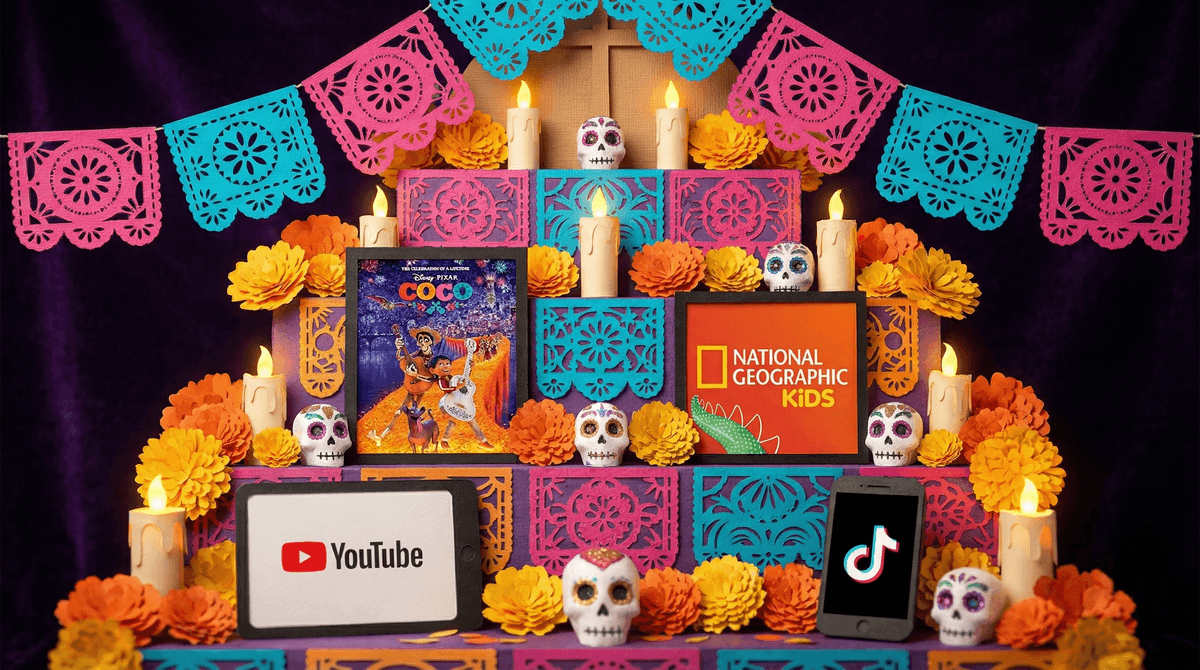
Day of the Dead (Día de los Muertos) videos have become increasingly popular across YouTube, TikTok, and streaming platforms, especially around late October and early November. These range from educational explainers about the Mexican holiday to animated movies like Coco, DIY face-painting tutorials, cultural documentaries, and yes—some truly bizarre content that uses the aesthetic without any actual cultural context.
The thing is, Day of the Dead imagery is visually striking. Sugar skulls, marigolds, colorful altars, face paint—it's all very appealing to kids. But not all Day of the Dead content is created equal. Some videos offer genuine cultural education and beautiful storytelling. Others are just using the aesthetic for clicks, mixing it with Halloween vibes in ways that can be confusing or culturally tone-deaf.
As parents, it's worth understanding what your kids are actually watching when they search "Day of the Dead" or stumble across related content—because the range is wild.
Kids encounter Day of the Dead content in a few main ways:
School projects and assignments - Many elementary and middle schools teach about Day of the Dead as part of cultural studies or Spanish class. Kids naturally turn to YouTube for research, which can lead them down some interesting rabbit holes.
Coco and similar media - Pixar's Coco introduced millions of kids to Day of the Dead traditions in 2017, and it remains hugely popular. Kids who loved the movie often seek out related content—some educational, some just capitalizing on the film's popularity.
Craft and art tutorials - Face painting tutorials, papel picado crafts, and sugar skull decorating videos are everywhere. These can be genuinely fun and creative, though quality varies wildly.
The algorithm - Let's be real: if your kid watches Halloween content in October, the algorithm will absolutely serve up Day of the Dead videos too, whether or not they're looking for them. And some of that content is... questionable.
Here's what you're dealing with:
The Good Stuff
Educational content - Channels like Crash Course Kids and National Geographic Kids have solid explainers about Day of the Dead traditions, history, and cultural significance. These are great for school projects and genuine learning.
Cultural documentaries - PBS and similar sources offer beautiful short films about real families celebrating the holiday, which can be moving and educational for kids 8+.
Coco and related quality content - Beyond the movie itself, there are behind-the-scenes videos, interviews with cultural consultants, and thoughtful discussions about the film's representation. This guide to Coco can help you explore the movie's themes with your kids.
Legitimate craft tutorials - Actual artists and cultural practitioners sharing traditional crafts, recipes, and celebration ideas.
The Problematic Stuff
Halloween mashups - Videos that treat Day of the Dead as "Mexican Halloween" or mix the traditions together without context. This isn't necessarily harmful, but it's confusing and misses the point.
Clickbait face paint tutorials - Some are fine, but many are just using sugar skull aesthetics for views without any cultural context or respect for the tradition's meaning.
Weird gaming content - Minecraft and Roblox worlds with Day of the Dead themes that have... nothing to do with the actual holiday. Some are educational, many are just aesthetic.
The truly bizarre - There's content out there that uses Day of the Dead imagery in genuinely strange or inappropriate ways. The algorithm doesn't always make good choices .
.
Ages 5-7: Stick with Coco (with you present) and very simple, parent-vetted educational videos. At this age, kids need help understanding that this is a real cultural tradition, not just pretty decorations.
Ages 8-10: Can handle more detailed educational content and documentaries. Good age for school projects. They can start to understand the concepts of honoring ancestors and different cultural approaches to death and remembrance.
Ages 11-13: Can explore more independently, but still benefit from conversations about cultural respect, appropriation vs. appreciation, and why context matters. Good age to discuss how social media can flatten complex traditions into aesthetics.
Ages 14+: Can generally navigate this content independently, but still worth checking in about what they're watching and what they're learning (or not learning) about the culture.
This is not Halloween - Day of the Dead is often conflated with Halloween because of timing and some visual similarities, but it's a distinct tradition with deep cultural and spiritual significance. It's about honoring deceased loved ones, not scary costumes.
Cultural context matters - There's a difference between learning about and appreciating a cultural tradition vs. just using its aesthetic for fun. This is a good opportunity to talk with kids about cultural appreciation vs. appropriation.
Not all "educational" content is accurate - Just because a video claims to explain Day of the Dead doesn't mean it's getting the details right. Look for content from cultural institutions, Mexican creators, or sources that cite their cultural consultants.
The face paint thing - Sugar skull face paint has become trendy, divorced from its cultural context. If your kid wants to do it for Halloween, that's a conversation worth having about when and why certain cultural expressions are appropriate.
Death and remembrance themes - Day of the Dead deals with death in a way that's different from typical American approaches. Some kids find this comforting and beautiful; others might have questions or concerns. Be ready to talk about it.
Watch together first - Especially for younger kids, preview Day of the Dead content before they dive in alone. You'll quickly spot the difference between educational and exploitative.
Use it as a teaching moment - This is genuinely a great opportunity to talk about cultural traditions, different approaches to death and remembrance, and how we can learn about cultures respectfully.
Seek out authentic voices - Look for content created by people from Mexican and Mexican-American communities who are sharing their own traditions and experiences.
Connect it to your own traditions - How does your family remember and honor people who have died? This can be a beautiful conversation about different cultural approaches to universal human experiences.
Set boundaries on the aesthetic-only content - If your kid just wants to watch sugar skull face paint tutorials with no context, that's a good place to pause and talk about why the imagery exists and what it means.
Day of the Dead videos can be a wonderful gateway to cultural education, beautiful storytelling, and meaningful conversations about how different cultures approach death and remembrance. Coco remains one of the best entry points for kids—it's genuinely moving and culturally respectful.
But the internet being the internet, there's also a lot of content that treats Day of the Dead as just an aesthetic or conflates it with Halloween in confusing ways. The key is helping kids understand the difference between learning about a cultural tradition and just consuming its visual elements without context.
This isn't about being the fun police or banning anything with a sugar skull. It's about helping kids develop cultural literacy and respect—skills they'll need as they navigate an increasingly connected world.
- If your kid loved Coco, explore this guide for discussion questions and related content
- Look for educational YouTube channels that cover cultural traditions accurately
- Talk to your kids about cultural respect online
- Consider watching a documentary about real Day of the Dead celebrations together
- If your kid has a school project, help them find sources from cultural institutions rather than random YouTube videos