

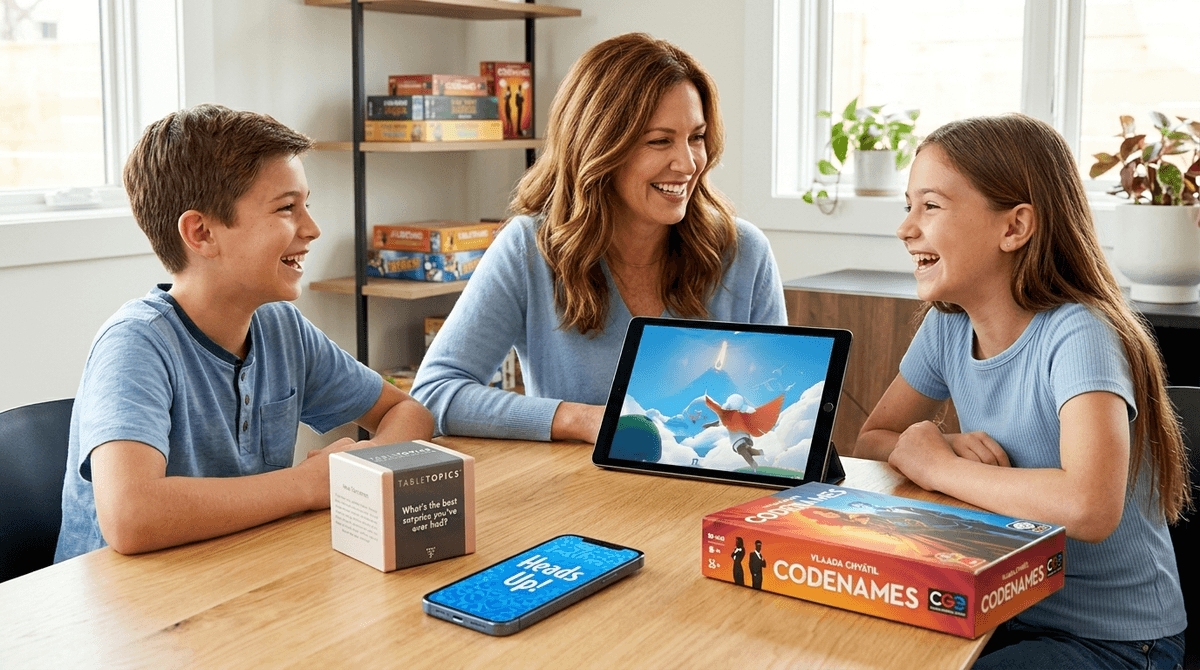
TL;DR: If you’re tired of the "How was school?" / "Fine" loop, you need a new strategy. We’re moving past the interrogation phase and into actual connection.
Top Picks for Quick Connection:
- The "No-Phone" Classic: High, Low, Buffalo
- The Dinner Table Anchor: TableTopics
- The Digital Bridge: Heads Up!
- The "Cozy" Co-op: Sky: Children of the Light
- The Logic Spark: Among Us
We’ve all been there. You’re in the car or at the dinner table, and you genuinely want to know what’s going on in that brain of theirs. You ask a standard question, and you get a standard, one-word answer. If you’re lucky, you get a shrug. If you’re unlucky, you get a "You wouldn't get it, it's an Ohio thing." (For the uninitiated: "Ohio" is Gen Alpha shorthand for "weird" or "cringey"—don't ask why, just accept that the Buckeye State has become a meme).
The reality is that kids—especially tweens and teens—often view direct questioning as a deposition. To get them talking, you have to lower the stakes. You have to make the conversation a byproduct of a game, not the main event.
At Screenwise, we see the data: about 65% of parents say their biggest digital struggle isn't just the "time" spent on screens, but the "disconnection" it creates. But here’s the secret: tech doesn't have to be the wedge. It can be the bridge. Whether you’re using a physical deck of cards or a shared iPad, the goal is the same—turning "Fine" into a story.
Conversation games aren't just about killing time in the minivan. They are "bids for connection." In developmental psychology, these are the small ways we reach out to each other. When a kid explains the lore of Skibidi Toilet to you, they aren't just talking about singing heads in toilets (as absurd as that is); they are inviting you into their world.
Using games to facilitate this does three things:
- Removes Eye Contact Pressure: For many kids, sitting face-to-face is intense. Side-by-side gaming or card-playing feels safer.
- Gamifies Vulnerability: It’s easier to answer "What’s your biggest fear?" when it’s printed on a card than when Mom asks it out of the blue over lasagna.
- Builds Digital Literacy: Playing games together allows you to model how to handle losing, how to be kind in chats, and how to spot "brain rot" content vs. quality media.
Learn more about the psychology of family digital wellness
Sometimes you just need to put the phones in the "phone jail" (or the kitchen basket) and go old school. These are the heavy hitters for the dinner table or long flights.
This is the gold standard. It’s a cube of 135 cards with questions that range from "What's the best gift you've ever given?" to "If you could have any superpower, what would it be?"
- Why it works: It’s curated. You don't have to think of the questions.
- Pro Tip: Get the "Family" version. The "Teen" version can sometimes feel a little "How do you do, fellow kids?", but the Family deck hits the sweet spot for ages 6-14.
Similar to TableTopics but often a bit more focused on emotional intelligence. It’s great for families who want to go a little deeper than "what's your favorite pizza topping."
- Ages: 7+
- The Vibe: Thoughtful, slightly more serious, but great for building empathy.
While not a "conversation starter" in the traditional sense, this is a word-association game that requires you to understand how the other people in your family think.
- The Screenwise Take: This is the best game for seeing how your kids' brains categorize information. You'll learn that they associate "Apple" with "iPhone" while you associate it with "Pie." It’s a fascinating window into their digital-first worldview.
If your kids won't put the phone down, join them. These apps are designed to be played in a group, essentially using the device as a high-tech deck of cards.
You know this one—the Ellen DeGeneres classic. One person holds the phone to their forehead, and the others shout clues.
- Why it’s great: It’s high energy. It breaks the "screen trance."
- Parental Note: It’s a great way to see what pop culture your kids actually know. If they can describe a YouTube star you’ve never heard of, that’s your opening to ask about them later.
From the same makers as Heads Up!, this is for the older crowd (Ages 10+). You make up fake answers to real trivia questions and try to "psych" your family into picking yours.
- The "No-BS" Review: It’s fun, but it does have some in-app purchases and ads that can be annoying. Keep an eye on the "decks" they want to buy.
This is a "lo-fi" game about writing anonymous letters of encouragement to real people.
You don't always need a "conversation game" to have a conversation. Some of the best talks happen while you're virtually "working" together.
This is, hands down, the most beautiful and peaceful game you can play with your child. You fly through clouds, hold hands, and solve puzzles.
- The Connection Factor: The game literally requires you to hold hands (virtually) to move through certain areas. It’s a "cozy game" that naturally leads to relaxed chatting while you explore.
Don't dismiss this as "just blocks." If you sit down and help your kid build a house in Minecraft, you are in their territory.
- The Strategy: Ask them to give you a tour of their world. "Why did you build this here?" "Who is that character?" You'll learn more about their creative process in 20 minutes of Minecraft than in a week of "How was your day?"
Read our full guide on how to actually enjoy playing Minecraft with your kids
Ages 5-8: Stick to physical games like Guess Who? or simple "Would You Rather" questions. Their attention spans are short, so keep the "games" to 10-15 minutes.
Ages 9-12 (The "Tween" Zone): This is the peak age for Roblox and Among Us. Use these games to talk about logic, lying (in the context of the game!), and online safety. This is also the best age for TableTopics.
Ages 13+: They might roll their eyes at "conversation cards." Transition to "co-op" gaming or shared media. Watch a show like The Dragon Prince or Avatar: The Last Airbender and talk about the character's choices.
When you start introducing these games, you might get some resistance. Here is how to handle it without being "extra" (another Gen Alpha term for "trying too hard"):
- Don't Force the "Lesson": If you’re playing Among Us, don’t immediately pivot to a lecture about digital footprints. Just play. The connection comes from the shared experience, not the moral of the story.
- Be a "Noob": Let your kids be the experts. If they are teaching you how to play [Brawl Stars](https://screenwiseapp.com/media/brawl-stars-app, they are in a position of power. This makes them much more likely to open up.
- Acknowledge the Absurdity: If they mention something weird like Skibidi Toilet, don't judge it. Ask, "Okay, explain the lore to me like I'm 80 years old." They love explaining things to "clueless" adults.
Connection in 2026 doesn't look like a 1950s sitcom dinner table. It’s messy, it’s often digital, and it involves a lot of weird slang. But the goal remains the same: making sure your kids know you’re interested in their world—even the parts of it that happen on a 6-inch screen.
Whether you're pulling a card from a box or holding a virtual hand in Sky: Children of the Light, you're doing the work. You're being intentional. And that is the opposite of "Ohio."
- Pick one "analog" game like TableTopics for the car or dinner table this week.
- Download one "bridge" app like Heads Up! for your next "we're bored" moment.
- Ask your kid for a "tour" of their favorite game—whether it's Roblox or Fortnite—and just listen.
Check out our guide on the best "Cozy Games" for family bonding