

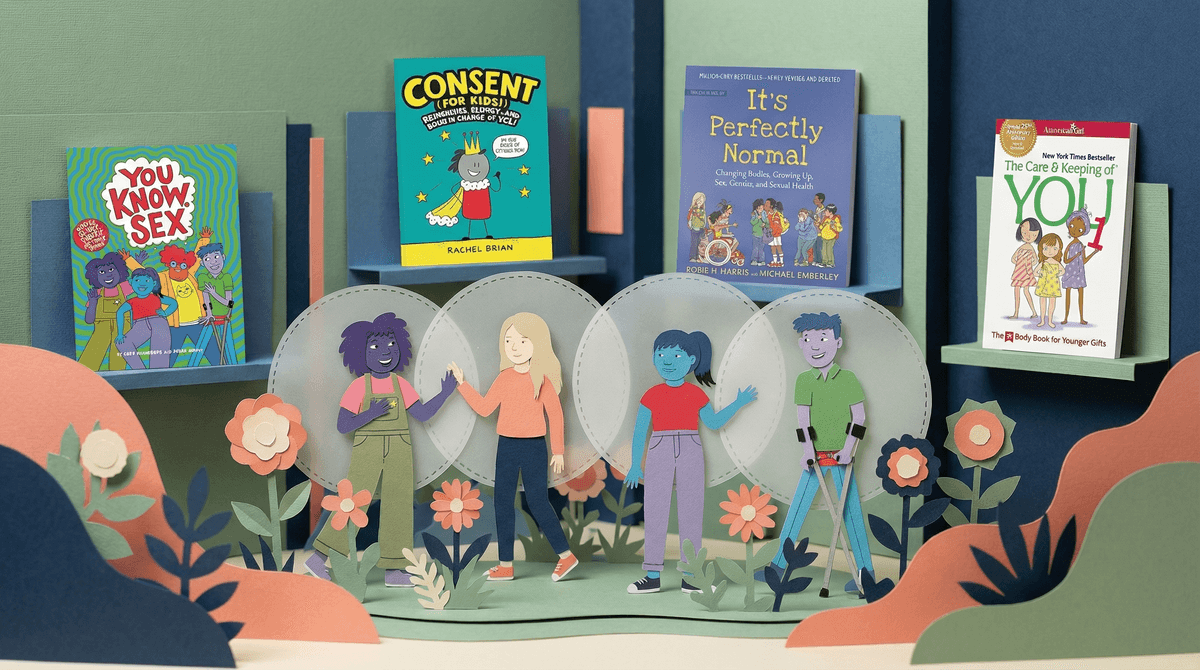
Look, talking to your tween about consent isn't just about "the talk" anymore. It's about helping them understand personal boundaries, bodily autonomy, and what healthy relationships actually look like—whether that's with friends, family, crushes, or eventually romantic partners.
Consent books for tweens are age-appropriate resources that tackle these topics without being preachy or cringe-inducing. They help kids understand that consent isn't just about sex (though that's part of it)—it's about respecting personal space, understanding that "no" is a complete sentence, recognizing when someone's uncomfortable, and knowing they have the right to set boundaries in all areas of their life.
The best books in this category don't just lecture. They use stories, real-life scenarios, and relatable characters to help tweens think through situations they're actually encountering: the friend who always wants to hug when they don't, the group chat that feels invasive, the pressure to share photos they're not comfortable with, or the confusing feelings when someone they like doesn't respect their boundaries.
Here's the reality: tweens are navigating consent issues way before most parents realize. By ages 10-12, kids are dealing with:
- Physical boundaries at school - Unwanted hugs, personal space violations, "playful" shoving that doesn't feel playful
- Digital consent - Pressure to share passwords, photos being screenshot and shared, group chats they can't leave
- Social dynamics - Peer pressure that ranges from "everyone's watching this" to more serious stuff
- Early romantic feelings - Crushes, "dating" (whatever that means in 6th grade), and figuring out what's normal
And honestly? Many tweens are already on platforms where they're encountering content and conversations about relationships, bodies, and sexuality—whether we like it or not. Snapchat, Instagram, and even Roblox have social elements where boundary violations happen.
The kids who understand consent aren't just safer—they're also more likely to speak up when something feels wrong, advocate for themselves, and treat others with respect. These aren't just "nice to have" skills. They're essential.
Here are the books that get recommended by educators, therapists, and parents who've actually used them (not just added them to a cart and forgot about them):
"You Know, Sex" by Cory Silverberg and Fiona Smyth
Ages 10+
This book is a game-changer because it doesn't assume anything about your kid's identity, body, or family structure. It talks about bodies, feelings, boundaries, and relationships in a way that's inclusive and actually readable. The illustrations are friendly (not clinical or childish), and it treats consent as the foundation of everything—not an afterthought.
What makes it great: It acknowledges that every body is different, every family is different, and that's okay. It's also explicit that sex isn't just about reproduction—it's about pleasure, connection, and choice.
Heads up: This is a real sex education book. If you're looking for something that dances around the topic, this isn't it. But if you want your kid to have accurate, shame-free information, it's excellent.
"What's Happening to My Body? Book for Girls/Boys" by Lynda Madaras
Ages 8-12
These classics have been updated to include more diverse bodies and identities, and they're still some of the most trusted resources for tweens going through puberty. The consent sections focus on bodily autonomy and understanding that your body is yours—no one else gets to touch it or comment on it without permission.
What makes it great: Comprehensive without being overwhelming. Kids can read it cover-to-cover or jump to specific chapters. The Q&A sections address real questions kids have (but might be too embarrassed to ask).
Consider: These are separated by gender, which works for some families but not others. If your kid is trans or non-binary, You Know, Sex might be a better fit.
"Consent (for Kids!)" by Rachel Brian
Ages 4-10 (but honestly, great for tweens too)
Don't let the "for kids" subtitle fool you—this book is fantastic for tweens who need a clear, no-nonsense primer on consent. It uses simple language and real scenarios to explain that consent applies to everything from hugs to tickling to sharing your stuff.
What makes it great: It's short, direct, and not awkward. You can read it together in 20 minutes and have a meaningful conversation afterward. It emphasizes that you can change your mind, that "maybe" isn't yes, and that you should always respect others' boundaries.
Pro tip: This is a great book to leave casually on the coffee table. Tweens will pick it up and read it on their own without feeling like it's A Big Deal.
"It's Perfectly Normal" by Robie H. Harris and Michael Emberley
Ages 10+
This comprehensive guide covers puberty, bodies, sex, health, and relationships—with consent woven throughout. The updated edition includes information about LGBTQ+ identities, online safety, and modern relationship dynamics.
What makes it great: It doesn't shy away from anything. Masturbation, sexual orientation, gender identity, abortion, STIs—it's all here, presented factually and without judgment.
Heads up: Some parents find the illustrations too explicit. Preview it first to make sure you're comfortable. But know that the explicitness is intentional—it helps kids recognize what they're seeing and understand what's happening to their bodies.
"The Care and Keeping of You" series by American Girl
Ages 8-12
These books focus primarily on puberty and body changes, but they include sections on boundaries, privacy, and respecting yourself and others. They're less comprehensive on consent specifically, but they're a gentle entry point for kids who aren't ready for more direct conversations.
What makes it great: Trusted brand, non-threatening format, and they normalize the idea that bodies change and that's okay. Good for kids who are anxious about puberty.
Consider: These are pretty heteronormative and gender-traditional. If you want something more inclusive, look elsewhere.
Here's the thing: buying the book is the easy part. Actually using it? That's where parents get stuck.
Some strategies that work:
1. Read it first yourself. You need to know what's in there so you're not surprised and so you can decide which sections to emphasize or skip for now.
2. Don't make it A Big Moment. Leave the book in their room or the bathroom (seriously, kids read everything in the bathroom). Let them explore it on their own first.
3. Create openings for conversation. "I saw you were looking at that book—anything you want to talk about?" or "I read something interesting in that book about boundaries. Can I tell you about it?"
4. Use it as a reference, not a textbook. You don't have to read it cover-to-cover together. Jump to relevant sections when situations come up: "Remember that chapter about saying no? This feels related."
5. Make it ongoing. Consent isn't a one-time conversation. These books should be resources you return to as your kid grows and faces new situations.
6. Be honest about your own discomfort. "This is a little awkward for me to talk about, but it's important, so let's figure it out together." Kids respect honesty.
Consent education isn't just about preventing assault. (Though yes, that's part of it.) It's about raising kids who:
- Understand their own boundaries and can articulate them
- Respect other people's boundaries without guilt-tripping or pressuring
- Recognize when something feels wrong and know they can speak up
- Understand that relationships—all relationships—should feel good and safe
Starting early matters. By the time kids are tweens, they're already forming ideas about relationships, power dynamics, and what's "normal" based on what they see around them—including online. If you're worried about what they're seeing on social media , you're not alone.
Your kid might know more than you think. They've probably already encountered conversations about consent, sex, and relationships—through friends, school, or online. Having accurate information helps them process what they're hearing.
And your kid might know less than you think. Even if they seem sophisticated, they're still kids who need guidance. Don't assume they've figured it out on their own.
You don't have to be perfect at this. Stumbling through these conversations is normal. What matters is that you're showing up and trying.
Consent books for tweens aren't about scaring kids or making them paranoid about relationships. They're about giving them the language and framework to navigate an increasingly complex social world—both online and off.
The best time to start these conversations is before your kid needs them. By the time they're in a situation where they need to set a boundary or recognize that someone's crossing theirs, you want them to already have the tools.
Start with one book. See how your kid responds. Have the awkward conversations. Normalize talking about bodies, boundaries, and respect. And remember: you're not just teaching them about consent—you're modeling it every time you respect their boundaries, apologize when you overstep, and show them that their voice matters.
- Choose a book from the list above based on your kid's age and what feels right for your family
- Preview it yourself before introducing it to your kid
- Create a judgment-free zone where questions are always welcome (even the uncomfortable ones)
- Connect it to their real life - talk about consent in the context of their friendships, online interactions, and daily experiences
- Check in regularly - this isn't a one-and-done conversation
And if you need help navigating specific situations—like how to talk about online relationships or what to do if your kid's boundaries are being violated at school—you're not alone in this.