

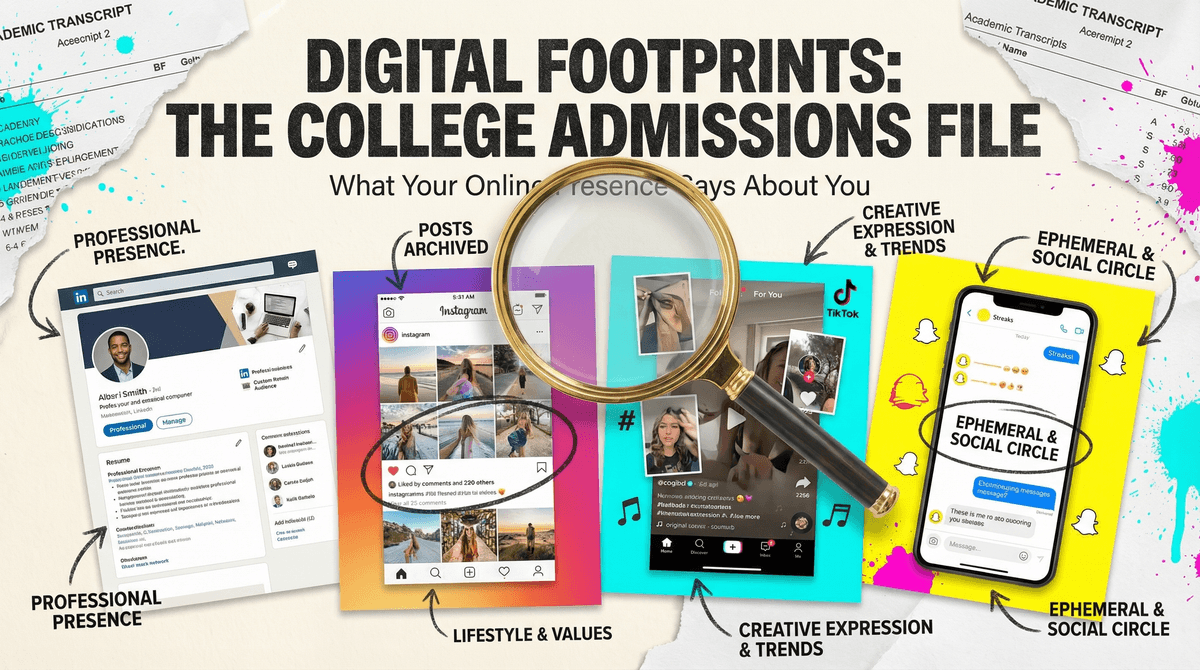
Let's cut through the panic: Yes, colleges can and do look at social media during the admissions process. But before you spiral into deleting every photo from your teen's Instagram, let's talk about what's actually happening here.
According to recent surveys, about 30-40% of admissions officers report checking applicants' social media profiles at some point in the process. That number has been pretty steady for the past few years. But here's the thing: most of them aren't actively hunting through your kid's TikTok at 2am. They're usually doing quick spot checks when something raises a flag, or occasionally when they're on the fence about a candidate.
The bigger issue? What they find can actually matter. About 1 in 3 admissions officers who check social media say they've found something that negatively impacted an applicant's chances. We're talking posts with discriminatory language, evidence of illegal activity, or content that directly contradicts what the student claimed in their application.
Your teen's digital footprint isn't going anywhere. That "joke" post from sophomore year? Still there. That comment thread where they went off about their teacher? Yep, still findable. And unlike the stupid stuff we did as teens that thankfully disappeared into the ether, their mistakes have timestamps and screenshots.
Here's what makes this particularly tricky: teens don't think like admissions officers. What seems funny or edgy or "just how everyone talks" in their friend group can read very differently to a 50-year-old reviewing applications. The disconnect is real.
Also worth noting: this isn't just about what your kid posts. It's about what they're tagged in, what they comment on, and what shows up when someone Googles their name. Understanding digital footprints is crucial here.
They're NOT expecting perfection. Admissions officers aren't scandalized by normal teenage content. Your kid posting about their Stardew Valley farm or sharing memes about finals week? Totally fine. Photos from prom, sports teams, family vacations? Not a problem.
What DOES raise red flags:
- Posts showing illegal activity (underage drinking, drug use, etc.)
- Discriminatory, racist, sexist, or hateful content
- Bullying or threatening language
- Anything that contradicts their application (claiming to be student body president when they weren't, saying they're passionate about community service while posting complaints about volunteer work)
- Inappropriate or sexually explicit content
Some colleges have also reported finding content that positively influenced their decision — like discovering impressive creative work, evidence of genuine community engagement, or insights into a student's character that supported their application.
Freshmen (Ages 14-15): Now is the time to start building good habits. This doesn't mean no social media — it means being intentional. Help them understand that college is still a few years away, but the foundation starts now. Set up privacy settings together on platforms like Instagram and Snapchat.
Sophomores & Juniors (Ages 15-17): This is when it gets real. Junior year is when many students start getting serious about college prep, and it's the perfect time for a social media audit. Sit down together (yes, it'll be awkward) and review their accounts. The rule of thumb: if you wouldn't want it projected on a screen at a college interview, it shouldn't be online.
Seniors (Ages 17-18): By application time, their social media should be pretty buttoned up. But remind them: acceptance letters can be rescinded. There have been actual cases of students losing their spots because of social media posts made AFTER acceptance. The Harvard 2017 incident where 10 students had offers rescinded for sharing offensive memes in a private Facebook group? That happened.
Start the conversation early, but don't be weird about it. This isn't about surveillance or control — it's about helping your teen understand that their online presence is part of their real-world reputation.
Do a digital audit together. Google your teen's name. See what comes up. Check their public profiles on all platforms. Look at tagged photos. This isn't snooping — do it WITH them, not behind their back.
Help them understand context collapse. That inside joke with friends doesn't have context when a stranger sees it. Talk about how online communication works differently than face-to-face.
Privacy settings matter, but they're not foolproof. Yes, set everything to private. But also understand that screenshots exist, friends' accounts might be public, and "private" doesn't mean invisible.
Consider a professional presence. Some students benefit from creating a LinkedIn profile or a simple personal website showcasing their academic work, projects, or portfolio. This can help control what appears in search results.
The goal isn't to sanitize your teen's entire online existence or make them paranoid about every post. It's about digital literacy and awareness. They need to understand that their online presence is part of how they present themselves to the world — including to colleges, future employers, and scholarship committees.
This is also a good opportunity to talk about the bigger picture: how social media affects mental health, the difference between authentic self-expression and performance, and what kind of digital citizen they want to be.
-
Have the conversation this week. Don't wait until junior year panic sets in.
-
Do a joint audit of their public profiles. Make it collaborative, not punitive.
-
Set up Google alerts for their name. This helps catch things you might not know about.
-
Review privacy settings together on all platforms they use.
-
Create a simple guideline: Before posting, ask "Would I be comfortable with a college admissions officer seeing this?" If the answer is no, don't post it.
-
Remember: this isn't just about college. These habits will serve them well for job applications, internships, and professional networking down the road.
The reality is that college admissions is stressful enough without adding social media anxiety to the mix. But a little proactive work now can prevent a lot of panic later. And honestly? Learning to manage their digital reputation is a life skill that goes way beyond college applications.