

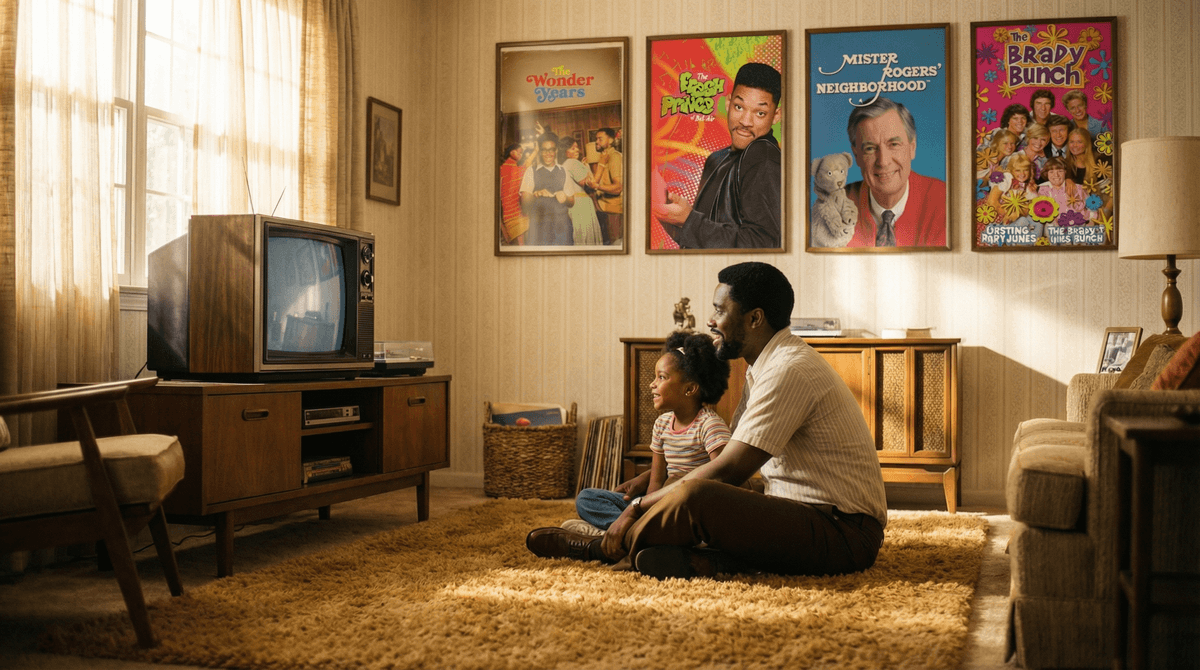
We're talking about the shows that aired before the algorithm took over—before Netflix learned your viewing habits better than you know yourself. Think The Wonder Years, Full House, Boy Meets World, The Cosby Show (yeah, we'll address that), Fresh Prince of Bel-Air, Mister Rogers' Neighborhood, Reading Rainbow, The Brady Bunch, Little House on the Prairie, and even stuff from the early 2000s like Drake & Josh or That's So Raven that now qualifies as "classic" (sorry, millennials).
These are shows that had actual episodes with beginnings, middles, and ends. They weren't designed to autoplay into infinity. They had theme songs you could sing. They dealt with problems that got resolved in 22-48 minutes. And here's the wild part: they might actually be better for your kids than half of what's algorithmically served up today.
Let's be real about what streaming has done to children's content. The sheer volume is overwhelming, the quality is wildly inconsistent, and platforms are literally designed to keep kids watching as long as possible. YouTube serves up an endless stream of content that ranges from educational to brain-melting. Netflix greenlights shows based on engagement metrics, not whether they're teaching your kid anything useful.
Classic TV offers something different: finite content with intentional pacing. When you sit down to watch The Wonder Years, that's it—there are 115 episodes total. You're not getting sucked into an infinite scroll of similar content. The episode ends, the credits roll, and there's a natural stopping point.
Plus, and this is huge: these shows give you a shared cultural reference point. When you watch Boy Meets World with your 10-year-old, you can actually talk about what you remember from watching it yourself. You can't do that with Skibidi Toilet.
Real problems with real solutions. Classic family sitcoms dealt with friendship drama, school struggles, family conflict, and growing up—but they actually resolved things. There was a lesson, even if it was corny. Compare that to a lot of modern content where conflict is just... ongoing chaos for engagement.
Slower pacing that allows processing. Old shows didn't cut every 1.5 seconds. They let scenes breathe. Kids' brains actually get a chance to follow a storyline without being overstimulated into mush.
Characters who grow and change. When you watch a show with 100+ episodes over multiple seasons, you see characters develop. Kevin Arnold in The Wonder Years literally grows from 12 to 17. That's powerful for kids to witness—especially in an age of disposable content.
Nostalgia as a conversation starter. Watching what you watched as a kid opens up stories about your own childhood. "Oh man, I remember when this episode made me cry" or "I had a friend just like that" becomes a bridge to deeper conversations.
Classic TV wasn't made for 2026 sensibilities, and that's... complicated.
Outdated attitudes about gender, race, and sexuality are real. Some shows hold up better than others. Fresh Prince of Bel-Air still feels pretty relevant. Full House has some cringe-worthy gender role stuff. And The Cosby Show? Yeah, that's a whole conversation about separating art from artist that you might not want to have with a 7-year-old.
The laugh tracks can be grating. If your kids have only watched modern comedies, the canned laughter might feel weird and forced. That's fair—it is weird and forced.
Some stuff just doesn't land anymore. Humor evolves. What was hilarious in 1992 might fall completely flat now. And that's okay! It's actually a good teaching moment about how culture changes.
The "very special episode" phenomenon. Oh boy, the heavy-handed moralizing. Some of these shows would tackle serious issues (drugs, death, discrimination) with all the subtlety of a sledgehammer. You might need to provide some context or debrief afterward.
Ages 4-7: Stick with the genuinely gentle stuff like Mister Rogers' Neighborhood, Reading Rainbow, or Sesame Street reruns. These were designed for this age and still work beautifully.
Ages 8-11: This is prime time for Boy Meets World, Full House, early seasons of The Wonder Years, and shows like Drake & Josh. The problems are relatable, the humor is clean enough, and you can watch together without cringing.
Ages 12+: You can branch into shows with more complex themes. Fresh Prince deals with class, race, and family in smart ways. Freaks and Geeks (if you count early 2000s as classic now) is phenomenal for teens. Later seasons of The Wonder Years tackle first love, Vietnam War anxiety, and growing up in ways that still resonate.
Co-watch, especially at first. You need to be there to provide context when something feels dated or problematic. "Yeah, that joke wouldn't fly today" or "Notice how the mom is always in the kitchen? What do you think about that?" These become teaching moments.
Use it as a replacement for algorithm content, not in addition to it. If your kid is already maxed out on screen time with Roblox and YouTube, adding classic TV isn't the move. But if you're trying to create healthier screen habits, replacing 30 minutes of YouTube with an episode of Boy Meets World is a genuine upgrade.
Create rituals around it. "Friday night is classic TV night" gives it special status. It's not just more content—it's a family thing. Make popcorn. Commit to one show at a time. Watch the episodes in order.
Talk about what's different. Make it a game: "What's different about how this family solves problems compared to how we do?" or "How would this episode be different if it was made today?" This builds media literacy while you watch.
Don't force it. If your kid genuinely hates it, that's okay. Not every kid will vibe with content from decades ago, and that's not a failure. The goal is to offer alternatives to algorithm-driven content, not to make them love your childhood.
Most of these shows are scattered across streaming services now. Hulu has a decent classic TV library. Paramount+ has a lot of old Nickelodeon content. Some are on Disney+. You might need to search around or—controversial opinion—actually buy a season on Apple TV or Amazon if it's something you really want to watch together.
Physical media is also making a comeback for exactly this reason. Owning the DVDs means you control when and how it's watched, no subscription required.
Classic TV isn't a magic solution to screen time struggles, but it offers something genuinely different from what dominates kids' screens today: intentional storytelling with natural endpoints, shared cultural experiences, and content that wasn't designed by an engagement algorithm.
Is it perfect? No. Will your kids initially resist watching something that looks "old"? Maybe. But if you're looking for screen time that actually creates conversation, teaches something, and doesn't just feed the algorithm beast, classic family TV is worth considering.
Think of it this way: would you rather your kid watch 30 minutes of The Wonder Years where they see a character navigate a difficult friendship situation with real emotional depth, or 30 minutes of autoplay YouTube where they watch someone react to someone else reacting to a video game?
Yeah, thought so.
Start with one show you loved as a kid. Watch the first episode yourself to make sure it holds up and isn't more problematic than you remember. Then pitch it to your kid as "something I used to watch—want to see if it's as good as I remember?"
If they're into it, great. If not, try another one. The goal isn't to force nostalgia on them—it's to offer an alternative to the infinite scroll that actually has a beginning, middle, and end.
And hey, if you want to explore more alternatives to algorithm-driven content, check out our guides on screen-free activities or learn about shows with actual educational value.