

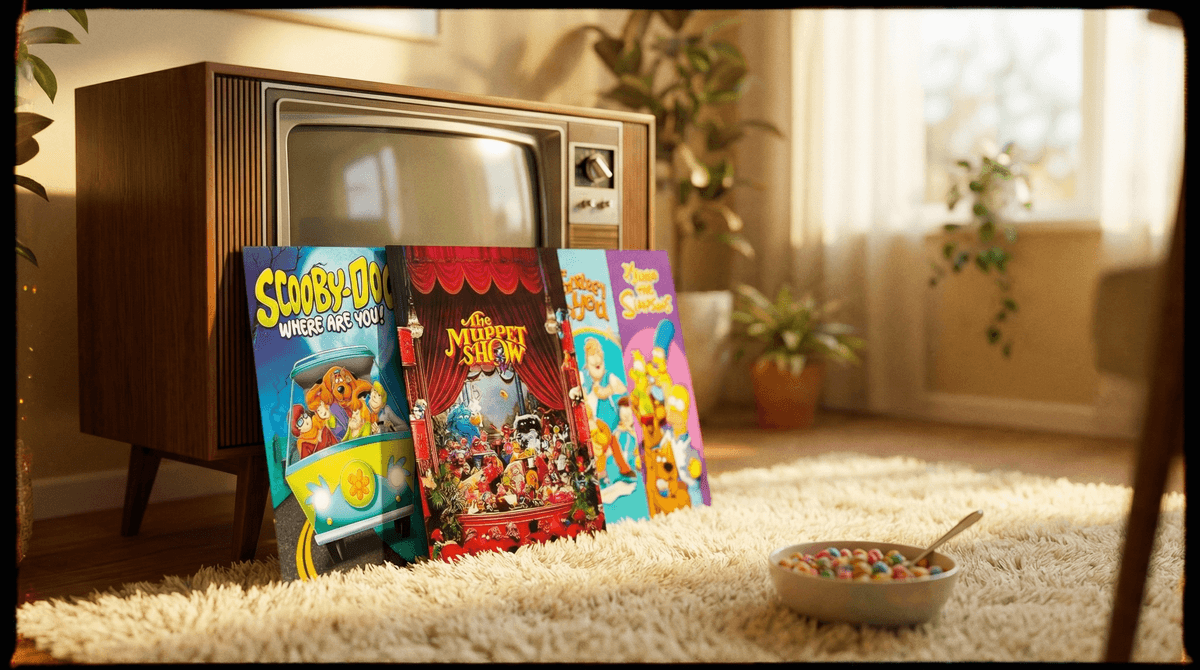
We're talking about the animated shows that defined childhoods before streaming existed—the ones you actually remember the theme songs to, where you had to wake up early on Saturday mornings or race home after school to catch them. Think Looney Tunes, Tom and Jerry, Scooby-Doo, The Muppet Show, and the golden age of Disney and Pixar films.
These aren't just nostalgia bait (though that's definitely part of the appeal). Classic cartoons represent a different era of animation—often hand-drawn, sometimes gloriously weird, and created before algorithms decided what kids should watch next. They're the shows that taught us about timing, slapstick, and that anvils are apparently very common household items.
The question isn't whether these shows hold up—many absolutely do. The question is: which ones are actually worth sharing with your kids, and how do you navigate the occasional... let's call them "product of their time" moments?
Shared cultural language. When your kid understands a Bugs Bunny reference, suddenly half of internet memes make more sense. These cartoons are embedded in our cultural DNA, and sharing them gives you common ground.
Different pacing and storytelling. Classic cartoons move differently than modern shows. There's often less dialogue, more physical comedy, and storylines that wrap up in 7 minutes. It's actually refreshing compared to the hyper-stimulating, rapid-cut style of a lot of current kids' content.
Legitimately good animation and music. The craftsmanship in classic Disney films, the timing in Looney Tunes, the character design in classic Hanna-Barbera—this stuff was made by people who were inventing the medium. Kids who watch Spirited Away or The Iron Giant are seeing what animation can be at its finest.
A break from the algorithm. These shows weren't designed to maximize watch time or trigger autoplay binges. They're finite, they end, and then you're done. Revolutionary concept, I know.
Let's be honest: not everything from your childhood is worth revisiting. Some shows were always bad, and some have aged like milk. But here are the genuine winners:
Looney Tunes (Ages 5+) — The timing, the music, the sheer creativity of these shorts is unmatched. Yes, there are some episodes with outdated stereotypes (you can skip those), but the vast majority are just brilliantly constructed comedy. The Bugs vs. Elmer Fudd opera episode? Chef's kiss.
Tom and Jerry (Ages 4+) — Almost entirely wordless physical comedy. Kids understand it immediately, and honestly, the violence is so cartoonish it's less concerning than a lot of modern action shows. Just stick with the classic era (1940s-1950s) and avoid some of the later, cheaper productions.
Scooby-Doo, Where Are You! (Ages 6+) — The original series is genuinely fun. The formula is predictable (it's always a guy in a mask), but that predictability is actually comforting for kids. Plus, it's a great introduction to mystery-solving and critical thinking. Skip some of the later reboots though—they get progressively weirder and less charming.
The Muppet Show (Ages 5+) — This variety show format is so unique, and the humor works on multiple levels. Kids laugh at the slapstick and silly songs, adults catch the clever wordplay and celebrity guest interactions. It's genuinely good entertainment.
Classic Disney films — The Lion King, Aladdin, Beauty and the Beast, Mulan (the animated versions, not the remakes) remain spectacular. The music, the animation, the storytelling—these are masterclasses in filmmaking. Ages vary by film, but generally 5-6+ for most.
Early Pixar — Toy Story, Finding Nemo, The Incredibles, WALL-E—these aren't just good kids' movies, they're good movies, period. The storytelling is sophisticated, the emotional beats are real, and they respect kids' intelligence.
Avatar: The Last Airbender (Ages 7+) — Okay, this is more recent (mid-2000s), but it's already a classic. Incredible world-building, character development, and storytelling that builds across three seasons. If your kid hasn't seen it, this is essential viewing.
Studio Ghibli films — My Neighbor Totoro, Kiki's Delivery Service, Spirited Away—these films are magical, beautifully animated, and offer a completely different sensibility than Western animation. They're slower-paced, more contemplative, and absolutely worth introducing to kids. Ages 5-8+ depending on the film.
Let's not sugarcoat it: some classic cartoons contain racist, sexist, or otherwise offensive content. Warner Bros. literally has a disclaimer before some Looney Tunes episodes acknowledging this.
Here's how to handle it:
Skip the obviously bad ones. You don't need to show your kid every single episode. There are curated collections that remove the most problematic content. Use them.
Context matters. If something questionable comes up, pause and talk about it. "This cartoon was made a long time ago, and people didn't understand how hurtful that was. We know better now." Kids can handle this conversation.
Don't overthink the cartoon violence. A coyote falling off a cliff in a Looney Tunes short is fundamentally different from realistic violence. Kids understand the difference between cartoon physics and reality. The research backs this up—slapstick cartoon violence doesn't lead to aggressive behavior the way realistic violence can.
Ages 3-5: Stick with gentler content like Mister Rogers' Neighborhood, Sesame Street, My Neighbor Totoro, or Winnie the Pooh (the classic Disney version).
Ages 5-7: Tom and Jerry, Looney Tunes, The Muppet Show, most classic Disney films.
Ages 8+: Avatar: The Last Airbender, more complex Pixar films like Up or Inside Out, Studio Ghibli's deeper films like Spirited Away.
Classic cartoons aren't automatically better than modern content—there's plenty of excellent stuff being made right now (looking at you, Bluey). But they offer something different: a connection to your own childhood, a different style of storytelling and animation, and a break from algorithm-driven content.
The best approach? Mix it up. Let your kids discover Gravity Falls and Hilda alongside The Iron Giant and Looney Tunes. Watch together when you can—not because you need to monitor everything, but because sharing these moments is genuinely fun.
And when your kid finally gets why you randomly say "What's up, Doc?" in a Brooklyn accent, you'll know you've done your job.
Want more specific recommendations? Check out our guides on best animated movies for kids, cozy shows for family viewing, or alternatives to YouTube for kids.