

Here's something I've noticed: in a world where we're constantly monitoring screen time and debating whether Roblox is educational or just expensive, we sometimes forget that physical books are also media—just the analog kind. And unlike that $40 LEGO set that gets built once and shoved under the bed, certain books become part of your family's emotional infrastructure.
The books worth buying repeatedly aren't necessarily the ones with the fanciest illustrations or the most awards. They're the ones kids reach for again and again, the ones that spark conversations at bedtime, the ones that teach empathy without feeling like a lesson, and the ones that grow with your child as they age.
Think of them as the opposite of YouTube autoplay—instead of passive consumption, these stories invite kids to pause, think, and feel.
Before we dive into specific titles, let's acknowledge the elephant in the room: kids are reading less for pleasure than they used to. Studies show that recreational reading has declined significantly, especially as kids hit middle school and smartphones become ubiquitous. By age 13, about 95% of kids have access to a smartphone, and suddenly books are competing with TikTok, Discord, and endless group chats.
But here's what's interesting: kids who grow up in homes with physical books—books they can see on shelves, touch, and claim as their own—tend to develop stronger reading habits. It's not about being anti-screen; it's about creating a rich media ecosystem where books have a visible, valued place.
The books worth buying (not just borrowing from the library) become anchors. They're the ones you want your kid to be able to grab at 3am when they can't sleep, or rediscover at age 14 and see with completely new eyes.
Ages 3-7: Building Empathy and Emotional Vocabulary
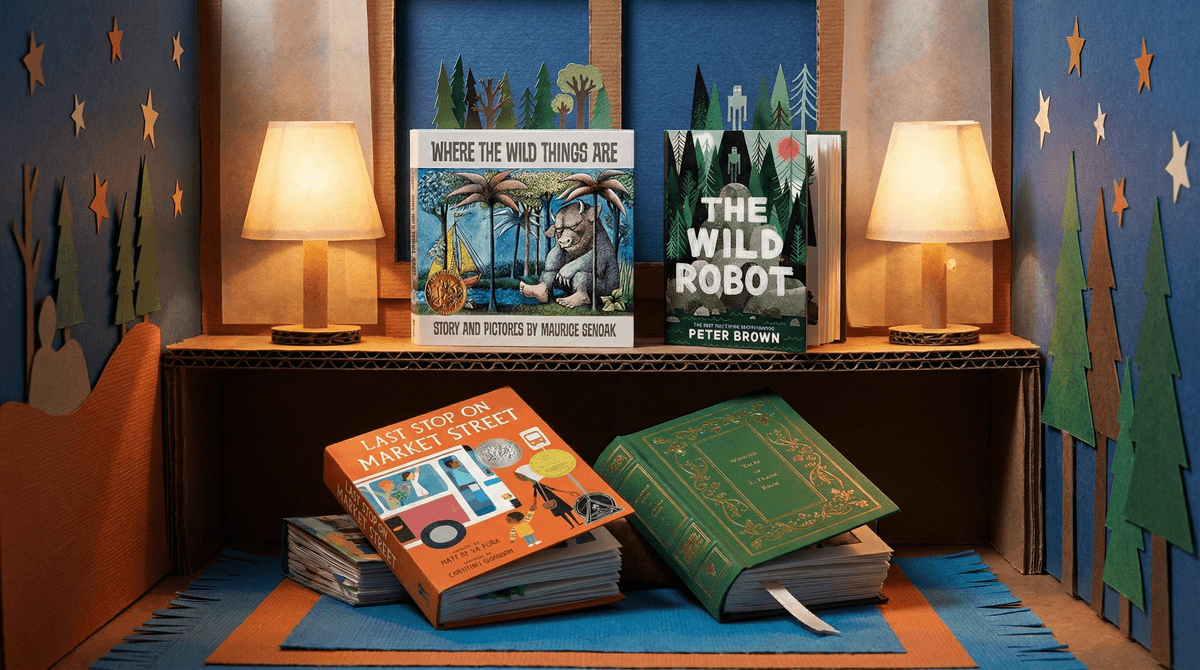
Where the Wild Things Are by Maurice Sendak – This one teaches kids that anger is normal, imagination is powerful, and home is where someone keeps your dinner warm. The emotional complexity here is real.
The Giving Tree by Shel Silverstein – Controversial take incoming: this book is worth owning precisely because it's complicated. As kids age, their interpretation shifts from "the tree loves the boy" to "wait, is this about healthy boundaries?" That evolution is the point.
Last Stop on Market Street by Matt de la Peña – Teaches kids to notice beauty and humanity in everyday places, and introduces economic diversity without being heavy-handed. Essential.
Ages 6-10: Expanding Perspective
Wonder by R.J. Palacio – If you have an elementary schooler, you probably already know about this one. It's genuinely good at teaching kids to consider multiple perspectives and understand that everyone's fighting battles you can't see. The movie is fine, but the book lets kids sit with Auggie's internal experience longer.
The Wild Robot by Peter Brown – A robot learning to be part of a natural ecosystem? It's basically a masterclass in adaptation, belonging, and what it means to be "different." Plus it's actually exciting enough that kids who claim they "hate reading" will often get hooked.
Esperanza Rising by Pam Muñoz Ryan – Immigration, class, resilience, and historical context wrapped in a compelling story. This is one kids can read at 9 and then revisit at 13 with completely different comprehension.
Ages 9-13: Developing Critical Thinking
The Giver by Lois Lowry – Still hits different. Utopia vs. freedom, the cost of "protecting" people from pain, memory and identity. In an age where kids are already thinking about what information they're being shown (hello, algorithm awareness), this book gives them a framework for those bigger questions.
Hatchet by Gary Paulsen – Survival story that's really about resourcefulness, resilience, and what happens when all the digital safety nets disappear. Weirdly relevant for kids who've never been truly alone or bored.
Brown Girl Dreaming by Jacqueline Woodson – Memoir in verse about identity, family, and finding your voice. The poetry format makes it accessible even for reluctant readers, and the themes are timeless.
The books listed above share some key characteristics:
They age with your child. A 6-year-old and a 12-year-old will get completely different things from The Giving Tree. That's not a bug, it's a feature.
They spark conversations. Unlike a lot of Netflix content that's designed to be consumed and forgotten, these books almost demand discussion. "Why do you think he did that?" becomes natural.
They build emotional vocabulary. Kids are navigating complex social dynamics online and offline. Books give them language for feelings they might not have words for yet.
They're reference points. When your kid is dealing with something hard—feeling left out, facing a big change, struggling with fairness—you can say "remember when Esperanza..." and suddenly you have shared language.
In a media landscape where YouTube Kids and Minecraft are competing for your child's attention (and often winning), investing in physical books isn't about being anti-technology. It's about diversifying your family's media diet.
The books worth buying again and again are the ones that become part of your family's emotional and intellectual foundation. They're the ones you gift to other families, replace when they fall apart from love, and eventually send with your kid to college.
Start with one or two from this list. See which ones your kid gravitates toward. And remember: the goal isn't to eliminate screens—it's to make sure books have a fighting chance in the attention economy.
Build it into the routine. Even 15 minutes of reading before bed makes a difference. It's the analog version of setting app time limits —you're creating intentional space for a specific type of media.
Let them see you read. Kids who see parents reading physical books are more likely to value them. Model the behavior you want to see.
Make books visible. Keep them where kids can reach them, not packed away in closets. Accessibility matters.
Don't force it. Some kids are readers, some aren't—yet. But having these books available means they're there when the moment strikes.
Want to think more about balancing digital and analog media in your home? Screenwise can help you understand your family's media habits in context with your community and values.