

Let's be real: "cartoons for kids" used to mean Saturday morning TV with commercials for sugary cereal. Now it means an infinite scroll of options across Netflix, Disney+, Hulu, Max, Apple TV+, YouTube, and whatever other streaming service launched this week. And unlike the days when you could confidently put on Sesame Street and walk away, today's animation landscape ranges from genuinely brilliant storytelling to what can only be described as algorithmic fever dreams.
The good news? There's never been more high-quality animation available for kids. The bad news? There's also never been more low-effort content designed purely to keep eyeballs glued to screens. And telling the difference isn't always obvious from the thumbnail.
Here's what you're actually dealing with:
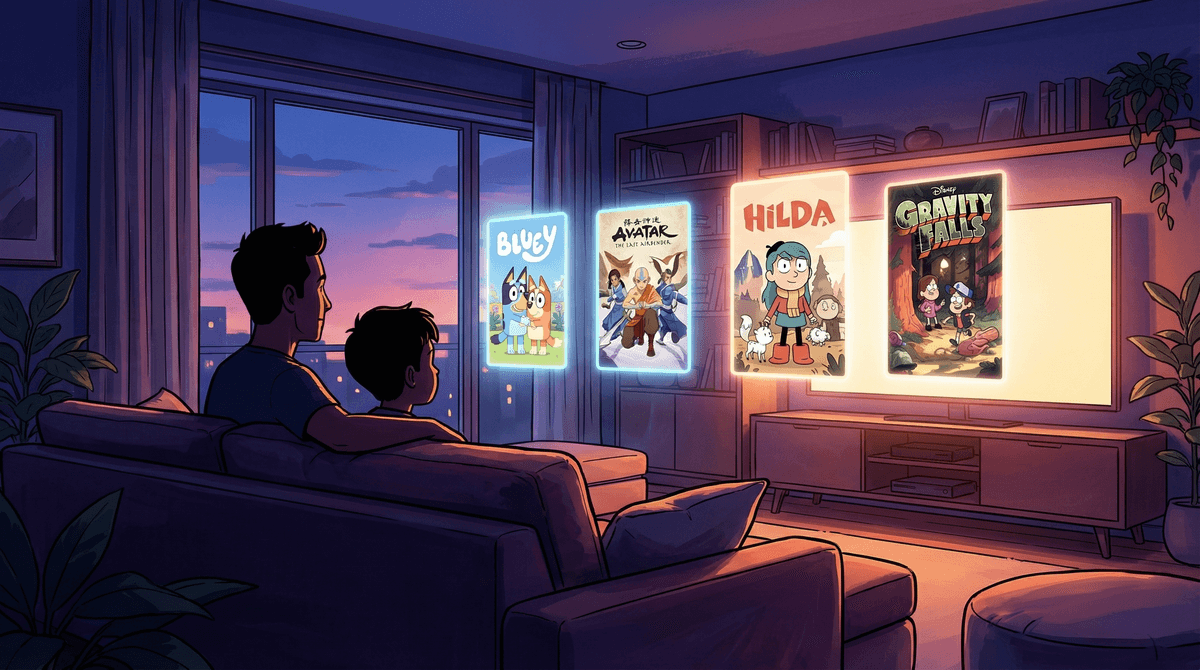
The Gold Standard Shows that parents and kids both genuinely enjoy: Bluey (obviously), Avatar: The Last Airbender, Gravity Falls, Hilda, The Owl House. These have actual plots, character development, and jokes that land for adults too.
The Solid Mid-Tier that won't make you want to leave the room: Pokemon, My Little Pony, The Amazing World of Gumball, Teen Titans Go (divisive, but self-aware about being chaotic).
The Educational Stuff that actually works: Octonauts, Wild Kratts, Numberblocks, StoryBots. Your kid might actually learn something, and these aren't torture to have on in the background.
The Brain Rot Category that you need to know about: Those weird YouTube animations with millions of views, bizarre Elsagate-adjacent content, low-effort shows that are just toy commercials with a plot, and anything where characters just scream at each other for 22 minutes straight. You know it when you see it—your kid is zombified, and you feel your soul leaving your body.
Ages 2-5: You want slow pacing, clear lessons, minimal overstimulation. Daniel Tiger's Neighborhood and Bluey are the MVPs here. Puffin Rock is genuinely soothing. Avoid anything with fast cuts, loud noises, or content that moves faster than their developing brains can process.
Ages 6-8: They can handle more complex plots now. Avatar: The Last Airbender, Hilda, Kipo and the Age of Wonderbeasts, Carmen Sandiego. These have actual story arcs and characters who grow. Some mild peril is fine—kids this age can distinguish fantasy from reality.
Ages 9-12: They're ready for more sophisticated animation. The Owl House, Gravity Falls, The Dragon Prince, Arcane (on the older end, and definitely preview first—it's TV-PG but intense). These shows tackle real themes: identity, loss, growing up, moral complexity.
The Teen Years: At this point, they're watching actual TV shows and anime, not "cartoons." Arcane, Castlevania, Invincible (very violent, FYI), and whatever anime their friends are into. Your role shifts from gatekeeper to conversation partner about what they're watching.
The Autoplay Trap: Your kid starts with Bluey, and somehow 47 minutes later they're watching someone's weird Minecraft roleplay video. Disable autoplay. Seriously.
"Kids" Doesn't Mean "Good for Kids": YouTube Kids and the kids' sections of streaming services aren't perfectly curated. Stuff slips through. The algorithm doesn't care about your family's values—it cares about watch time.
The Toy Commercial Problem: Some shows exist purely to sell merchandise. Paw Patrol isn't going to harm your kid, but it's not exactly enriching content either. If every episode ends with your kid wanting a new toy, you're watching a 22-minute ad.
Violence and Humor Levels: Some cartoons have surprisingly intense violence (The Clone Wars) or adult humor that goes over kids' heads but might not align with your family (Regular Show, Adventure Time). Preview first episodes of new shows when possible.
The Representation Question: Modern animation is way more diverse and inclusive than the cartoons we grew up with. The Owl House has LGBTQ+ characters. Encanto centers a Colombian family. Turning Red is about a Chinese-Canadian girl going through puberty. This is good, actually—kids benefit from seeing different families, cultures, and identities represented.
Co-watch when you can. Not every second of every show, but enough to know what's happening. You'll catch things—good and bad—that you'd miss otherwise.
Use the parental controls that actually exist. Netflix, Disney+, and other services let you set age restrictions and create kids' profiles. Use them. Learn more about streaming parental controls.
Have a "screen time ends with" rule, not just a timer. "You can watch until this episode ends" works better than a timer that goes off mid-show and causes a meltdown.
Make a list of pre-approved shows. Put the mental work in once, then your kid can choose from the approved list. Reduces the "can I watch this?" negotiations every single time.
Check Common Sense Media ratings. They're not perfect, but they're a solid starting point for age-appropriateness and content warnings.
Not all cartoons are created equal, and "it's animated" doesn't automatically mean it's for kids. The best shows respect children's intelligence, tell actual stories, and don't just exist to sell toys or farm watch time.
Your job isn't to be the fun police—it's to be the curator. You're building your family's media diet the same way you think about food. Some shows are nutritious, some are treats, and some are just empty calories that leave everyone feeling worse.
Next Steps:
- Audit what your kids are actually watching this week
- Set up age-appropriate profiles on your streaming services
- Pick 2-3 new shows to try from the recommendations above based on your kid's age
- Explore more age-appropriate show recommendations
- Have a conversation with your kid about why you're making changes, not just imposing new rules
And remember: putting on a cartoon so you can make dinner in peace doesn't make you a bad parent. It makes you a human trying to survive. Just make sure it's Bluey and not whatever cursed content the algorithm is pushing today.