

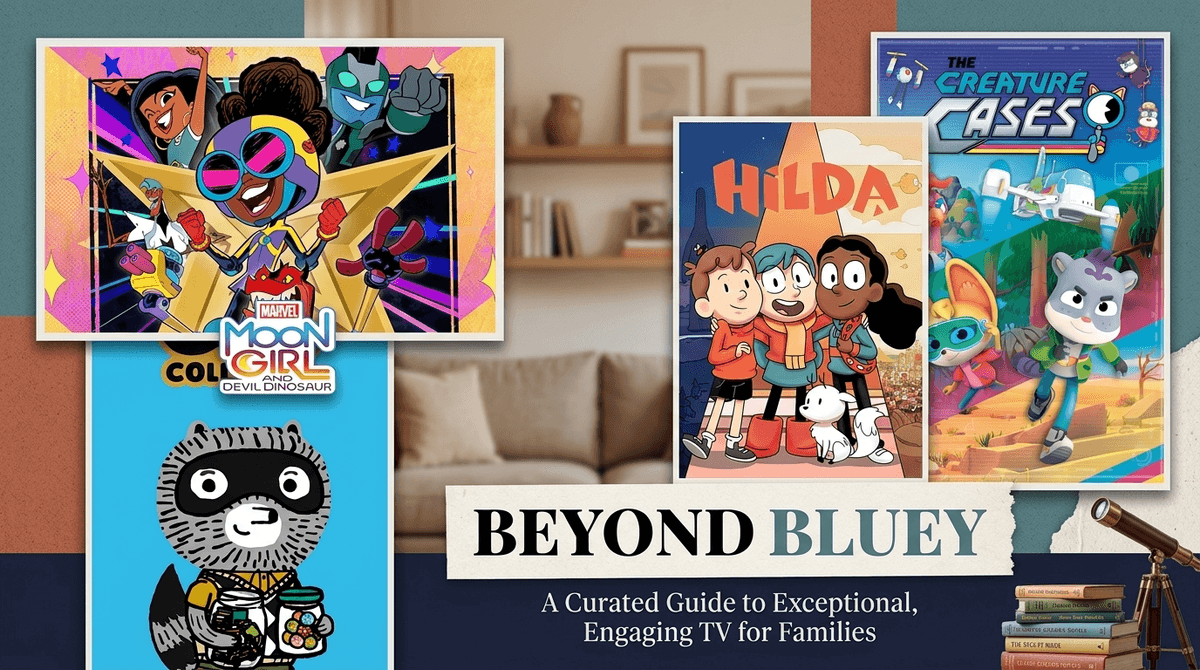
TL;DR: The 2026 "No-Brain-Rot" Watchlist
If you’re tired of Bluey on a loop or terrified that your kid is one YouTube autoplay away from a "Skibidi Toilet" marathon, here are the best shows to stream right now that actually respect your child’s intelligence:
- Best for Preschoolers: Carl the Collector (PBS Kids) – Neurodiversity-forward and genuinely sweet.
- Best for Creative Minds: Lyla in the Loop (PBS Kids) – Teaches strategic thinking without being a "school" show.
- Best for Nature Lovers: Creature Cases (Netflix) – Like Octonauts but with a sleuthing vibe that 6-year-olds obsess over.
- Best for Older Kids (8+): Moon Girl and Devil Dinosaur (Disney+) – High-energy, visually stunning, and actually has a soul.
- Best for Family Night: The Wild Robot (Note: While it started as a movie/book, the spin-off content is top-tier).
Get recommendations based on your kid's favorite games
We’ve all been there. You need twenty minutes to start dinner or finish an email, so you hand over the remote. But then you look up and your kid is entranced by a neon-colored YouTube video of a faceless hand opening surprise eggs, or worse, a "brain rot" compilation where the audio is just distorted screaming.
It’s 2026, and the battle for our kids' attention spans is getting weirder. Between the "Ohio" memes and the relentless pull of Roblox, finding a TV show that actually offers a narrative—rather than just a dopamine hit—feels like a full-time job.
The good news? We are currently in a bit of a "Golden Age" for intentional kids' programming. Creators have realized that parents are burnt out on CoComelon (which, let’s be honest, is basically digital candy) and are looking for shows that foster emotional intelligence, curiosity, and actual humor.
"Brain rot" isn't just a funny term kids use for weird internet subcultures; it describes high-stimulation, low-substance content designed to keep kids in a trance. If a show has fast cuts every 1.5 seconds, constant shouting, and no discernible plot, it’s likely overstimulating your kid’s developing brain. This leads to the "iPad Kid" meltdown the second the screen turns off.
The shows listed below are the "slow-burn" winners. They have pacing that allows for reflection, dialogue that sounds like actual humans (or relatable animals) talking, and themes that stick.
This is the breakout hit of the last year. Carl is an autistic raccoon who loves collecting things. What makes this show incredible is that it doesn't treat neurodiversity as a "special episode" topic—it's just who Carl is. It helps kids understand that everyone’s brain works a little differently, all while being genuinely funny and gentle.
If you want your kid to start thinking like a coder or a problem-solver without actually sticking them in front of a Scratch tutorial, Lyla is your girl. The show focuses on "computational thinking"—basically, how to break big problems into small, manageable pieces. It’s empowering and features a fantastic, supportive family dynamic.
StoryBots has been around for a while, but the newer Answer Time episodes remain the gold standard for educational TV. It answers the "Why?" questions that drive parents crazy (Why is the sky blue? How do cell phones work?) with cameos from celebrities that actually make the parents laugh, too.
Check out our guide on why StoryBots is better than YouTube "Kids Learning" channels
Lunella Lafayette is a 13-year-old super-genius living in the Lower East Side. This show is a vibe. The soundtrack is incredible, the art style is heavily influenced by graffiti and comic books, and the stories deal with real-world issues like gentrification and anxiety alongside the "fighting bad guys with a T-Rex" stuff.
Think X-Files but for the elementary school set. Sam Snow (a detective leopard) and Kit Casey (a kit fox) solve mysteries involving real animal facts. It’s fast-paced enough to keep kids who are used to YouTube engaged, but it’s actually teaching them biological science.
If your family loved The Wild Robot by Peter Brown, you need to watch Hilda. It’s a beautiful, slightly moody show about a girl who moves from a magical wilderness to a walled city. It deals with themes of environmentalism, friendship, and the fear of the unknown. It’s one of the few shows that kids and parents can truly enjoy together without anyone checking their phone.
At this age, kids usually want to migrate toward MrBeast or Fortnite streams. To keep them engaged with scripted content, you need high stakes and high production value.
The TV adaptation of the Percy Jackson books is miles better than the old movies. It’s a great "bridge" show for kids who are starting to feel "too old" for cartoons but aren't ready for the heavy themes of TV-MA dramas.
This is the sequel to Camp Cretaceous. It’s surprisingly dark and sophisticated for a "kids" show. It deals with conspiracy theories, loss, and growing up, all while featuring dinosaurs. It’s great for the kid who thinks they’ve seen everything.
When you're picking a show in 2026, don't just look at the age rating. A "TV-Y7" rating can apply to a show that is essentially a 22-minute toy commercial, or a show that is a deeply moving story about grief.
Ask yourself these three questions:
- The Dialogue Test: Are the characters constantly screaming or using "slop" language (meaningless catchphrases)? If yes, skip it.
- The Pacing Test: Does the show have quiet moments? If a show is afraid of 10 seconds of silence, it’s designed to overstimulate.
- The "After-Show" Test: How does your kid act when you turn it off? If they are aggressive or "zoned out," that show is likely high-cortisol content that isn't doing them any favors.
Learn more about how high-stimulation media affects dopamine in kids
You’ll notice most of these recommendations are on Netflix, Disney+, or PBS Kids. That’s intentional. While there is "good" content on YouTube, the platform's algorithm is designed to lead your child toward the most sensationalist, high-energy content possible.
If your kid is asking for "Skibidi Toilet" or "Ohio Rizz" videos, they aren't being "bad"—they're just participating in the current playground currency. However, as the parent, you can frame "Show Time" as something different. Tell them, "YouTube is for quick clips, but this show is a story we’re following."
You don't have to be the "No Screens" parent to be an intentional parent. The goal isn't to ban TV; it's to curate a digital diet that doesn't leave your kid's brain feeling like mush.
Move past the Bluey phase (it’s okay to admit you’re tired of Bandit’s perfection!) and introduce something with a little more meat on the bones. Whether it’s the neurodivergent-friendly world of Carl the Collector or the high-flying action of Moon Girl, there is plenty of "anti-brain-rot" content out there.
- Audit the Watchlist: Go into your Netflix/Disney+ profiles and "dislike" or hide the shows that drive you crazy (goodbye, Blippi).
- The One-Episode Rule: Tell your kid you’ll watch one episode of their choice if they watch one episode of your choice. Start with Creature Cases or Hilda.
- Talk About the "Why": If they ask why they can't watch certain YouTube channels, be honest. "That show is designed to make your brain feel tired and cranky. I want us to watch things that make us feel curious."