

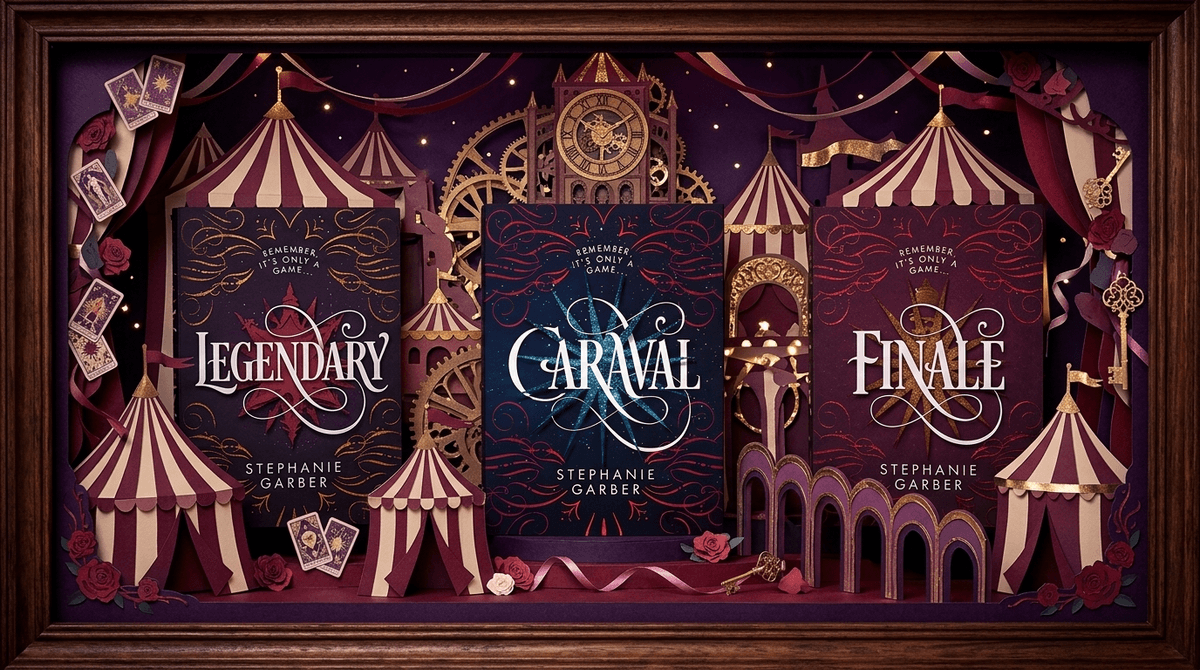
Caraval is the definitive 12-and-up "gateway" fantasy—it has the atmosphere of a Tim Burton movie and the romantic tension of a CW drama, but it manages to keep the heaviest "spice" off-page. If your kid is asking for it, they’ve likely seen the "aesthetic" posts on BookTok, and while the vibes are dark and the romance is front-and-center, it is significantly tamer than the "New Adult" titles usually shelved next to it.
TL;DR: Caraval is a safe, high-quality pick for readers 12 and up who are ready to move past middle-grade fantasy into something more atmospheric and romantic. It’s a "closed-door" series, meaning the romance is heavy on tension and longing but light on graphic content. For more age-appropriate picks, check out our best books for kids list.
If you feel like you’re seeing the covers of Caraval, Legendary, and Finale every time you walk into a bookstore, you aren't imagining it. Stephanie Garber’s trilogy is a pillar of "clean" YA (Young Adult) fantasy. It’s the kind of series that builds a massive following because the world-building is lush and the stakes feel life-or-death, but it doesn't cross into the explicit territory of "BookTok books" like A Court of Thorns and Roses.
The story follows two sisters, Scarlett and Tella, who escape their abusive father to participate in Caraval—a once-a-year legendary performance where the audience participates in a magical game. The catch: nothing is quite what it seems, and the line between the game and reality is razor-thin.
For a parent, the "age rating" question usually comes down to three things: the romance, the "dark" magic, and the emotional intensity.
In the world of modern YA, parents often hear terms like "spice" or "smut" thrown around. Caraval sits firmly in the "closed-door" or "fade-to-black" category.
There is a lot of romantic tension. There are swoony descriptions, intense eye contact, and plenty of kissing. However, when things head toward the bedroom, the scene ends or the chapter breaks. It’s romantic and evocative without being clinical or graphic.
If your kid is 11 or 12 and starting to show interest in romance, this is actually a great "level up" from middle-grade stories where the most you get is a shy hand-hold. It treats the characters' feelings with weight and seriousness without handing the reader a manual they aren't ready for.
The "scary" factor in Caraval isn't about gore or jump scares. It’s psychological. The game master, Legend, is a master of manipulation. Characters are often forced to choose between their desires and their family, or they’re tricked into believing things that aren't true.
There is some violence—magical duels, some blood, and mentions of suicide in the backstory—but it’s handled with a fantasy sheen. It feels more like a Grimm’s Fairy Tale than a gritty modern thriller. The biggest "watch-out" for younger or more sensitive readers is the theme of emotional abuse from the sisters' father in the beginning of the first book. It’s the catalyst for their journey, but it’s a heavy note to start on.
If you have a kid who loves the idea of Caraval but finds the "purple prose" (very descriptive, flowery writing) a bit of a slog, the Caraval audiobook is a fantastic move.
We talk a lot about how literacy is multi-stranded. While your kid isn't "decoding" text with their eyes, they are building the language comprehension strand of the reading rope. Garber’s vocabulary is sophisticated—words like ephemeral, labyrinthine, and nefarious pop up constantly. Hearing those words in context while following a high-stakes plot is genuine literacy practice. It builds the background knowledge and syntax they’ll need when they tackle even harder classics in high school.
If your kid is already deep into the trilogy, don't just ask "is it good?" Ask about the mechanics of the world. The best part of Caraval is the "game" aspect.
Questions to start a conversation:
- If you were in the game, would you be able to tell what’s real and what’s a performance?
- Why do you think Scarlett is so protective of Tella, even when Tella makes choices Scarlett hates?
- The characters often have to pay for things using emotions or secrets instead of money. What’s the "cost" of magic in this world?
These questions move the conversation away from "is this book okay for you?" and toward "I’m interested in what you’re thinking about."
Once they finish the trilogy, they’re going to want more. Here is the move:
- The Night Circus by Erin Morgenstern: This is the "grown-up" version of Caraval. It’s atmospheric, magical, and sophisticated. It’s technically an adult novel, but it’s very clean and perfect for a teen who loved the "magical competition" vibe.
- Once Upon a Broken Heart: This is a spin-off series by the same author. It’s slightly more romantic, but stays in that same 12-14+ sweet spot.
- The Cruel Prince by Holly Black: If they want more "political" magic and a bit more edge, this is the gold standard for YA faerie stories.
For more tailored ideas, see our digital guide for middle school.
Q: What age is Caraval appropriate for?
The sweet spot is 12 to 14. Younger readers (10-11) can certainly handle the text, but they might find the heavy focus on romantic longing and psychological mind games a bit boring or confusing. High schoolers still enjoy it for the aesthetic and world-building.
Q: Is there "spice" in Caraval?
No. Caraval is a "closed-door" romance. There is plenty of tension and kissing, but no explicit sexual content. It’s much tamer than many of the other books currently trending on TikTok.
Q: Are there any content warnings for Caraval?
The primary ones are emotional and physical abuse by a parent (mostly off-page or in the past), mentions of suicide, and some fantasy violence involving blood and magical injuries. It’s dark in "vibe," but not graphic in execution.
Caraval is a win for intentional parents. It’s a compelling, high-vocabulary series that gets kids excited about reading physical books again. It deals with mature themes like sacrifice and sisterhood without forcing kids into adult content before they’re ready. If your middle schooler wants to join the circus, let them.
