

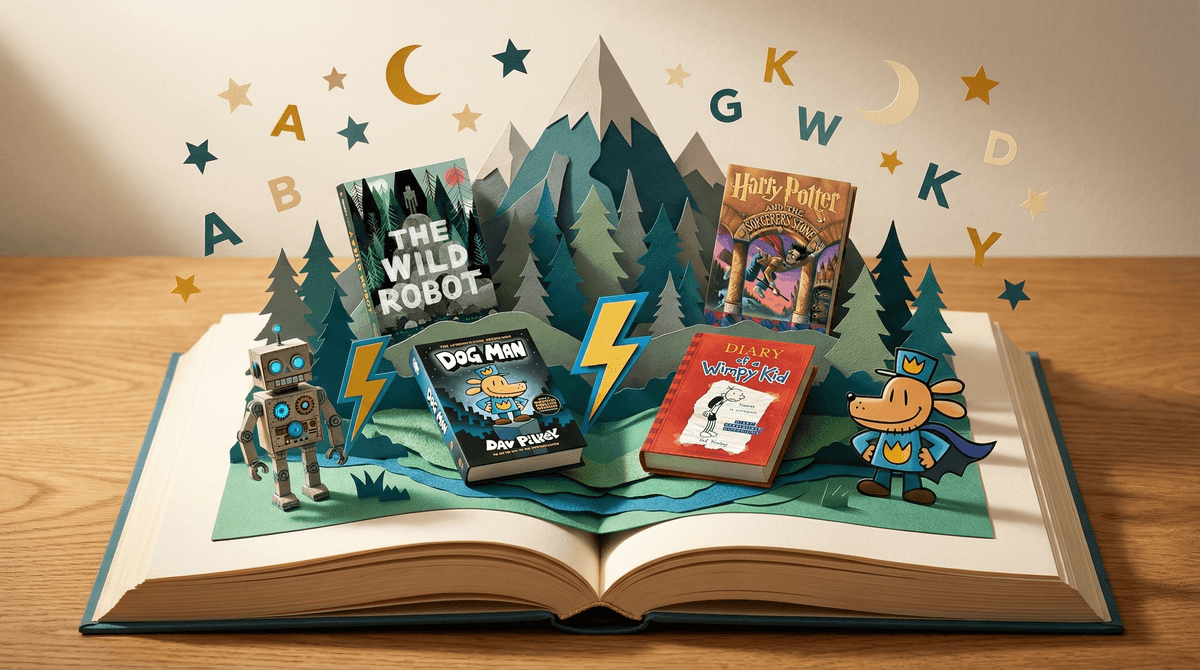
Third grade is when reading really clicks for a lot of kids. They're finally past the painful sounding-out phase, and suddenly books become portals instead of homework. The sweet spot for most 8-9 year olds is that transition from early readers to actual chapter books—stories with real plots, characters they care about, and enough pages to feel accomplished when they finish.
But here's the thing: third grade reading levels are all over the map. You might have one kid devouring Harry Potter while their classmate is still working through Dog Man. Both are totally normal. The goal isn't to push them up some arbitrary ladder—it's to find books they'll actually want to read.
Third grade is make-or-break for reading habits. Kids who enjoy reading at this age tend to keep reading. Kids who associate books with frustration or boredom? They're the ones who'll tell you in high school that they "just don't like reading."
The research is pretty clear: volume matters more than difficulty. A kid who reads ten "easy" books they love will become a better reader than one who slogs through two "challenging" books they hate. So if your third grader wants to reread Diary of a Wimpy Kid for the fifth time instead of trying something new, that's honestly fine.
Also worth noting: this is the age where kids start having real opinions about what they read. They're developing taste. Some want funny, some want scary, some want realistic, some want pure fantasy. Honor that.
Here's what's working right now with this age group:
Graphic Novels (yes, they count as real reading):
- Dog Man series by Dav Pilkey - Silly, bathroom humor, easy wins
- The Bad Guys series - Reluctant readers love these
- Amulet series by Kazu Kibuishi - More complex, beautiful art
- Hilo series - Robot kid adventures, genuinely funny
Chapter Book Series (the gateway drug to real reading):
- Magic Tree House - Still going strong, 60+ books, educational without being preachy
- Who Was/What Was series - Biography-style, great for history-loving kids
- Junie B. Jones - Controversial because of the grammar, but kids love her
- The Wild Robot by Peter Brown - Absolutely beautiful, works for a range of levels
Books That Build Empathy:
- Wonder by R.J. Palacio - Third grade is the perfect age for this
- Fish in a Tree by Lynda Mullaly Hunt - About a kid with dyslexia
- Because of Winn-Dixie by Kate DiCamillo - Classic for a reason
For Kids Ready for Something Meatier:
- Percy Jackson series - Greek mythology, adventure, humor
- Frindle by Andrew Clements - Short but smart, about a kid who invents a word
- Charlotte's Web - If they haven't read it yet, now's the time
Reading level vs. interest level: Just because a book is at their reading level doesn't mean it's interesting to them. And just because a book seems "too easy" doesn't mean it's not valuable. If they're reading it, it's doing its job.
The audiobook question: Some parents worry that audiobooks are "cheating." They're not. Audiobooks build vocabulary, comprehension, and love of stories. If your kid will listen to Percy Jackson on audio but won't touch the physical book, that's a win. You can always encourage them to follow along with the text if you want to sneak in some visual reading practice.
Screen time guilt: Look, if your kid is choosing to read Dog Man over playing Roblox, that's a parenting victory. Don't overthink it.
Representation matters: Third graders are noticing who gets to be the hero in stories. If your kid never sees themselves reflected in books, or only sees the same types of kids as protagonists, that sends a message. Mix it up.
For 8-year-olds (early third grade): Focus on shorter chapter books (80-150 pages), lots of illustrations, clear plots. Series are your friend because once they like the characters, they'll keep going. Magic Tree House, Mercy Watson, Ivy and Bean.
For 9-year-olds (late third grade): They can handle more complex plots, longer books (150-300 pages), and stories that deal with real emotions. Wonder, The One and Only Ivan, early Harry Potter.
Content considerations: Third grade books generally avoid graphic violence, romance, and heavy topics like abuse or death (though some do touch on loss in age-appropriate ways). If you're unsure about a book's content, Common Sense Media is your friend.
The best book for your third grader is the one they'll actually read. Full stop.
If that's graphic novels, great. If that's the same series over and over, fine. If that's nonfiction books about sharks or space or weird historical facts, perfect. The goal is to build the habit and the love of reading, not to check boxes on some curriculum.
That said, if your kid is stuck or frustrated, or if they're avoiding reading altogether, that might be worth a conversation with their teacher. Sometimes there's an underlying issue (vision, comprehension, dyslexia) that needs support.
Create a reading routine that's not homework: 20 minutes before bed, reading on the couch while you read your own book, audiobooks in the car. Make it normal, not a chore.
Library trips: Let them pick their own books, even if you think the choices are questionable. Ownership matters.
Model reading: Kids who see adults reading tend to read more themselves. Your doomscrolling Instagram doesn't count, unfortunately.
Don't force it: If they hate a book, let them quit. Life's too short for books you don't like, and forcing them to finish sends the wrong message about reading.
And hey, if you need more specific recommendations based on your kid's interests, Get recommendations based on your kid's interests —it's actually pretty good at this stuff.