

Sixth grade is where reading gets real. Like, really real. You've got kids who just discovered fantasy epics and will devour 800 pages in a weekend, and you've got kids who think reading is a form of medieval torture. Sometimes these are the same kid depending on whether they picked the book or their teacher did.
Here's the thing about sixth graders: they're not little kids anymore, but they're also not quite teens. They're dealing with middle school drama, changing friend groups, and bodies that are doing weird things. They can handle complex themes, but they still need books that respect where they actually are in life. The right book at this age can turn a reluctant reader into a lifelong reader. The wrong book? That's how you get a kid who "just doesn't like reading."
Sixth grade is the crossroads. Research shows that kids who aren't reading regularly by the end of sixth grade often don't catch up. But it's also the year when reading can click for kids who've struggled before, especially if they find books that actually speak to them.
The problem? This is when schools often assign "the classics" that were written for a completely different generation. Look, I'm not saying The Old Man and the Sea is bad, but if your kid is already skeptical about reading, Hemingway might not be the gateway drug we're hoping for.
What sixth graders need are books that:
- Respect their intelligence without talking down to them
- Reflect their actual concerns (friendship drama, fitting in, identity)
- Move fast enough to compete with TikTok and YouTube
- Offer windows and mirrors (stories about kids like them AND different from them)
Let's talk about the elephant in the room: your kid who says they hate reading but will read Discord messages and Roblox chat for hours. They don't hate reading. They hate being forced to read things that bore them to tears.
For reluctant readers, try:
- Graphic novels - Yes, they count as real reading. Smile by Raina Telgemeier and the Amulet series are gateway drugs to longer books.
- Short, punchy books - Restart by Gordon Korman is under 250 pages and moves like a TV show.
- Books about their actual interests - Gaming? Warcross by Marie Lu. Sports? Ghost by Jason Reynolds. YouTube drama? Eliza and Her Monsters by Francesca Zappia.
The goal isn't to get them reading Tolstoy by December. The goal is to prove that reading can be as engaging as their favorite screen time.
If your kid already loves reading, sixth grade is when you can start introducing more complex narratives and themes. These kids are ready for:
- Percy Jackson series - If they haven't read it yet, this is the year. Mythology, humor, and a protagonist with ADHD who's actually the hero.
- The Giver by Lois Lowry - Dystopian but not gratuitously violent. Great for conversations about conformity and choice.
- Wonder by R.J. Palacio - Empathy-building without being preachy. Multiple perspectives, real middle school dynamics.
- Hatchet by Gary Paulsen - Survival story that keeps even reluctant readers hooked.
Sixth grade is tricky because kids mature at wildly different rates. Some are ready for books that touch on heavier themes (divorce, death, identity), while others still want straightforward adventures.
Here's a framework: Look for books that introduce complex themes through age-appropriate lenses.
For example:
- Refugee by Alan Gratz deals with war and displacement, but through three distinct, accessible narratives
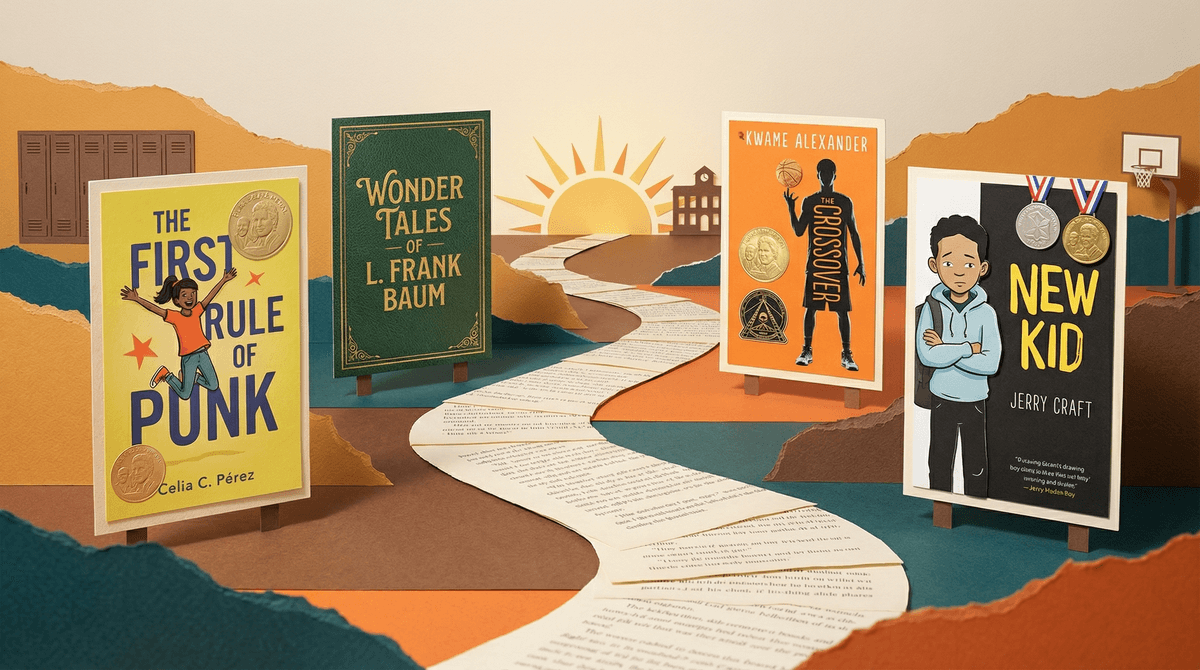
- New Kid by Jerry Craft tackles racism and code-switching through the everyday experience of middle school
- The Crossover by Kwame Alexander explores family, ambition, and loss through basketball and verse
Most importantly: read the book yourself or check reviews before handing it over. Not because you're censoring, but because you want to be ready for conversations. If your kid reads about a character dealing with depression, you want to be able to talk about it.
One underrated hack for sixth grade: find a series they love and let them binge it. Yes, even if it means reading the same type of book over and over.
- Wings of Fire - Dragons with complex political systems. 15+ books to keep them busy.
- Keeper of the Lost Cities - Fantasy with a strong female protagonist. 9+ books and counting.
- Land of Stories - Fairy tale retellings that get progressively more complex.
Series reading builds stamina and confidence. Once they've proven to themselves they can finish long books, they're more willing to try standalone novels.
Sixth graders are forming their understanding of the world. Make sure their reading list includes:
- Protagonists of different races, cultures, and backgrounds
- Different family structures (single parents, same-sex parents, multigenerational households)
- Characters with disabilities who aren't inspiration porn
- International settings and perspectives
This isn't about being "woke" (ugh, that term). It's about showing kids that there are infinite ways to be human. Books like Front Desk by Kelly Yang (Chinese-American immigrant experience) or The First Rule of Punk by Celia C. Pérez (Mexican-American identity) do this naturally, without feeling like homework.
"Does it count if they listen to it instead of reading it?"
Yes. Full stop.
Audio books are reading. They're processing narrative, building vocabulary, engaging with story structure. If your kid will listen to Harry Potter on audio but won't touch the physical book, that's a win.
Some kids are auditory learners. Some have reading challenges that make physical books exhausting. Some just like multitasking (listening while they draw or play Minecraft). All of these are valid.
Stop making it a battle. Seriously. The fastest way to kill a love of reading is to turn it into a chore with rewards and punishments.
Instead:
- Let them choose - Even if they pick something you think is "too easy" or "not literary enough"
- Create reading time - Not "you must read for 30 minutes," but family reading time where everyone reads their own thing
- Model it - They need to see you reading actual books, not just your phone
- Talk about books - Not in a "what's the theme?" way, but in a "what did you think about when the main character did that?" way
- Visit bookstores and libraries - Let them browse, discover, get excited about covers and back-cover descriptions
The best book for your sixth grader is the one they'll actually read. Whether that's a graphic novel about a kid with anxiety, a fantasy epic about dragons, or a realistic fiction book about middle school friendship drama, what matters is that they're engaging with narrative, building empathy, and proving to themselves that reading can be as compelling as any screen.
Don't stress about whether they're reading "the right" books or books at "the right level." Sixth grade is about building the habit and the love. The literary analysis can come later.
If your kid isn't reading: Start with graphic novels or books about their specific interests. Make a bookstore trip and let them choose three books with zero judgment from you.
If your kid loves reading: Introduce them to book communities (Goodreads for kids, book clubs at school or library) where they can talk about what they're reading with other kids who get it.
If you're not sure what they'd like: Check out guides for specific genres and themes or ask a librarian. School and public librarians are criminally underused resources who literally specialize in matching kids with books.
And remember: every reader is different. Your kid's reading journey won't look like their sibling's or their friend's or the kid in the Instagram post about the 11-year-old who's already read all of Dickens. That's okay. That's actually the point.