

Let's be real: in a world where toddlers can navigate an iPad better than most adults can work their TV remote, getting preschoolers excited about physical books can feel like you're competing with the entire internet. But here's the thing—books for this age group (roughly 3-5 years old) aren't just about reading. They're about snuggling up together, pointing at pictures, making silly voices, and building the foundation for literally everything that comes after.
The best preschool books hit a sweet spot: simple enough that kids can follow along, engaging enough that they actually want to, and rich enough in language that they're building vocabulary without realizing it. We're talking board books that can survive a juice spill, picture books with illustrations so good you want to frame them, and stories that you won't want to throw out the window after reading them 47 times in a row.
Look, no judgment if Bluey has been your co-parent this week. But books do something screens can't quite replicate for this age group. When you read together, kids learn that those squiggly lines on the page mean something. They start to understand that stories have a beginning, middle, and end. They build attention span in a way that's totally different from passive watching.
Plus—and this is huge—reading together is one of the few times in modern parenting where you're both doing the exact same thing at the exact same pace. No notifications. No multitasking. Just you, them, and a story about a mouse who wants a cookie or whatever.
Research consistently shows that kids who are read to regularly have larger vocabularies, better listening skills, and stronger emotional regulation. They're also more likely to become readers themselves, which matters because reading ability is basically the gateway to every other academic skill.
Not all books are created equal, and at this age, you want to look for:
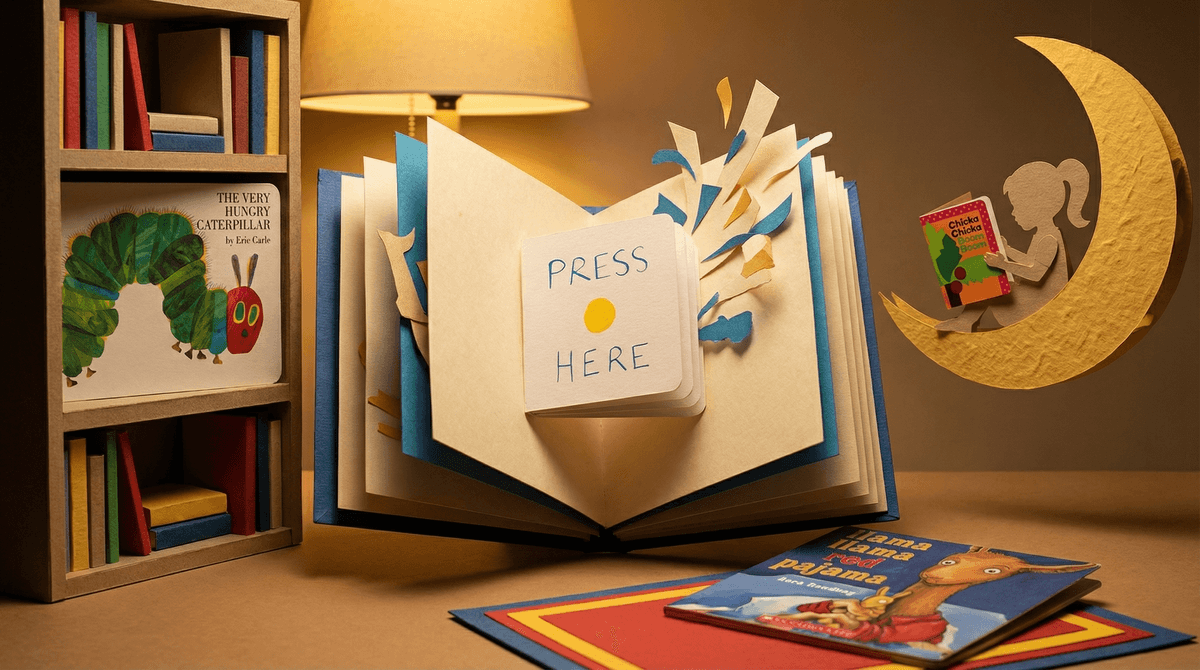
Engaging illustrations: Preschoolers are still very visual learners. Books like The Very Hungry Caterpillar or anything by Oliver Jeffers work because the pictures tell as much of the story as the words do.
Repetition and rhythm: Kids this age LOVE predictability. Books with repeated phrases (Brown Bear, Brown Bear, What Do You See?) or rhyming text (Chicka Chicka Boom Boom) let them "read" along even before they know how to read.
Relatable themes: Potty training, starting school, making friends, dealing with big feelings—preschoolers are navigating a LOT of new experiences. Books that mirror their lives help them process what's happening. Llama Llama Red Pajama is basically a masterclass in separation anxiety.
Interactive elements: Lift-the-flap books, touch-and-feel textures, or stories that ask questions keep little hands and minds engaged. Press Here by Hervé Tullet is pure magic for this reason.
Ages 2-3 (Toddler/Early Preschool) These kids are still building basic concepts and might have the attention span of a goldfish. Go for:
- Board books with minimal text
- Books about everyday routines
- High-contrast, bold illustrations
- Indestructible formats (because they WILL chew on them)
Ages 3-4 (Mid Preschool) Now we're getting somewhere. They can follow simple plots and might start having favorite books:
- Picture books with simple narratives
- Books with repeated phrases they can chant along with
- Stories about feelings and social situations
- Silly humor (potty jokes are peak comedy right now)
Ages 4-5 (Pre-K) These kids are ready for more complex stories and might even start recognizing some letters:
- Longer picture books with more detailed plots
- Early reader books for kids showing interest in decoding
- Books that ask questions or have problems to solve
- Stories with diverse characters and experiences
The goal isn't to read 47 books a day. It's to make reading a cozy, consistent part of your routine. Here's what actually works:
Pick a time that already exists: Before nap, after bath, while dinner is cooking. Don't try to create a whole new time slot—you're busy enough.
Let them choose (within reason): Give them 2-3 options so they feel ownership but you don't end up reading the same book about construction vehicles for the 900th time. Though honestly, if that's what they love, lean into it.
Make it cozy: Blankets, special reading spots, stuffed animals as "audience members"—whatever makes it feel special and not like a chore.
Don't finish every book: If they're not into it, move on. The goal is to build positive associations with books, not to power through because you started.
Library cards are your friend: Preschoolers have strong opinions that change weekly. The library lets you rotate books without spending your entire paycheck at the bookstore.
Okay, so apps like Epic! have thousands of kids' books, and tablets can read stories aloud. Are they terrible?
Not necessarily. But here's the deal: interactive e-books with games and sounds can actually distract from the story. Kids end up playing with the features instead of following the narrative. If you're going digital, look for simple e-book versions that basically replicate the physical book experience.
That said, nothing beats a physical book at this age. The tactile experience of turning pages, the lack of notifications or other apps calling to them, and the fact that YOU have to be present to make it work—these all matter.
Not every book that's marketed to preschoolers is actually good for them:
- Books that talk down to kids: Preschoolers are smarter than we give them credit for. They can handle complex vocabulary and nuanced emotions.
- Overly didactic stories: Books that are basically just lessons with characters slapped on top tend to fall flat. Kids can smell a lecture from a mile away.
- Books you hate: If you can't stand reading it, your kid will pick up on that energy. Life's too short for bad children's books.
- Books with scary content marketed as "funny": Some books try to be edgy but end up just being nightmare fuel. Trust your gut.
Getting preschoolers into books isn't about raising the next great novelist or hitting some developmental benchmark. It's about creating a quiet space in a loud world where you connect, where language becomes play, and where stories become a shared experience.
Some kids will be obsessed with books from day one. Others will need more convincing. Both are totally normal. The key is consistency without pressure, variety without overwhelm, and making it feel like something you do together because it's nice, not because it's homework.
And hey, if you need to throw on Bluey after reading time so you can make dinner in peace? That's not failure. That's just called parenting in 2026.
Ready to build your preschooler's library? Check out our guide to building a home library on a budget or explore alternatives to screen time for rainy days. And if you want personalized book recommendations based on your kid's specific interests and reading level, Get book recommendations based on your kid's specific interests and reading level —we can help you find exactly what will work for your family.