

Fifth grade is that sweet spot where kids are transitioning from "learning to read" to "reading to learn" — and if we're being honest, this is where we either hook them on books for life or lose them to screens forever.
The best books for fifth graders (typically ages 10-11) hit a very specific target: they're sophisticated enough to match their growing brains, fast-paced enough to compete with YouTube, and tackle themes that matter to kids navigating friendships, identity, and their place in the world. We're talking books with real stakes, complex characters, and plots that don't treat kids like babies.
This isn't about assigned reading or "classics" that make kids groan. This is about finding books that make a fifth grader say "just one more chapter" at bedtime, books they'll actually talk about with friends, books that prove reading can be just as engaging as binge-watching The Last Airbender for the third time.
Fifth grade is a critical inflection point. Kids are developing their identities as readers — or non-readers. They're old enough to pick their own books, which means if we hand them the wrong ones, they'll just... stop reading.
The data is pretty clear: kids who aren't hooked on reading by middle school tend to stay that way. Meanwhile, screens are getting more sophisticated, more engaging, and more designed to capture attention. Books have to compete with Roblox, TikTok (which yes, some fifth graders are already on despite the age restrictions), and YouTube's infinite scroll.
But here's the thing: fifth graders still WANT to read. They want stories that feel grown-up, that don't talk down to them, that deal with real emotions and real problems. They want characters who feel like people they could know. They want to laugh, cry, and stay up past bedtime because they can't put a book down.
Let's talk about what's actually working with this age group:
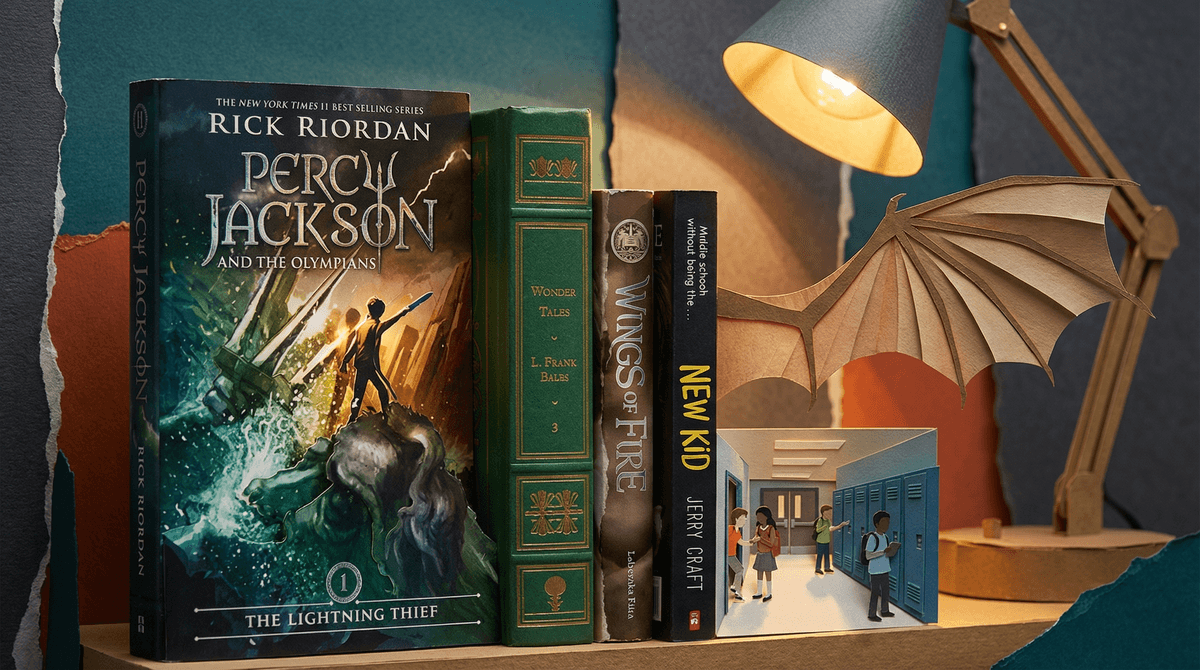
Percy Jackson remains the gold standard. Rick Riordan figured out the formula: take a kid who doesn't fit in, give them a secret power, add mythology and humor, keep the chapters short and the stakes high. The entire Percy Jackson universe (Greek, Roman, Egyptian, Norse) is catnip for fifth graders.
Wonder by R.J. Palacio hits different in fifth grade than it does in third or fourth. At this age, kids are dealing with real social dynamics, cliques, and the cruelty of middle school looming ahead. This book sparks conversations about empathy, difference, and choosing kindness — without being preachy about it.
The Hunger Games is technically for older readers, but many fifth graders are ready for it, especially by spring. Yes, it's violent. Yes, it's dystopian. But it's also about a girl who protects her sister, fights an unjust system, and doesn't wait for adults to fix things. Talk to your kid about the themes before handing it over, but don't automatically say no.
Graphic novels are real books, full stop. Dog Man, Amulet, Smile, and New Kid are getting kids to read who might otherwise bail on traditional chapter books. The storytelling is sophisticated, the art is incredible, and they count as reading. Don't be a snob about this.
Some books are perfect for reading together or discussing after your kid finishes:
Hatchet by Gary Paulsen — A survival story about a boy alone in the wilderness after a plane crash. Great for kids who love adventure and problem-solving. Also: zero screens involved in the plot, which is kind of refreshing.
Fish in a Tree — About a girl with dyslexia who's been hiding it by acting out. Excellent for any kid who feels "different" or struggles in school, and opens conversations about learning differences.
Ghost by Jason Reynolds — A kid with a complicated home life finds purpose in running. The whole Track series is fantastic, deals with real issues (poverty, trauma, family struggles) without being heavy-handed.
The Giver — A classic dystopian that introduces big questions about freedom, memory, and conformity. Perfect for kids ready to think about "why do we have rules?" in a deeper way.
For the reluctant reader who "hates reading":
- Diary of a Wimpy Kid still works (yes, even in fifth grade)
- I Survived series (historical disasters, short chapters, high stakes)
- Who Would Win? books (yes, they're younger, but they're reading)
For the kid who devours fantasy:
- Wings of Fire series (dragons with complex societies and politics)
- Keeper of the Lost Cities (elves, telepathy, mystery)
- Fablehaven (magical preserve with creatures)
For the kid ready for more complex themes:
- Number the Stars (Holocaust, but age-appropriate)
- Brown Girl Dreaming (memoir in verse about growing up Black in the 1960s-70s)
- Refugee (three refugee stories across different time periods)
Series are your friend. If your kid finds one book they love, they'll read 8 more just like it. This is not a problem. Let them binge the entire Wings of Fire series. Reading momentum matters more than variety.
Audio books count. If your kid absorbs stories better by listening during car rides or before bed, that's reading. The comprehension and vocabulary benefits are the same.
Let them read "below their level." If your advanced reader wants to re-read Dog Man for the fifth time, that's fine. Reading for pleasure is different than reading for school. Sometimes comfort reading is exactly what they need.
Don't force the classics. Treasure Island and Little Women are great books, but they're not necessarily great books for every fifth grader right now. Meet kids where they are.
Talk about what they're reading. Not in a "quiz them to make sure they understood" way, but in a "what do you think about that character's choice?" way. Make reading social. Let them tell you about the plot. Act interested even when they're explaining the entire lore of a fantasy world.
The goal isn't to create a fifth grader who reads only award-winning literature. The goal is to create a fifth grader who chooses to read when they have free time, who sees reading as entertainment and not just homework, who develops the habit of getting lost in a story.
In a world where Minecraft and YouTube and group chats are constantly competing for attention, books need to earn their place. The right book at the right time can do that. It can create a reader for life.
So hit the library, let your kid browse, don't judge their choices too harshly, and celebrate when they find a book they can't put down. That's the win.
Take your kid to the library or bookstore and let them choose. Yes, even if they pick something you think is "too easy" or "not literary enough."
Set up a reading time that's screen-free for everyone. Twenty minutes before bed where adults read too. Model the behavior.
Ask your kid's teacher or librarian for recommendations based on what your specific kid likes. They know what's working with this age group right now.
And if you want more personalized recommendations based on what your kid is actually into — Get books for your specific fifth grader . Because the best book for fifth graders is the one YOUR fifth grader will actually read.