

Look, I'm not here to tell you that your kid needs to read the exact same books you did as a child, or that there's some canonical list handed down from on high. But there are books that do something special—they build empathy, spark imagination, introduce big ideas in age-appropriate ways, and create those "remember when we read..." moments that stick with families.
The thing is, in 2026, getting kids to read anything feels like a minor miracle when they're competing with Roblox, YouTube, and whatever the latest TikTok trend is. So when we talk about books "all kids should read," we're really talking about books that are so good they can hold their own against screens—and maybe even become the thing your kid chooses over their iPad.
Here's the deal: reading builds different neural pathways than watching videos. It requires sustained attention, visualization, and active engagement in a way that passive content consumption doesn't. Kids who read regularly have better vocabulary, stronger empathy, and more developed critical thinking skills.
But also? Reading is just a different kind of magic. It's portable, personal, and happens at your own pace. No ads, no autoplay, no algorithm deciding what comes next. In a world where kids are constantly being fed content, books let them be in control.
Early Readers (Ages 4-7)
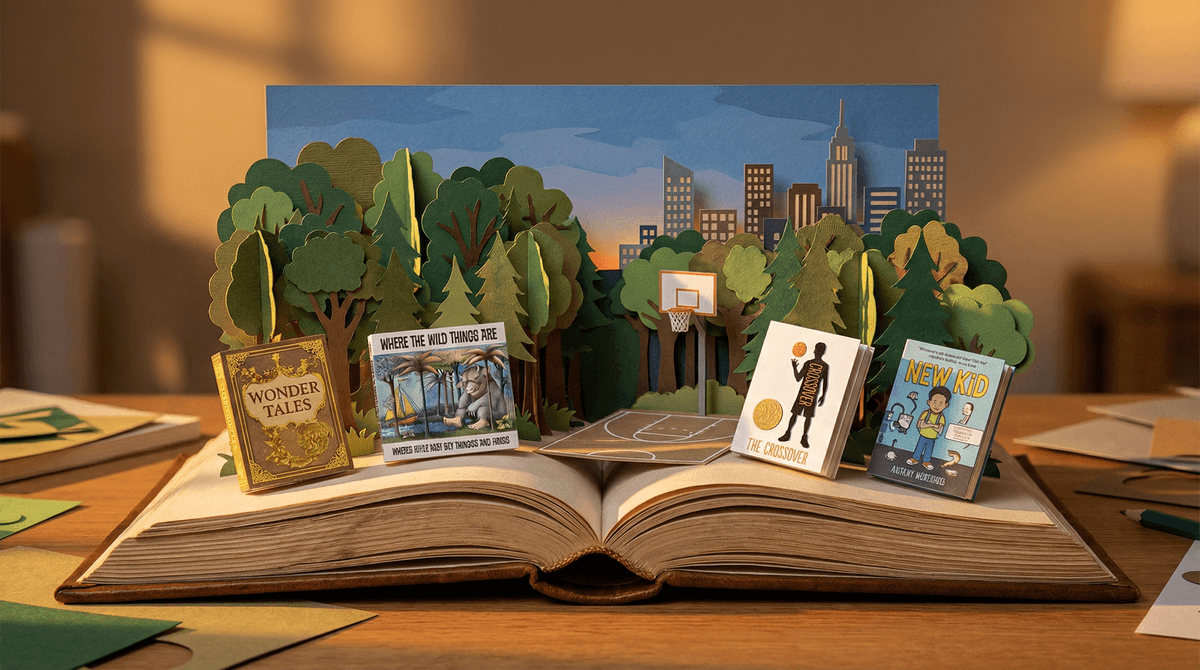
Where the Wild Things Are by Maurice Sendak The OG book about big feelings. Max gets angry, escapes to an imaginary world, and learns that home is where someone loves you even when you're being a monster. Still hits after 60+ years.
The Paper Bag Princess by Robert Munsch Princess rescues prince, prince is ungrateful, princess dumps him. Teaches kids that you don't need to settle for people who don't appreciate you. Revolutionary stuff for a picture book.
Last Stop on Market Street by Matt de la Peña A kid and his grandma take the bus across town, and it's about finding beauty in everyday life and understanding economic diversity. Gorgeous illustrations, important themes, never preachy.
Middle Grade (Ages 8-12)
Wonder by R.J. Palacio If your kid is going to read one book about kindness and difference, make it this one. Auggie has a facial difference and starts mainstream school, and it's told from multiple perspectives so kids see how their actions ripple outward. Fair warning: you will cry.
The Giver by Lois Lowry Dystopian before dystopian was cool. A seemingly perfect society has eliminated pain, but also color, choice, and real emotion. Great for conversations about conformity, memory, and what makes life meaningful. Ages 10+.
Hatchet by Gary Paulsen Survival story where a kid crashes in the Canadian wilderness with nothing but a hatchet. No magical powers, no chosen one narrative—just problem-solving and resilience. Kids who think they don't like reading often love this one.
Percy Jackson series by Rick Riordan Greek mythology meets ADHD representation meets genuinely funny adventure. Percy is dyslexic and impulsive, and it turns out those "weaknesses" are actually demigod superpowers. Gets kids who struggle with reading to actually want to read. The Disney+ show is solid too, but the books are better.
Brown Girl Dreaming by Jacqueline Woodson Memoir in verse about growing up Black in the 1960s and 70s, split between South Carolina and New York. Beautifully written, accessible even for kids who find prose intimidating. Great for discussing civil rights, family, and identity.
Tweens/Early Teens (Ages 11-14)
The Hate U Give by Angie Thomas Starr witnesses her friend's death at the hands of police and has to decide whether to speak up. Deals with code-switching, activism, and systemic racism in a way that's honest without being overwhelming. Ages 12+, and worth reading together.
Holes by Louis Sachar Camp Green Lake is not a camp, and there is no lake. Stanley gets sent to a juvenile detention center where they dig holes all day, and the story weaves together past and present in this incredibly satisfying way. Funny, smart, and the movie is actually good too.
A Wrinkle in Time by Madeleine L'Engle Sci-fi adventure with a female protagonist written in 1962. Meg's father is missing, and she travels through space and time to find him, learning that her faults are actually her strengths. Gets metaphysical in cool ways.
The Crossover by Kwame Alexander Novel in verse about twin brothers who play basketball. About family, competition, first love, and loss. Even kids who "don't like poetry" get sucked in because it reads like the rhythm of a basketball game.
Some books are worth reading specifically because they give you something to talk about together:
- The Giving Tree - Is this about unconditional love or unhealthy boundaries? Discuss.
- Charlotte's Web - Death, friendship, and what it means to be "some pig"
- Number the Stars - Holocaust story through the eyes of a Danish girl helping her Jewish friend escape
- Inside Out and Back Again - Refugee experience, Vietnamese culture, resilience
Yes. Full stop, yes. Graphic novels are real reading. They require visual literacy, inference, and engagement. Some incredible options:
- Smile by Raina Telgemeier - Middle school, braces, friendship drama
- New Kid by Jerry Craft - Being one of the few Black kids at a fancy private school
- Amulet series by Kazu Kibuishi - Fantasy adventure with gorgeous art
- El Deafo by Cece Bell - Growing up deaf, told with humor and heart
If your kid is deep in their Minecraft or Fortnite era and thinks books are boring, try this:
- Meet them where they are - There are Minecraft novels, Fortnite guides, Pokémon encyclopedias. It counts.
- Try audiobooks - Listening to books
 while playing a chill game or drawing is still engaging with literature
 - Read together - Even with older kids, reading aloud or doing a family book club makes it social
- Let them quit books - The "you have to finish what you started" rule doesn't apply to books. Life's too short for books you hate.
- Graphic novels and manga count - See above
There's no single list of books every kid must read, but there are books that open doors—to empathy, to adventure, to seeing themselves or others in new ways. The best book for your kid is the one they'll actually read, whether that's a classic like Harry Potter or a graphic novel about a kid who farts a lot.
The goal isn't to force-feed them the literary canon. It's to help them discover that books can be just as engaging as screens, and sometimes more so. That they can be the portal to anywhere, the friend who gets it, the adventure that never ends.
Start with one book. Read it together or separately. Talk about it. See what happens. And if your kid ends up loving reading? That's the kind of screen alternative that actually sticks.
Want personalized book recommendations based on your kid's age and interests? Get book recommendations based on your kid's age and interests for suggestions tailored to your family.
Trying to balance screen time with reading time? Check out our guide on creating sustainable screen time rules that actually work.
Looking for audiobook options? Here's our take on audiobooks vs. reading and which platforms are worth it.