The Giving Tree

The Giving Tree

book

1964, Children's Books, Literature & Fiction

WISE
62%

WISE Score

4.8

Amazon

Shel Silverstein's beloved-yet-controversial tale of a tree who gives everything—and a boy who takes it all without looking back.

Amazon4.8
Common Sense Media

Where to Read

Our reviews and ratings are 100% unbiased, but as an Amazon Associate, Screenwise earns an affiliate fee if you buy a book or game by clicking one of our links. We don't get any credit if you just Google it instead :)

Screenwise Verdict

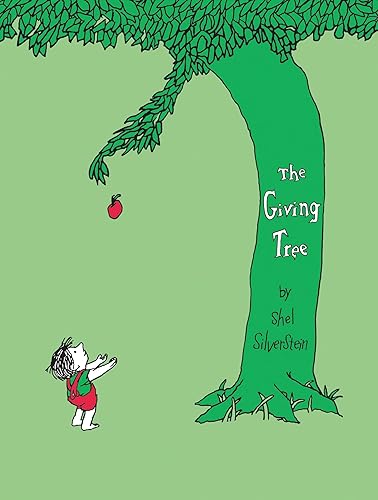
Here's the thing: The Giving Tree is a cultural touchstone that adults remember fondly, but it's also deeply problematic in ways we didn't talk about in 1964. The tree gives and gives until she's literally a stump, and the boy—now an old man—just sits on her without a word of thanks. Is this beautiful unconditional love or a cautionary tale about enabling?

The book sparks great conversations, but you'll need to guide them, because the text itself doesn't offer answers. Young kids will just see a sad tree. Older kids will roll their eyes at the simplistic language. The sweet spot is maybe 6-8 years old, and even then, you're doing interpretive heavy lifting.

It's not a bad book, but it's not the unquestioned classic many remember. If you want to explore themes of generosity and gratitude, there are clearer, more balanced options. But if you grew up with this and want to share it, just be ready to talk through what healthy giving actually looks like.
Age Fit

Best for ages 6-10, though it's genuinely hard to nail down. Younger kids won't get the complexity and may just find it sad. Older kids and teens will find the text patronizingly simple. Adults tend to love it for nostalgic reasons or hate it for the toxic relationship dynamics.

WISE Breakdown
Wholesome
55

The book presents unconditional giving, but the relationship dynamic is troubling—the tree gives everything while the boy takes without reciprocity or gratitude. This models a deeply imbalanced relationship that many parents find concerning. It's emotionally heavy, potentially teaching self-sacrifice to the point of self-destruction rather than healthy boundaries. The tone is melancholic rather than uplifting.

Imaginative
72

Silverstein's spare, poetic text and simple line drawings create a parable structure that invites multiple interpretations. The minimalist style allows readers to project their own meaning—some see parental love, others see codependency, still others see environmental exploitation. This ambiguity sparks discussion and critical thinking, though it doesn't actively invite creative play or building.

Safe
88

No concerning content for kids—no violence, scary imagery, or mature themes. The emotional weight might be heavy for sensitive children, but it's not unsafe. The book is straightforward and predictable in structure. Only concern is the sadness factor, which some young kids may find confusing or upsetting.

Enriching
68

This book generates serious conversations about giving, taking, gratitude, and relationships—that's valuable. But the lesson is murky at best. Does it celebrate selfless love or warn against exploitation? Is the tree happy or destroyed? Kids under 8 won't grasp the complexity, and older kids may find it too simplistic. The 4.8 Amazon rating shows adult nostalgia, but Common Sense Media parent reviews reveal deep division: some call it a beautiful lesson, others find it 'patronizing' and emotionally problematic.

Parent Info

Why It Might Be Great

  • Opens up meaningful conversations about love, sacrifice, and what we owe each other
  • Beautifully spare prose and illustrations that have endured for 60 years
  • Can be read multiple ways—as parental love, cautionary tale about codependency, or environmental parable
  • Quick read that packs an emotional punch and stays with you

What to Watch For

  • The relationship is deeply one-sided—the boy never says thank you, never gives back, and the tree ends up as a stump
  • Many parents find this models unhealthy self-sacrifice rather than balanced giving
  • Can be genuinely sad and confusing for young kids who won't understand the metaphor
  • Oddly positioned—too simplistic for kids old enough to grasp the themes, too heavy for kids young enough to enjoy the simple text

Conversation Starters

  • "Do you think the tree was happy at the end? Why or why not?"
  • "Should the boy have done anything differently? What could he have given back to the tree?"
  • "When is it good to give to others, and when do we need to save something for ourselves?"
  • "Who does the tree remind you of in real life? Who does the boy remind you of?"

Ask Anything

Get a personalized guide on any topic