

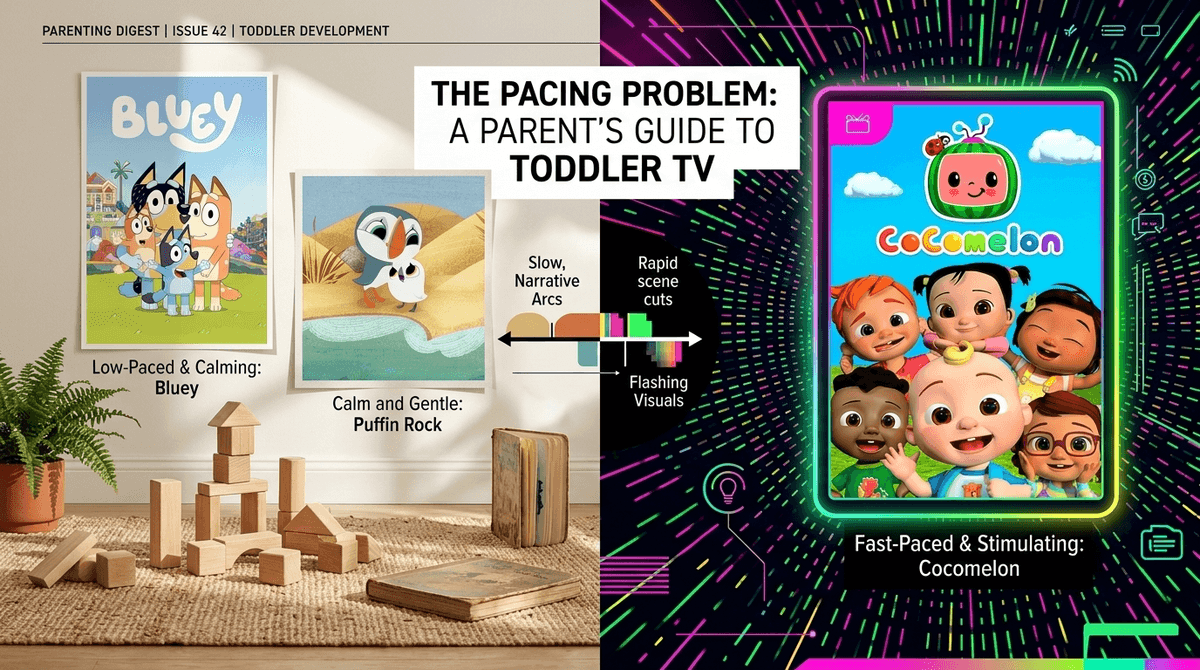
TL;DR: Bluey is the gold standard for social modeling, imaginative play, and parent-child dynamics, whereas Cocomelon is often criticized for its hyper-stimulating pacing that can lead to "screen-time meltdowns." If you want a show that encourages your kid to go play after the TV is off, pick Bluey. If you need five minutes of "digital hypnotic" time to cook dinner, Cocomelon works, but be prepared for the behavioral hangover.
If you’ve spent more than five minutes in a playground lately, you’ve probably heard the "Cocomelon vs. Bluey" debate. It’s the modern version of "Beatles vs. Stones," but with more juice boxes and fewer leather jackets.
On one side, you have Cocomelon, the YouTube-born juggernaut that has basically every toddler in the world in a trance. On the other, you have Bluey, the Australian import that has parents unironically crying into their coffee because a cartoon dog learned a lesson about growing up.
But beyond the memes, there is actual science and developmental psychology at play here. As intentional parents, we’re not just looking for "quiet time"—we’re looking for media that doesn't make our kids act like tiny terrors the second the remote hits the coffee table.
You might have heard the term "overstimulation" thrown around in Facebook groups. It’s not just a buzzword. When we talk about the difference between these shows, we have to talk about scene cuts.
In Cocomelon, the camera angle or scene changes roughly every 1 to 3 seconds. This is incredibly fast for a developing brain. It triggers a "distal stimulus" response—essentially, the brain is so busy trying to process the new visual information that it doesn't have time to actually think about the content.
This is why kids look like zombies when they watch it. They aren't "engaged"; they are overstimulated. When the show ends, their brain experiences a sudden drop in dopamine, which often leads to that classic, floor-thrashing meltdown.
In contrast, Bluey uses much slower pacing. The camera stays still. Characters walk in and out of the frame. There is space to breathe. This allows a toddler to actually follow the narrative rather than just being bombarded by bright colors and nursery rhymes.
Learn more about the science of overstimulation and "fast-paced" media
The biggest win for Bluey isn't just the art style—it’s the social modeling.
In Cocomelon, the world is perfect. Everyone sings about their feelings in a way that feels a bit robotic. It’s great for learning the "Wheels on the Bus," but it doesn't teach a kid how to handle it when their friend won't share the red truck.
Bluey shows kids (and parents) how to:
- Navigate conflict and sharing.
- Use "boring" moments to spark imaginative play.
- Deal with disappointment and big emotions.
Honestly? Bluey is just as much for us as it is for them. Bandit and Chilli (the parents) are depicted as tired, funny, and sometimes frustrated, which is a hell of a lot more relatable than the eerily perfect parents in Cocomelon.
Check out our guide on why Bluey is actually a parenting masterclass
Let's be real: Screenwise isn't here to shame you. If you’re at a restaurant and your toddler is about to lose their mind, putting on Cocomelon is a tactical decision. It’s effective because it’s hypnotic.
However, if Cocomelon is the staple of your child's media diet, you might notice:
- Decreased attention span during non-screen activities.
- Increased irritability when the screen is turned off.
- Lack of independent play (because they are used to being "fed" constant stimulation).
If you’re going to use it, think of it like a sugary snack. A little is fine, but it’s not a meal.
If you’re looking to diversify the "menu" beyond the big two, there are some fantastic, low-stimulation options that prioritize storytelling over flashing lights.
This is the ultimate "chill" show. It’s narrated by Chris O'Dowd, the colors are muted and beautiful, and the pacing is incredibly gentle. It’s basically a nature documentary for toddlers.
Available on Netflix, this show is about a boy and his best friend (who happens to be a giant, honking trash truck). It’s sweet, quiet, and focuses on the simple joys of childhood.
The direct descendant of Mr. Rogers. If you want your kid to have a "strategy song" for every possible emotional crisis (like going to the potty or being mad), this is the one. It’s high-quality social-emotional learning with zero "brain rot" vibes.
The classic for a reason. While modern Sesame Street is a bit faster than the 1970s version, it still prioritizes human interaction, diversity, and actual educational goals over pure "eye candy."
At Screenwise, we look at the data. In our community surveys, parents who report high usage of "high-stimulation" apps and shows often report higher levels of "tech-related conflict" in the home.
By the time kids hit kindergarten, those who have been "conditioned" by the fast pacing of shows like Cocomelon or certain YouTube Kids channels can sometimes struggle with the "slower" pace of a classroom.
Choosing Bluey or Puffin Rock isn't just about being a "snob"—it's about protecting your child's ability to focus and play independently.
If your house is currently a Cocomelon fortress and you want to transition to Bluey, here’s the game plan:
- The "Bridge" Strategy: Introduce Bluey during a time when they are already calm, not when they are demanding their "fix."
- Model the Play: After an episode of Bluey like "Keepy Uppy," grab a balloon and actually play the game with them. They’ll quickly realize the show is a blueprint for real-world fun.
- Check the "Wise Score": Use the Screenwise app to check the stimulation ratings for new shows before you hit play.
Check out our guide on how to handle screen time transitions without the drama
Cocomelon is a masterpiece of engineering—it is designed to keep a child’s eyes glued to the screen. Bluey is a masterpiece of storytelling—it is designed to reflect the beauty and chaos of family life.
If you want a kid who asks to play "Grannies" or "Hospital" after the TV goes off, Bluey is your winner. If you’re stuck in a 4-hour car ride and need a digital pacifier, Cocomelon is an option, but use it with caution.
In the long run, the "boring" pacing of high-quality shows pays off in better behavior, more creativity, and—honestly—a much more enjoyable viewing experience for you, too. Because let’s be real: if you have to hear "The No No Bedtime Song" one more time, you might actually lose it.
Next Steps:
- Take the Screenwise survey to see how your family's media diet compares to your community.
- Explore our list of the best "Cozy" shows for toddlers
- Learn how to set up parental controls on YouTube Kids