

Look, I'm not going to pretend that handing your kindergartener a picture book is going to magically cure their iPad addiction. But here's the thing: building a solid reading routine now actually does create a legitimate alternative to screen time that can last years. Not because books are morally superior or whatever, but because kids who get hooked on stories early genuinely choose books over screens sometimes. Sometimes! That's a win.
This isn't about becoming a screen-free household (unless that's your thing, no judgment). This is about giving your 5-6 year old another option that's actually appealing when you say "okay, screen time's done."
Kindergarten is this weird sweet spot. Your kid is probably:
- Just starting to decode words on their own (or getting close)
- Still totally down for you reading to them (this window closes faster than you think)
- Developing preferences about what they like
- Spending an average of 2-3 hours a day on screens, according to most recent data
That last one isn't a judgment—it's just context. If we're going to carve out 20-30 minutes for books, we need books that can actually compete with Bluey or Minecraft for your kid's attention.
For Kids Who Love Silly/Gross/Weird Stuff
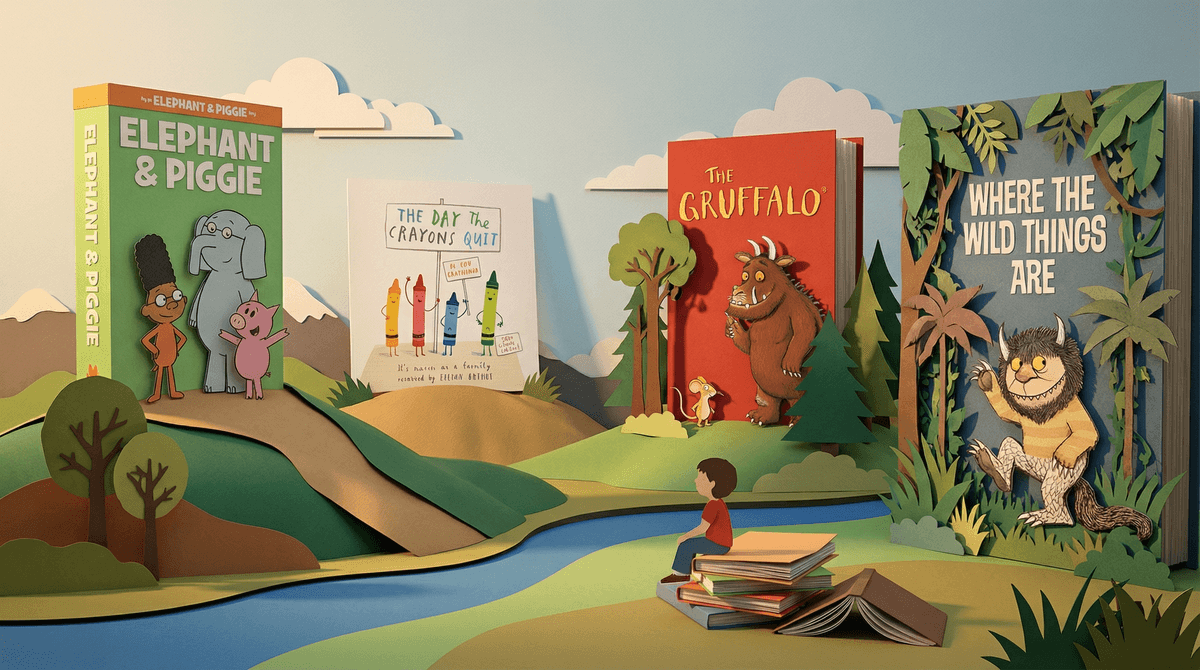
The Day the Crayons Quit by Drew Daywalt Each crayon writes a letter complaining about how they're used. It's funny, the illustrations are great, and it's genuinely clever. Kids find it hilarious. This is the book equivalent of a good YouTube video—entertaining but actually well-made.
Dragons Love Tacos by Adam Rubin Dragons. Tacos. Chaos. That's it. That's the book. It works.
The Bad Seed by Jory John A sunflower seed is a jerk and then decides to be less of a jerk. Sounds simple, but it's actually a solid entry point for talking about behavior without being preachy. Plus kids think "bad seed" is the funniest thing they've ever heard.
For Kids Who Need to Move/Have Energy
Press Here by Hervé Tullet This book is interactive—you press dots, shake the book, tilt it. It's like a low-tech iPad game but actually encourages imagination. Weirdly engaging.
We Don't Eat Our Classmates by Ryan T. Higgins A dinosaur goes to school and keeps eating her classmates. It's about making friends and self-control but packaged in a way that doesn't feel like a lesson. Good for the kid who can't sit still because there's action on every page.
For Kids Who Love Animals/Nature
The Pout-Pout Fish by Deborah Diesen Rhyming story about a fish who thinks he's destined to be grumpy. The rhythm makes it fun to read aloud, and there's a whole series if your kid gets hooked.
Giraffes Can't Dance by Giles Andreae Gerald the giraffe feels clumsy until he finds his own rhythm. It's the "be yourself" message but done well, with great illustrations. Also rhymes, which helps with pre-reading skills.
For Kids Who Like Feelings/Relationships
The Invisible String by Patrice Karst About the invisible connection between people who love each other. Helpful for separation anxiety, which is real in kindergarten. Not preachy, just comforting.
Jabari Jumps by Gaia Cornwall About a kid working up courage to jump off the diving board. Great for talking about being scared of new things (like, say, kindergarten itself).
Chrysanthemum by Kevin Henkes A mouse gets teased about her name and then learns it's actually special. Solid for the inevitable "someone said something mean to me" conversation.
For Kids Who Like Adventure/Action
The Gruffalo by Julia Donaldson A mouse outsmarts predators by inventing a scary monster, then has to deal with the actual monster showing up. British, rhyming, clever. Kids love it.
Where the Wild Things Are by Maurice Sendak Classic for a reason. Max goes on an adventure, becomes king of the monsters, comes home. The illustrations are actually wild (pun intended) and it's short enough that even wiggly kids stay engaged.
Pete the Cat: I Love My White Shoes by Eric Litwin Pete steps in stuff and his shoes change colors but he keeps singing. There's actually a song that goes with it. It's repetitive in a good way for early readers.
For Kids Starting to Read on Their Own
Elephant & Piggie series by Mo Willems These are perfect for the kid who's just starting to decode words. Simple text, speech bubbles, funny situations. There are like 25 books in the series. Gerald the elephant is anxious, Piggie is enthusiastic, they're best friends. My personal take: these books are genuinely well-written, not just "easy reader" filler.
Dog Man series by Dav Pilkey Graphic novels about a cop who's part dog, part man. These are technically for older kids but kindergarteners who are strong readers eat them up. Fair warning: lots of potty humor. But if it gets your kid reading independently? Worth it.
Reading level vs. interest level: Your kindergartener might be able to decode simple words but still want complex stories read to them. That's normal. Don't force them to only read "kindergarten level" books if they're engaged with harder stuff you read aloud.
Repetition is good: Kids want to read the same book 47 times. This is actually how they learn—both reading skills and emotional processing. Yes, it's boring for you. This is just parenting .
.
Library > buying everything: These books are expensive. Most libraries have great kids' sections and apps like Libby for ebooks. Test books before buying. Though I'll say—if you find one your kid truly loves, owning it so they can access it anytime is worth it.
Audiobooks count: If your kid will listen to Brains On! or story podcasts, that's still building literacy skills. Don't be precious about it having to be a physical book.
The bedtime routine: Reading before bed is the classic move because it works. Screen time before bed messes with sleep anyway (the blue light thing is real), so this is one of the easier swaps.
The "screen time is over" transition: Have books visible and accessible. When you turn off the TV, having a book right there on the couch makes the transition easier than sending them to find one in their room.
Letting them choose: Take your kid to the library or bookstore and let them pick based on covers, topics, whatever. They're more likely to engage with books they chose, even if their criteria is "this one has a dinosaur wearing pants."
Reading to them even when they can read: Keep reading aloud to your kindergartener even as they start reading independently. You can read more complex, interesting stories together, and it's bonding time that doesn't involve a screen.
A good kindergarten reading list isn't about hitting some developmental milestone or proving you're doing enrichment activities. It's about finding books your specific kid actually likes so that "read a book" becomes a real alternative to "watch something" or "play a game."
Will books completely replace screen time? No. Should they? That's your call. But having 10-15 books your kindergartener genuinely enjoys gives you options—for quiet time, for wind-down, for car rides, for "I'm making dinner and you need something to do."
The books on this list work because they're actually entertaining, not just educational. They're the books that kindergarten teachers, librarians, and parents keep recommending because kids keep choosing them.
Start with a few that match your kid's interests, see what lands, and build from there. And if your kid only wants to read Dog Man books for six months straight? They're reading. That's the win.
Try the library first: Check out 5-6 books from different categories on this list and see what your kid gravitates toward.
Create a reading spot: Doesn't have to be fancy—just a place with good light, maybe some pillows, where books live and are easy to grab.
Track what works: Mental note of which books your kid asks for again. That's your signal to find similar ones or more from that author/series.
Be realistic: Aiming for 20 minutes of reading a day is great. Some days it'll be 5 minutes. Some days it'll be zero because everyone's tired and you ordered pizza and put on a movie. That's also fine.
If you want to dig deeper into building reading habits or finding alternatives to specific screen activities, Screenwise can help you build a personalized plan based on your actual family situation—not some idealized version of parenting that doesn't exist.