

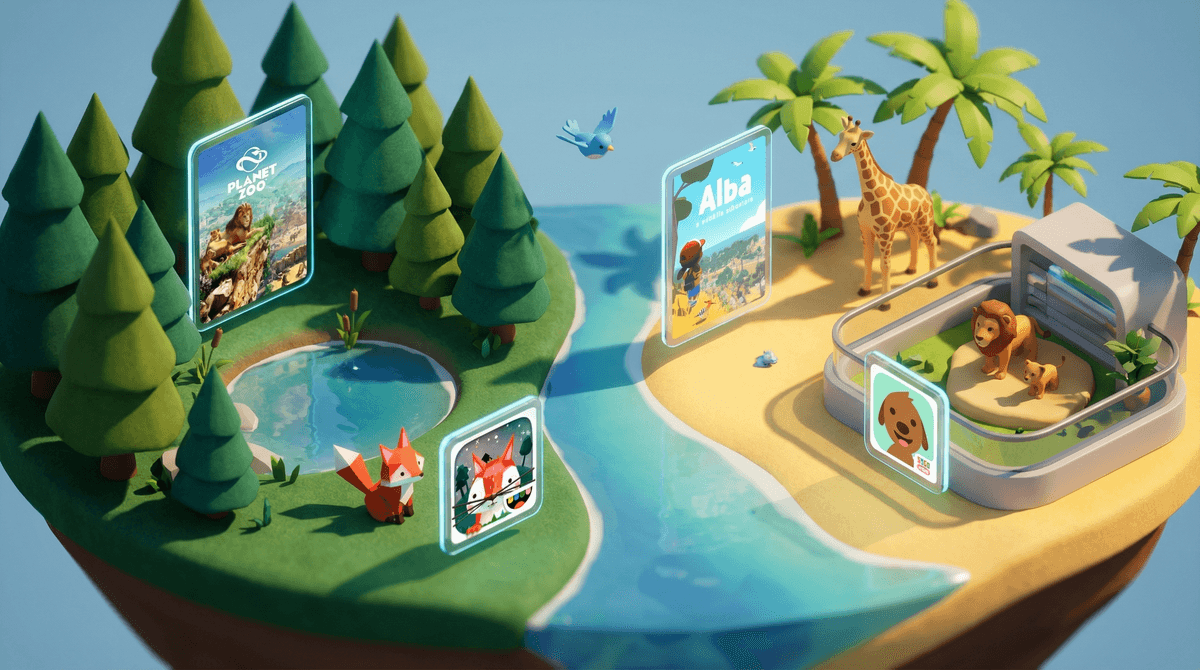
Animal games for kids run the full spectrum from "raise a virtual pet and clean up its digital poop" to "learn about actual ecosystems while building a wildlife sanctuary." The good ones teach empathy, responsibility, and sometimes real science. The sketchy ones are basically slot machines wrapped in fur.
The animal game category has exploded in the last few years, and honestly? A lot of them are really good. We're talking about games where kids can care for creatures, learn about habitats, solve problems, and occasionally get weirdly invested in whether their pixelated penguin is happy. But we're also talking about a minefield of in-app purchases, predatory mechanics, and games that promise "educational content" but deliver glorified clicker games.
Let's break down the actually good ones.
Ages 4-7: Gentle Introductions
Toca Nature is the gold standard here. Kids plant trees, shape landscapes, and watch animals appear naturally in the environments they create. No timers, no purchases, no stress. It's basically a digital terrarium that teaches cause and effect without being preachy about it. Toca Boca's whole lineup is solid, but this one hits different.
[Sago Mini Pet Cafe](https://screenwiseapp.com/media/sago-mini-pet-cafe-game and the entire Sago Mini universe are perfect for the younger crowd. The art style is adorable without being cloying, and the gameplay is genuinely about caring for animals—feeding them, playing with them, making them happy. No weird monetization, no dark patterns. Just good vibes.
Endless Ocean Luminous for Nintendo Switch is worth mentioning for families with the console. It's essentially an underwater exploration game where you scan and catalog sea creatures. Incredibly chill, beautiful, and actually educational. My only complaint is that it can feel a bit slow for kids who need more action, but for the right kid? It's magic.
Ages 8-12: More Complexity, Real Learning
Minecraft obviously makes the list, but specifically the animal breeding and farming mechanics. Kids learn about genetics (even if they don't realize it), resource management, and ecosystem balance. Yes, there's combat, but you can absolutely play Minecraft as a peaceful farming simulator. Check out our full Minecraft guide if you want to understand what your kid is actually doing in there.
Planet Zoo is the big one for this age group. It's a full zoo management sim that doesn't dumb down the complexity. Kids learn about conservation, animal welfare, habitat requirements, and even the economics of running a zoo. Fair warning: it's on PC/Steam, and it requires some serious computer power. Also, your kid will absolutely lecture you about enrichment requirements for red pandas after playing this.
Alba: A Wildlife Adventure is a gem that flew under a lot of radars. You play as a young girl documenting wildlife on a Mediterranean island and working to clean up pollution. It's gorgeous, genuinely heartwarming, and teaches environmental activism without being heavy-handed. Available on Switch, PC, and mobile. No in-app purchases, no nonsense.
[Webkinz](https://screenwiseapp.com/media/webkinz-game is still around, which is wild. The original required buying physical plush toys to unlock virtual pets, but the current version is more accessible. It's dated, but for some kids, the virtual pet care loop is exactly what they want. Just be aware of the in-app purchase situation—it's not predatory by modern standards, but it's there.
Ages 10+: Deep Dives and Real Science
Niche - A Genetics Survival Game is legitimately teaching genetics. You're managing a species' evolution through selective breeding, dealing with genetic mutations, and trying to survive in different biomes. It's turn-based strategy meets biology class, and it's actually fun. Available on Steam and Switch. This one is genuinely educational in a way that doesn't feel like homework.
Spiritfarer isn't strictly an animal game, but you're caring for spirits (many of whom are animals) on their journey to the afterlife. It's beautiful, emotionally complex, and deals with themes of death and letting go in a way that's appropriate for older kids. Fair warning: it will make you cry. It will make your kid cry. Everyone will cry. But it's worth it.
Stardew Valley deserves mention for its farming and animal care mechanics. You're raising chickens, cows, goats, and even dinosaurs. The game teaches resource management, long-term planning, and the satisfaction of building something sustainable. Our full Stardew Valley guide goes deeper into why this game is so beloved.
Here's where we need to talk about the elephant in the room (pun intended). The mobile app stores are absolutely flooded with animal games, and most of them are garbage. They're designed to get kids hooked on a dopamine loop and then extract money through in-app purchases.
Games like My Talking Tom or Pou aren't evil, but they're also not particularly enriching. They're fine for short bursts, but if your kid is spending an hour a day feeding a virtual cat and watching ads, that's not really teaching anything.
The red flags to watch for:
- Energy systems that require waiting or paying to keep playing
- Constant prompts to watch ads for rewards
- "Gacha" mechanics where you're gambling for rare animals
- Social features that push kids to compare collections or compete with strangers
If a game is free and has animals in it, See why free mobile games are problematic . The answer is usually "because they're going to try to sell you stuff constantly."
The best animal games teach:
- Empathy: Understanding that creatures have needs and feelings
- Responsibility: Consistent care leads to positive outcomes
- Systems thinking: How ecosystems work, how actions have consequences
- Real science: Actual facts about animal behavior, habitats, and conservation
The worst ones teach:
- Impatience: Everything should happen instantly or for a price
- Gambling: Random rewards are exciting and worth pursuing
- Consumerism: Collecting is the point, not understanding
If your kid is learning something genuine—even if it's just "penguins need cold water and lots of fish"—that's a win. If they're just clicking buttons and watching numbers go up, that's a different conversation.
Most animal games are genuinely safe from a content perspective. You're not dealing with violence (usually) or inappropriate themes. The bigger concerns are:
Time sinks: Games with daily check-in mechanics train kids to think about the game constantly. "I need to feed my virtual pet!" becomes a real source of anxiety.
Social features: Some games have chat or friend systems. Always check what social features exist before letting younger kids play unsupervised.
In-app purchases: Set up parental controls on devices. Have conversations about why the game wants real money. Understand how in-app purchases work before your credit card gets hit with $200 in virtual hay.
Good animal games exist at every age level, and they can genuinely teach valuable things. The key is being selective and understanding what the game is actually designed to do.
Start with paid games when possible—they're usually designed to be fun rather than to extract money. Toca Nature, Alba, and Planet Zoo are worth every penny. For free games, watch for the red flags and set boundaries early.
And honestly? If your kid gets really into one of these and starts asking questions about real animals, habitats, or conservation, lean into that. Visit a zoo, watch nature documentaries, volunteer at an animal shelter. The best outcome of any animal game is that it leads to caring about actual animals in the actual world.
Not sure which game is right for your kid's age and interests? Find the right animal game for your kid to get personalized recommendations based on your family's specific situation. We can help you figure out what's age-appropriate, what's worth paying for, and what's just going to be a headache.