

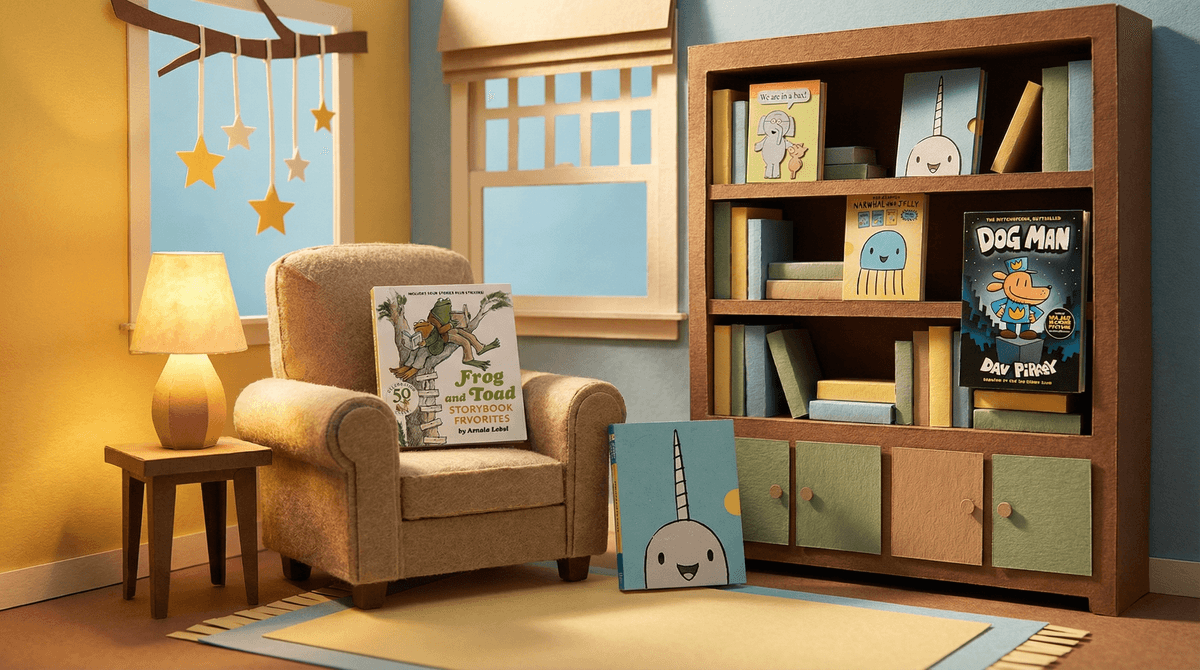
Early reader book series are the bridge between picture books and chapter books—designed specifically for kids who are just starting to read independently, typically ages 5-8. These books have larger text, simple vocabulary, lots of illustrations, and short chapters (or no chapters at all). But here's the thing: the best ones don't feel like "learning to read" books. They feel like real stories that happen to be accessible.
Think of series like Elephant and Piggie, Frog and Toad, or Dog Man—books that kids actually want to read, not just books they can read.
The magic of a good series? Once a kid connects with the characters, they're motivated to keep going. That's how you build reading stamina and confidence without it feeling like work.
Here's what makes series so powerful for early readers:
Familiarity breeds confidence. When kids know the characters, the format, and the style, they can focus their brain power on decoding words instead of figuring out a whole new world every time.
Built-in motivation. "Can we get the next one?" is the sentence every parent wants to hear. Series create momentum—kids want to know what happens next, so they keep reading.
Scaffolded progression. Many series get slightly more complex as they go, so kids are building skills without realizing it.
Emotional connection. Kids form genuine attachments to series characters. My local librarian says she's seen kids literally hug the Ivy + Bean books.
Some early reader series have been around for decades because they're just good:
Frog and Toad by Arnold Lobel (Ages 4-8)
These gentle stories about friendship are timeless. The language is simple but never dumbed down, and the illustrations are charming. Perfect for kids just starting to sound out words.
Henry and Mudge by Cynthia Rylant (Ages 5-8)
A boy and his huge dog. Short chapters, big heart. These books nail the everyday magic of childhood—getting a pet, visiting relatives, playing in the snow.
Amelia Bedelia by Peggy Parish (Ages 6-9)
The original books (not the newer chapter book versions) are hilarious for kids learning about literal vs. figurative language. Amelia takes everything literally, which leads to chaos and wordplay kids genuinely find funny.
Little Bear by Else Holmelund Minarik (Ages 4-7)
Sweet, simple stories with Maurice Sendak illustrations. These feel cozy and safe—perfect bedtime reading that kids can also tackle on their own.
Let's be real: not every kid is going to vibe with a bear in overalls from 1957. Here are series that feel current and hook reluctant readers:
Dog Man by Dav Pilkey (Ages 6-10)
Part graphic novel, part comic book, all chaos. These books are wildly popular with early readers, especially kids who think "reading is boring." The humor is silly, the format is engaging, and yes, there are fart jokes. But kids are reading—voluntarily—and that's what matters.
Elephant and Piggie by Mo Willems (Ages 4-8)
These are technically early readers, but they work for a huge age range. The dialogue format (speech bubbles!) makes them feel like comics, and the emotional intelligence in these books is off the charts. Kids learn about friendship, disappointment, and joy through a pig and an elephant.
Mercy Watson by Kate DiCamillo (Ages 6-9)
A pig who lives in a house and loves buttered toast. That's it. That's the premise. And it's delightful. DiCamillo's writing is playful and warm, with just enough vocabulary stretch to keep things interesting.
Narwhal and Jelly by Ben Clanton (Ages 5-8)
Graphic novels about an optimistic narwhal and his skeptical jellyfish friend. The format is super accessible, the humor is goofy, and there's surprising depth about friendship and imagination.
Ivy + Bean by Annie Barrows (Ages 6-9)
Two very different girls become best friends. These books capture the intensity and creativity of early elementary friendships. The chapters are short, the plots are engaging, and kids see themselves in these characters.
Some series use a predictable structure that helps kids feel successful:
Fly Guy by Tedd Arnold (Ages 5-8)
A boy and his pet fly. The format is consistent across books, vocabulary is controlled but not boring, and kids love the gross-out humor.
Biscuit by Alyssa Satin Capucilli (Ages 3-6)
For the youngest readers, these super simple books about a puppy use repetition and predictable language. Great for building confidence before moving to more complex series.
Branches series from Scholastic (Ages 5-9)
This isn't one series—it's a whole imprint of early chapter books designed specifically for transitional readers. Owl Diaries, Dragon Masters, and Notebook of Doom all fall under this umbrella. They're formulaic, but that's the point—kids know what to expect and can focus on reading.
First: graphic novels are reading. Full stop. The combination of text and images actually requires sophisticated comprehension skills.
That said, if you want to gently expand beyond graphic novels, try:
- The Bad Guys by Aaron Blabey—heavily illustrated chapter books that feel like graphic novels
- Dork Diaries or Diary of a Wimpy Kid—diary format with lots of drawings (though these skew slightly older, around ages 8-12)
- Captain Underpants—another Dav Pilkey series that mixes comic panels with traditional text
Ages 4-6 (Pre-readers and beginning readers):
Elephant and Piggie, Biscuit, Little Bear, Frog and Toad
Ages 6-8 (Emerging readers):
Fly Guy, Henry and Mudge, Narwhal and Jelly, Mercy Watson, Dog Man
Ages 7-9 (Transitional readers):
Ivy + Bean, Branches series, Amelia Bedelia, The Bad Guys
But honestly? Follow your kid's interest over age recommendations. A motivated 5-year-old might devour Dog Man, while a 9-year-old who's struggling might need Elephant and Piggie. Meet them where they are.
Don't force "quality" literature on reluctant readers. If your kid wants to read Captain Underpants for the 47th time instead of the "award-winning" book you brought home, let them. Reading stamina and love of reading matter more than literary merit at this stage.
Audiobooks count. If your kid wants to listen to Mercy Watson while following along in the book, that's still reading. It's actually a great strategy for building fluency.
Series can get expensive. Libraries are your friend. Most library systems let you place holds online, and librarians love helping kids find their next favorite series. Also, many of these series are available on apps like Epic! or Libby.
Rereading is good. Kids reread favorite books because it feels good to be fluent and confident. Don't push them to move on before they're ready.
The best early reader series is the one your kid actually wants to read. Whether that's a pig who loves toast, a superhero dog, or two friends who are a frog and a toad, the goal is the same: building confidence, fluency, and—most importantly—a love of reading.
Start with what interests your kid. If they love animals, try Henry and Mudge. If they love silly humor, go with Dog Man. If they love friendship stories, Elephant and Piggie or Ivy + Bean are gold.
And remember: there's no such thing as a "bad" book if it gets your kid reading. Even if it's about a pig in underpants.
- Hit the library. Check out 3-4 different series and see what sticks.
- Ask your kid's teacher or librarian what's popular with their peers—sometimes kids want to read what their friends are reading.
- Don't stress about reading levels. If your kid is engaged and understanding the story, the book is working.
- Explore more book recommendations for different ages
 to keep the reading momentum going.