

Let's clear something up right away: anime isn't a genre—it's an entire medium of animation from Japan. Saying "my kid likes anime" is like saying "my kid likes live-action." It tells you almost nothing about what they're actually watching.
This matters because when parents hear "anime," they often picture either adorable Pokémon or... something wildly inappropriate they stumbled across late-night on Adult Swim in college. The reality? Anime films range from G-rated masterpieces that'll make you cry happy tears to R-rated content your teenager absolutely should not be watching.
The good news: some of the most beautiful, emotionally intelligent films ever made are anime. The better news: many are perfect entry points for families new to the medium.
Here's why starting with films (rather than series) makes sense:
Contained stories. You're committing to 90-120 minutes, not 200+ episodes of One Piece. You can watch together, discuss, and decide if this medium clicks for your family.
Higher production values. Anime films typically have bigger budgets and more polished animation than TV series. Think Pixar-level craft and attention to detail.
Easier parental oversight. You can actually preview a 2-hour film. Good luck screening an entire anime series before your kid starts it.
Cultural gateway. These films introduce Japanese storytelling traditions, aesthetics, and values in digestible doses. Your kid learns that compelling stories exist outside the Disney/Marvel universe.
Ages 6-9: Studio Ghibli's Gentle Entries
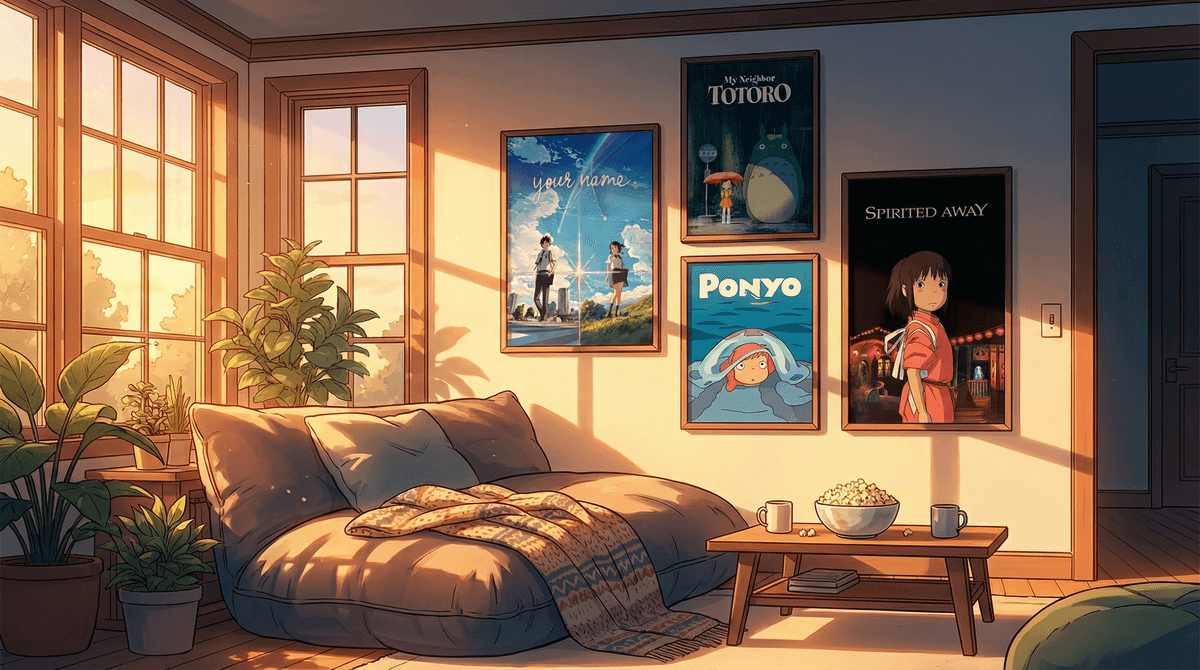
My Neighbor Totoro is the gold standard first anime film. Two sisters move to the countryside, discover friendly forest spirits, and that's... basically it. No villain. No world-ending threat. Just childhood wonder, sibling dynamics, and a cat-bus that will live rent-free in your kid's imagination forever. The pacing is slower than American animation—embrace it. This film teaches kids that stories don't need constant action to be captivating.
Ponyo is Ghibli's riff on The Little Mermaid, but weirder and more wholesome. A fish-girl wants to become human after befriending a 5-year-old boy. Gorgeous watercolor-style animation, themes about environmental balance, and exactly zero scary moments. Perfect for the under-10 crowd.
Kiki's Delivery Service follows a 13-year-old witch starting her independence year in a new city. It's about finding your place, dealing with self-doubt, and running a small business (your entrepreneurial kid will love this). Mild peril, zero nightmare fuel.
Ages 10-13: Stepping Up the Emotional Complexity
Spirited Away is the film that won Studio Ghibli an Oscar and converted a generation of Western audiences. Ten-year-old Chihiro's parents are turned into pigs (yeah, it's weird), and she must work in a bathhouse for spirits to save them. This film has genuinely scary moments—body horror, threatening characters, real stakes. But it's also about courage, identity, and growing up. Not for sensitive younger kids, but transformative for mature 10+.
The Boy and the Heron is Hayao Miyazaki's newest (and possibly final) film. It's strange, sometimes dark, and deeply personal—a boy processing grief after his mother's death during WWII. Stunning animation, but emotionally heavy. Best for thoughtful preteens who can handle complex themes.
Your Name is the film that hooked millions of teens on anime. Two teenagers mysteriously swap bodies across time and space, leading to romance, disaster prevention, and genuine tears. Gorgeous visuals, compelling mystery, and appropriate for middle schoolers. Some mild language and teenage romantic tension, but nothing that'll make you uncomfortable watching together.
Ages 14+: Films That Stick With You
A Silent Voice tackles bullying, disability, depression, and redemption with remarkable sensitivity. A former bully tries to make amends with the deaf classmate he tormented in elementary school. Content warning: includes a suicide attempt. This is not a "fun" watch, but it's an important one for teens navigating social cruelty and mental health. Watch together and be ready to talk.
The Girl Who Leapt Through Time is a time-travel romance that's smarter than it sounds. A high school girl discovers she can jump backward in time, uses it for trivial things (acing tests, avoiding awkward conversations), then realizes every change has consequences. Great for teens interested in sci-fi with heart.
Howl's Moving Castle is Ghibli's most romantic film. An 18-year-old girl is cursed to become elderly and ends up living in a wizard's walking castle. Themes about war, aging, self-worth, and found family. Some scary imagery (war scenes, magical transformations), but ultimately hopeful.
The subtitle situation. Most anime films are better in the original Japanese with subtitles. The English dubs are often fine (Ghibli's are excellent, actually), but your kid will miss the original voice acting's nuance. If they can't read fast enough yet, dubs are totally acceptable. But by age 10-11, encourage subtitles—it's good for reading skills and cultural authenticity.
Pacing differences. Anime films often have "quiet" moments that feel slow compared to American animation's relentless pacing. A character might just... watch rain. Or make tea. This is intentional. These films teach patience and contemplation. Don't skip through these moments.
Cultural context matters. Japanese storytelling values ambiguity, bittersweet endings, and spiritual themes that might feel unfamiliar. Not every question gets answered. Not every ending is "happily ever after." This is actually valuable—it expands your kid's narrative literacy.
Studio Ghibli isn't the only option. It's the safest bet for family viewing, but directors like Makoto Shinkai (Your Name, Weathering With You) and Mamoru Hosoda (The Boy and the Beast, Belle) make equally beautiful films worth exploring.
Where to watch. HBO Max has the complete Studio Ghibli collection. Netflix has most Makoto Shinkai films. Crunchyroll and Funimation have broader anime catalogs but require more parental curation.
Not all anime films are family-friendly. Avoid these common mistakes:
- Don't assume animation = kid-friendly. Films like Akira, Perfect Blue, or Grave of the Fireflies are absolutely not for children, despite being animated.
- Check ratings. If it's rated R or TV-MA, there's a reason. Common Sense Media is your friend here.
- Watch out for "fan service." This is anime-speak for gratuitous sexualization, usually of female characters. It's unfortunately common in some anime, even in otherwise good stories. Preview before showing your kids.
- Some anime has extreme violence. Beautiful animation doesn't make graphic content appropriate. When in doubt, watch it yourself first.
The best anime films offer something increasingly rare: stories that trust young audiences to sit with complex emotions, ambiguity, and beauty without constant stimulation. They're not better than Western animation—just different, and that difference is valuable.
Start with My Neighbor Totoro or Kiki's Delivery Service for younger kids. Graduate to Spirited Away or Your Name for tweens and teens. Watch together. Talk about what you see.
If your kid connects with these films, you've opened a door to an entire medium of storytelling that values artistry, emotional depth, and cultural perspectives they won't get from Marvel or Pixar (which are great, but not the only game in town).
And honestly? You might find yourself more moved by these films than your kids are. Don't say I didn't warn you about the Totoro tears.
Ready to dive deeper? Explore our guide to Studio Ghibli films by age or learn about anime series that are actually appropriate for kids.
Worried about anime content in general? Here's how to talk to your kids about anime stereotypes and fan service .
.
Kid asking for Crunchyroll? Understand what they'll actually find there before saying yes.