

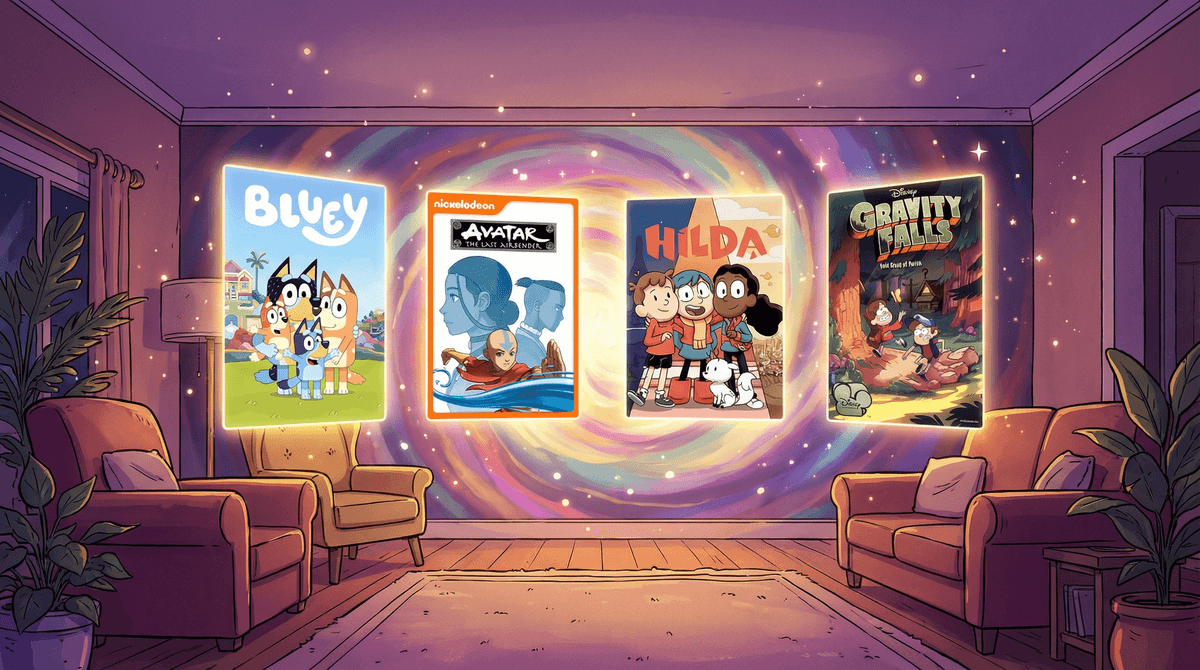
Look, we need to talk about the absolute avalanche of animated content available right now. Between Netflix, Disney+, Apple TV+, HBO Max, Prime Video, and whatever new streaming service launched this week, there are literally thousands of animated shows competing for your kids' eyeballs.
Some of it is genuinely excellent—thoughtful, beautiful, educational even. Some of it is... well, let's just say not all screen time is created equal. And figuring out which is which while your kid is begging to watch "just one more episode" is basically a part-time job nobody signed up for.
Screenwise Parents
See allSo here's the deal: I'm going to break down the actual best animated shows worth your time (and theirs) in 2026, organized by age group, with the real talk about what makes each one special—or not.
Bluey (Ages 2-8, but honestly adults too)
If you haven't watched Bluey yet, stop reading and go watch it right now. I'll wait.
This Australian gem about a Blue Heeler puppy family is legitimately the best thing on television for young kids, full stop. Every 7-minute episode is a masterclass in imaginative play, emotional intelligence, and—here's the kicker—actually good parenting modeling. The dad, Bandit, plays with his kids in ways that feel real and exhausting and hilarious. The mom, Chilli, has her own life and boundaries. The kids are allowed to be bored, frustrated, and work through problems.
Parents cry watching this show. Kids learn empathy and creativity. It's the rare piece of children's media that makes everyone better.
Avatar: The Last Airbender (Ages 8+)
The original series (not the live-action remake) remains one of the most sophisticated pieces of storytelling in any medium, animated or otherwise. Yes, it's about a kid who can bend the elements and needs to save the world. But it's really about war, genocide, trauma, redemption, and growing up with impossible responsibilities.
The character development is chef's kiss. The humor is sharp. The action is genuinely thrilling. And it tackles heavy themes—colonialism, disability, toxic masculinity, forgiveness—without ever talking down to kids. If your tween hasn't seen it, this is the show that might actually get them off YouTube Shorts for 20 minutes.
Daniel Tiger's Neighborhood (Ages 2-5)
I know the songs get stuck in your head for days. "When you feel so mad that you want to roar..." will haunt your dreams. But here's the thing: this show works. Kids actually use the strategies. The social-emotional learning is research-based (it's from the Fred Rogers Company, so of course it is). And unlike some shows in this category, it doesn't make you want to throw the remote through the TV.
Puffin Rock (Ages 2-5)
Gentle, gorgeous, and narrated by Chris O'Dowd with an Irish accent that will make you want to move to a coastal cliff. This is the show for when you need something genuinely calming. No loud noises, no overstimulation, just a baby puffin named Oona exploring her island home. Perfect for winding down before nap or bedtime.
Hilda (Ages 6-10)
A blue-haired girl moves from the wilderness to the city and has adventures with trolls, elves, and other Scandinavian-inspired creatures. The animation is beautiful, the stories are genuinely engaging, and Hilda herself is a fantastic role model—brave, curious, kind, and willing to admit when she's wrong.
There are some mildly scary moments (it's more "spooky" than "scary"), but nothing traumatizing. And the show deals with real stuff like moving, making friends, and navigating family dynamics in ways that feel authentic.
The Dragon Prince (Ages 8+)
From the creators of Avatar: The Last Airbender (see a theme here?), this fantasy epic has everything: magic, dragons, complex political intrigue, and genuinely diverse representation that doesn't feel forced. The deaf general who communicates through sign language? Just part of the world. The main character with two dads? No big deal.
Fair warning: the animation style in Season 1 is... divisive. Some people hate the frame rate thing they did. It gets better in later seasons, and the story is strong enough to push through.
Arcane (Ages 13+)
Based on League of Legends (yes, really), this is hands-down one of the most visually stunning animated series ever made. The story follows two sisters torn apart by class warfare and moral choices in a steampunk city. It's dark, violent, and deals with addiction, trauma, and systemic inequality.
This is NOT for younger kids. There's real violence with consequences, complex moral ambiguity, and themes that require emotional maturity. But for teens? This is the show that proves animation isn't just for kids.
Gravity Falls (Ages 8-14)
Twins spend the summer with their great-uncle in a weird Oregon town full of supernatural mysteries. This show is clever, funny, genuinely mysterious, and rewards careful watching (there are codes and clues hidden in every episode). It also has one of the most satisfying series finales in television history.
The humor works on multiple levels, so adults can watch without wanting to claw their eyes out. And it deals with real sibling dynamics, growing up, and trust in ways that feel earned.
Cocomelon: Look, I'm not going to tell you your toddler can't watch it, but this is basically the animated equivalent of empty calories. The research on super-fast-paced content for young brains is... not great . If you need 20 minutes of peace, fine. But there are better options that won't leave your kid in a glazed-over stupor.
Teen Titans Go!: This is pure chaos and bathroom humor. Some kids love it. Some parents can't stand it. It's not harmful, just... a lot. If your kid is into it, you could do worse. But you could also do better.
Peppa Pig: Peppa is kind of a brat, not gonna lie. Kids love it anyway. The episodes are short, which is nice. But if you notice your preschooler suddenly getting sassier, this might be why. Check out our full guide on Peppa for the full breakdown.
Here's what actually matters more than the age rating on the box:
For younger kids (2-6): Look for shows with clear emotional lessons, slower pacing, and characters who solve problems through talking and creativity rather than violence or chaos. Daniel Tiger's Neighborhood and Bluey are your friends here.
For elementary age (6-10): This is when kids can handle more complex stories, mild peril, and moral ambiguity. Shows like Hilda and Avatar challenge them to think about right and wrong in nuanced ways.
For tweens and teens (10+): They can handle darker themes, but you want shows that treat those themes with respect. Arcane shows violence with consequences. Gravity Falls deals with trust and growing up. These aren't just "mature content"—they're mature storytelling.
Forget the age ratings for a second. Here's what actually matters:
Pacing: Is the show so fast-paced that your kid goes into a trance? That's a red flag, especially for younger kids.
Problem-solving: How do characters solve problems? Through violence? Talking? Creativity? Magic that just fixes everything? The shows that stick with kids are the ones that model actual problem-solving.
Representation: Does the show reflect the world as it actually is? Kids of different races, abilities, family structures? This shouldn't be controversial in 2026—it's just reality.
Humor: Does the show rely on mean-spirited humor or bathroom jokes exclusively? Or is there actual wit and wordplay? Your kid will internalize whatever they're laughing at.
Emotional intelligence: Do characters talk about feelings? Make mistakes and apologize? Show empathy? This is the stuff that actually shapes how kids navigate their own lives.
The best animated shows for kids are the ones that respect their intelligence, challenge them to think and feel, and don't make you want to throw the TV out the window when you inevitably end up watching too.
Bluey is the gold standard for younger kids. Avatar: The Last Airbender is the gold standard for everyone else. Everything else falls somewhere on the spectrum between "actually enriching" and "well, at least it's not YouTube autoplay."
The good news? There's genuinely great stuff out there if you know where to look. The bad news? You're going to have to be a bit intentional about it, because the algorithm doesn't care if your kid watches something thoughtful or just something that keeps them clicking.
Want to dig deeper? Check out our guide to setting up streaming parental controls so you can curate what shows up in your kid's profile.
Need more recommendations? Our alternatives to YouTube guide has a whole section on quality animated content by age group.
Curious about a specific show? Our show guide can give you the real breakdown on any animated show you're wondering about—including the stuff your kid's friends are watching that you've never heard of.