

TL;DR
If your kids are currently vibrating at a frequency only detectable by Roblox servers and YouTube shorts, Because of Winn-Dixie is the cinematic equivalent of a deep exhale. It’s a gentle, slightly dusty, 2005 classic that tackles heavy themes—abandonment, alcoholism, and loneliness—with a lightness that won’t traumatize your seven-year-old.
Quick Recommendations:
- Best for: Ages 6–11
- Watch if: You want a movie that sparks actual conversation instead of just "brain rot."
- Pair with: The book by Kate DiCamillo or other gentle classics like The Secret Garden.
Released in 2005, Because of Winn-Dixie is based on the Newbery Honor book by Kate DiCamillo. The story follows 10-year-old Opal, who has just moved to a tiny town in Florida with her father, a preacher (played by a very grounded Jeff Daniels). Opal is lonely, she misses her mother who left years ago, and she’s struggling to fit in.
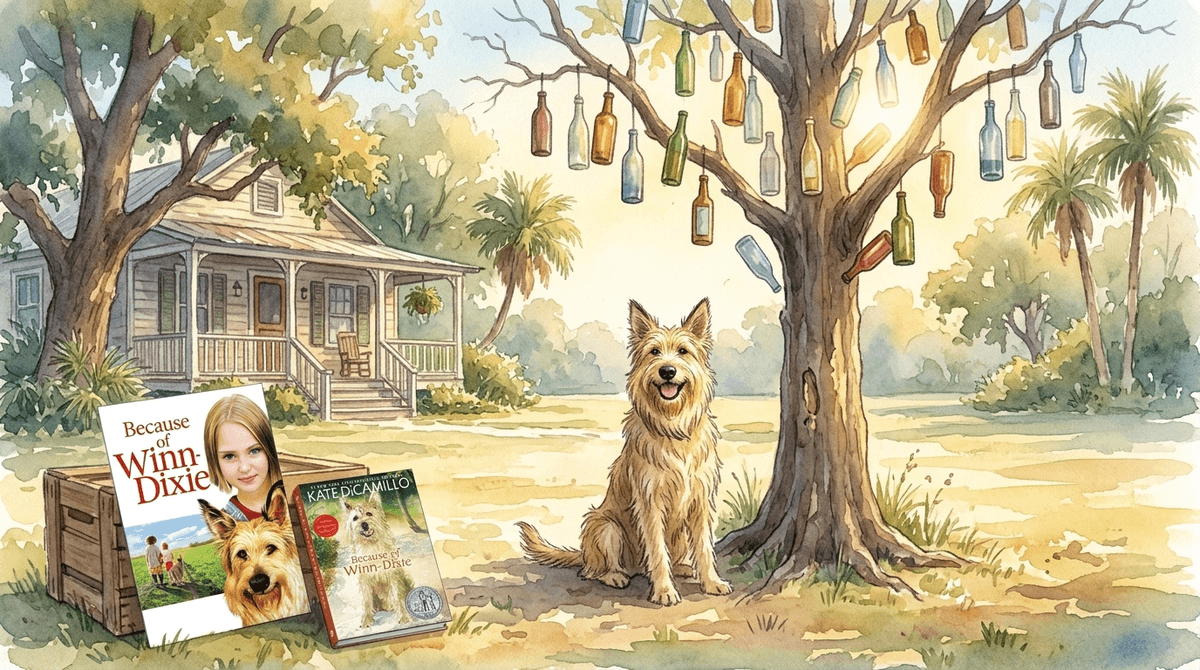
Enter Winn-Dixie: a scruffy, smiling Berger Picard dog she finds causing chaos in a grocery store. Opal claims the dog to save him from the pound, and through the dog’s "magic" ability to make friends, Opal begins to connect with the eccentric, lonely adults in her community. It’s a story about how a dog can be the ultimate social icebreaker, but it’s really about how everyone is carrying a "heart full of sadness" that they just need a little help sharing.
We live in an era of high-stimulation media. If it’s not a frantic MrBeast challenge, it’s a "Skibidi Toilet" meme that makes absolutely zero sense to anyone over the age of 15. Because of Winn-Dixie is "slow media." It moves at the pace of a humid Florida afternoon.
For intentional parents, this movie is a tool. It’s a way to recalibrate a child’s attention span and empathy. It asks kids to look at the "scary" lady down the street or the "weird" guy at the pet shop and realize they have stories, too. In a world where digital interactions are often shallow or performative, this movie is a masterclass in seeing people for who they really are.
If your family enjoys the vibe of Because of Winn-Dixie, you might want to build a watchlist of movies that prioritize emotional intelligence over explosions.
This Studio Ghibli masterpiece is the gold standard for gentle storytelling. Like Opal, the sisters in Totoro are dealing with a difficult family situation (a sick mother), but the movie focuses on wonder, nature, and the quiet moments of childhood.
While the movie adaptation is more high-octane, the original book (and the experience of reading it together) captures that same sense of an outsider finding community. If your kid loved Opal and Winn-Dixie, they will likely connect with Roz the robot.
A more modern take on the "outsider looking for a place to belong" theme. It’s a bit more polished and "Hollywood" than Winn-Dixie, but the core message of choosing kindness is a direct descendant of Opal’s journey.
This movie is rated PG, and for once, the rating actually makes sense. There is no "bad" language, no violence, and no sexual content. However, "appropriate" doesn't mean "easy."
The Emotional Weight: The movie deals with abandonment. Opal’s mother left when she was three, and Opal spends a significant amount of time asking her father for "ten things" about her mother. For kids who have experienced divorce or loss, this might hit close to home.
The "Scary" Characters: There are characters who might initially seem frightening to younger kids:
- Gloria Dump: The neighborhood kids call her a witch. She’s actually a kind, elderly woman with failing eyesight who has a "bottle tree" in her backyard.
- Otis: Played by Dave Matthews (yes, that Dave Matthews), he’s a shy musician who works at the pet store and has a criminal record for "disturbing the peace" while playing music.
Let’s be real: this movie is saccharine. It’s got a mid-2000s indie-folk soundtrack and some very "movie-magic" moments where a dog’s smile literally solves deep-seated trauma. If you’re looking for gritty realism, this isn't it.
However, there is one scene that is genuinely profound: The Bottle Tree. Gloria Dump explains to Opal that the bottles hanging from the tree represent the "ghosts" of all the things she’s done wrong in her life—specifically her struggle with alcoholism. She tells Opal, "You can't always judge people by the things they've done. You got to judge them by what they are doing now."
That is a heavy, beautiful concept to drop into a kids' movie. It’s a perfect opening to talk about:
- Regret and Forgiveness: Everyone makes mistakes, but they aren't defined by them forever.
- Addiction: In an age-appropriate way, it introduces the idea that some people struggle with things that make them act in ways they regret.
Ask our chatbot for tips on talking to kids about addiction and recovery
If you watch this with your kids, don't just let the credits roll and go back to Minecraft. Use these prompts to see what they actually took away from it:
- The "Ten Things" List: In the movie, Opal asks for ten things about her mom. Ask your kid: "If you had to tell someone ten things about yourself that really matter, what would they be?"
- The "Witch" Next Door: "Why were the boys afraid of Gloria Dump? Have we ever been afraid of someone just because they looked different or lived differently than us?"
- The Preacher's Shell: Opal says her dad is like a turtle hiding in his shell. "Do you ever feel like you need to hide in a shell when you're sad? What helps you come out?"
Because of Winn-Dixie isn't going to win any awards for "coolest movie of the year" in your kid's eyes. It doesn't have the fast-twitch appeal of Fortnite or the neon aesthetic of Trolls.
But it is a "soul-replenishing" movie. It reminds us that community is built by the people we choose to include, not just the people who look like us. It’s a 106-minute lesson in empathy that feels like a warm hug—or a wet dog lick to the face.
- Watch the movie on a rainy Sunday. It’s currently streaming on several platforms (check your local listings).
- Read the book. Kate DiCamillo is a master of "sad-happy" stories. If your kid likes this, move on to The Miraculous Journey of Edward Tulane.
- Take the Screenwise Survey. If you're wondering how movies like this fit into your family's overall "digital diet," our survey can help you see where you stand compared to other intentional parents in your community.
Take the Screenwise Digital Habits Survey Check out our guide to Kate DiCamillo books