

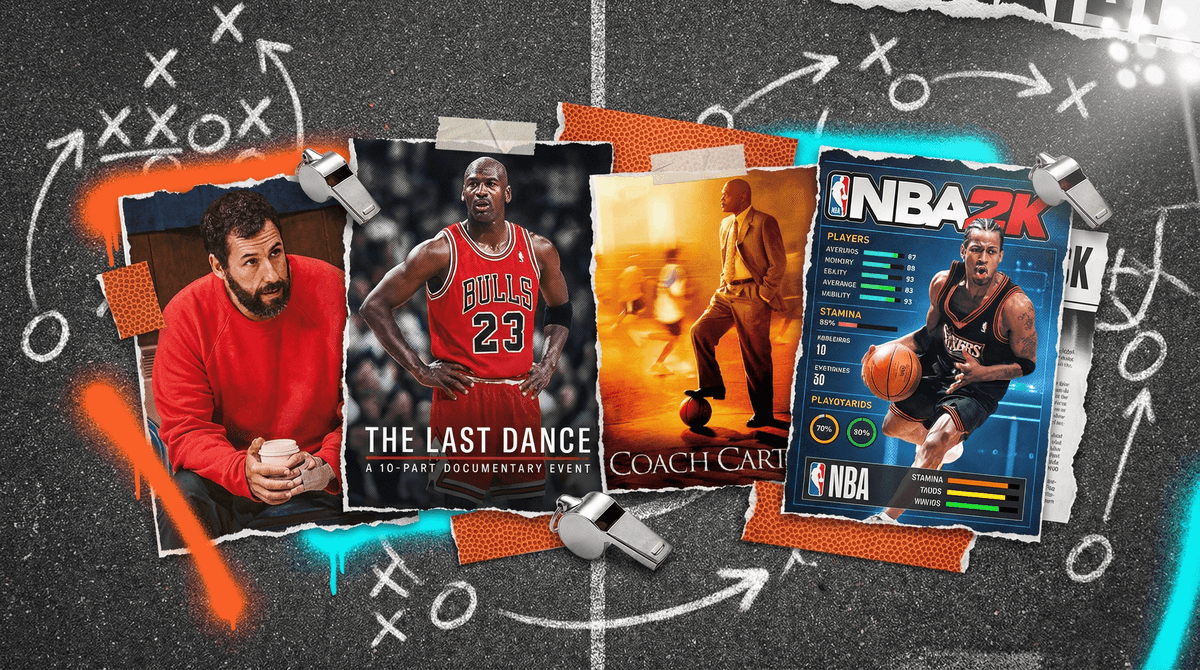
Here's something that might surprise you: not all basketball screen time is created equal. While your kid could mindlessly scroll through highlight reels on TikTok or YouTube, there's actually a category of basketball content that can genuinely help them understand the game better—and maybe even improve their play.
We're talking about movies that break down strategy, games that teach positioning and decision-making, and shows that explain the mental side of basketball. Think of it as the difference between watching cooking shows that just show finished dishes versus ones that actually teach you knife skills and flavor combinations.
The key is intentionality. A kid who watches The Last Dance documentary while thinking about team dynamics will get something totally different than one who's just watching for the dunks.
Basketball IQ isn't just about physical skills—it's about reading the game, understanding spacing, anticipating plays, and knowing the "why" behind decisions. And here's where quality basketball media comes in:
Movies and documentaries can break down historic games, explain coaching decisions, and show how players think through situations. Your kid watching Coach Carter isn't just seeing a feel-good sports story—they're seeing discipline, accountability, and team-first mentality modeled.
Video games like NBA 2K actually require players to understand basketball concepts to succeed. You can't just button-mash your way to victory—you need to know when to pass, how to set screens, and what defensive schemes work against different offenses. Want to understand if NBA 2K is teaching strategy or just selling virtual currency?
YouTube channels and shows can provide instant feedback and explanation that kids can take straight to the court. Channels breaking down NBA plays or teaching specific moves give kids a mental library to draw from during actual games.
Ages 6-10: Building Love for the Game
At this age, it's about fun and fundamentals, not advanced strategy.
- Space Jam or Space Jam: A New Legacy: Pure entertainment, but introduces basketball culture and gets kids excited
- NBA Playgrounds: Arcade-style basketball game that's more accessible than simulation games
- YouTube channels like Shot Science (simplified tutorials) or Jr. NBA content designed for young players
Ages 11-14: Learning Strategy
Middle schoolers can start understanding the why behind plays and decisions.
- The Last Dance: This documentary series about Michael Jordan and the Bulls is genuinely educational about team dynamics, work ethic, and competitive mentality (note: some mature themes to discuss)
- Hustle: Adam Sandler's 2022 basketball movie that's surprisingly good and shows the scouting/development side
- NBA 2K MyCareer mode: Creates scenarios where players learn positioning, play-calling, and team basketball (with parental guidance on microtransactions)
- YouTube: Channels like By Any Means Basketball, ILoveBasketballTV, or Coach Frikki break down actual NBA plays and teaching concepts
Ages 15+: Advanced Understanding
High schoolers can handle complex strategy and mental game content.
- The Last Dance (rewatch with new understanding)
- Hoosiers: Classic that shows team-building and fundamental basketball
- Full NBA games with analysis: Not just highlights—watching complete games with commentary teaches flow and decision-making
- NBA 2K with coaching settings on: Actually explains why plays work or don't work
- Thinking Basketball or BBallBreakdown on YouTube: Deep tactical analysis
Not all basketball content is educational. There's a huge difference between watching highlight compilations (pure entertainment) and content that actually breaks down concepts. The former is like watching magic tricks; the latter is learning how the tricks work.
Video games can teach, but watch for the money trap. NBA 2K has legitimate educational value, but it's also notorious for pushing microtransactions, especially in MyTeam mode. Learn more about how sports games monetize players. MyCareer mode tends to be better for actual basketball learning.
Active watching beats passive watching. The magic happens when kids think about what they're seeing. Ask questions: "Why did the coach call timeout there?" "What defense were they running?" "How did that player create space?"
This works best alongside actual play. Screen time about basketball shouldn't replace court time—it should enhance it. The kid who watches a video about crossover moves and then practices them will learn way more than one who just watches.
Set the intention upfront. Instead of "go watch TV," try "want to watch something that might help with your game?" This frames it differently in their mind.
Watch together sometimes. You don't need to be a basketball expert. Just asking "what did you notice there?" or "could you try that?" creates active engagement.
Connect screen to court. After they watch something, ask if they want to try it at the park. Or after practice, see if they want to watch a video about something they struggled with.
Balance entertainment and education. Not every basketball movie needs to be a teaching moment. Space Jam can just be fun. But having some content that's explicitly about learning creates good habits.
Basketball movies, games, and shows can absolutely help kids improve their game—but only if consumed intentionally. The difference between educational basketball screen time and mindless basketball screen time is whether your kid is thinking about what they're seeing and how to apply it.
This doesn't mean every minute needs to be optimized for learning. But knowing which content actually teaches strategy, fundamentals, and basketball IQ means you can feel good about screen time that aligns with your kid's interests and goals.
- Ask your kid what part of their game they want to improve, then find content that addresses it
- Check out our guide to sports video games to understand the landscape better
- Set up one "active watching" session where you watch basketball content together and discuss what you're seeing
- Explore how YouTube can be educational when used with intention