

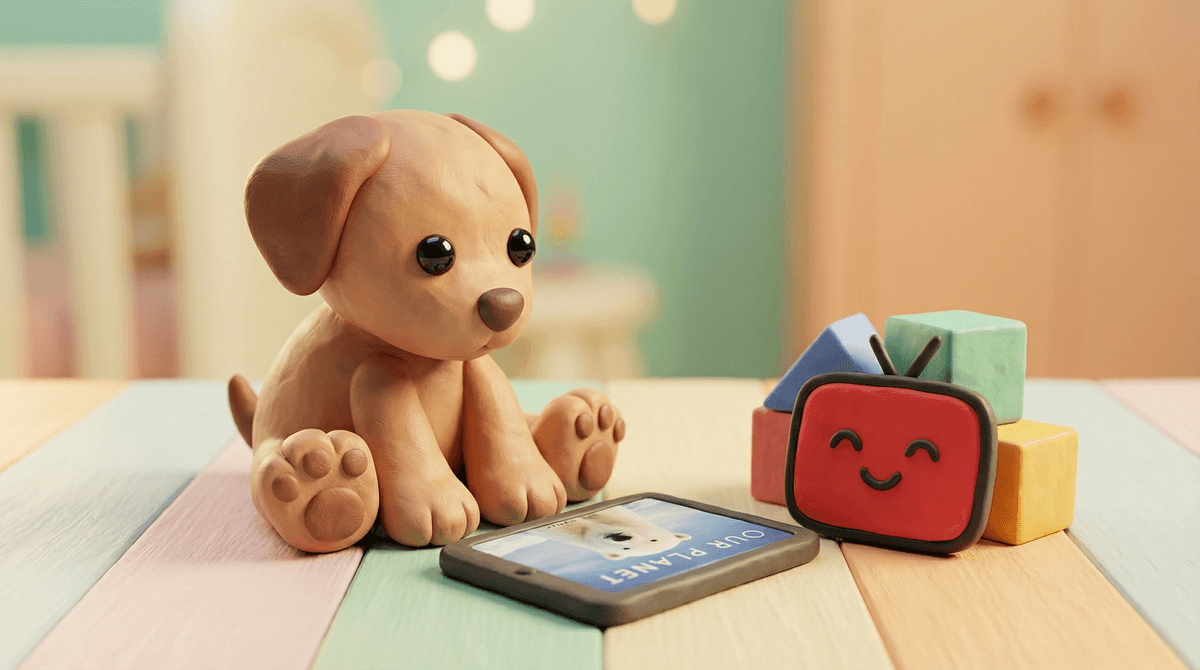
You know exactly what these are. Those YouTube compilations of puppies learning to walk, kittens discovering their tails, baby goats bouncing around like they're on invisible trampolines. Maybe it's a panda sneezing, or a baby elephant figuring out its trunk, or ducklings following their mom in a perfect little waddle line.
These videos have become the go-to digital pacifier for parents everywhere. Waiting room meltdown? Baby animals. Grocery store checkout line? Baby animals. Need five minutes to actually finish your coffee while it's still hot? Baby. Animals.
And here's the thing: unlike most screen time conversations where we're all quietly drowning in guilt, this might actually be one you can feel okay about.
There's actual science behind why toddlers will watch a video of puppies playing for 20 minutes straight without moving a muscle. Baby animals hit something primal in the human brain—even tiny human brains that are still figuring out object permanence.
The appeal is universal: Round faces, big eyes, clumsy movements, high-pitched sounds. These features trigger nurturing instincts across cultures and ages. Your two-year-old isn't being manipulated by an algorithm (well, not in the same way they would be with Cocomelon)—they're responding to millions of years of evolutionary wiring that says "protect the cute thing."
Plus, these videos are:
- Predictable and safe: No jump scares, no plot twists, no scary music
- Genuinely calming: Slow-paced, often with gentle music or nature sounds
- Endlessly rewatchable: Toddlers love repetition, and a puppy pile is a puppy pile is a puppy pile
Let's be honest about screen time: most of it is a trade-off. We're weighing convenience against developmental concerns, entertainment against engagement, peace against guilt. But baby animal videos might be the rare exception where the math actually works in our favor.
Language development: Watching videos of animals—especially with a parent narrating—can help build vocabulary. "Look at the baby elephant! See his trunk? He's using his trunk to spray water!" You're teaching nouns, verbs, cause and effect, all while your kid is mesmerized by something that isn't trying to sell them toys.
Emotional regulation: Multiple studies suggest that watching cute animal content can reduce stress and anxiety. This isn't just true for adults (though yes, you're allowed to enjoy these too). For toddlers who are still learning to manage big feelings, a few minutes of baby animals can be genuinely soothing. It's like a reset button.
Nature exposure: Okay, it's not the same as actually being outside. But for kids growing up in cities, or during long winters, or when you're stuck inside for whatever reason, these videos provide exposure to animals and nature they might not otherwise see. A kid in an apartment building can still know what a baby goat sounds like.
No addictive design patterns: Unlike most kids' content on YouTube, basic baby animal compilations aren't engineered to hijack attention spans. There's no "what happens next?!" cliffhanger, no flashing colors and quick cuts designed to trigger dopamine hits. It's just... animals being animals.
Before you think this is a free pass for unlimited puppy content, let's talk about the actual concerns:
YouTube's autoplay is still YouTube's autoplay: Start with baby animals, and the algorithm might serve up something less benign. Always supervise, or better yet, use YouTube Kids with restricted mode, or download specific videos for offline viewing.
Ads and weird content: Even innocent-seeming animal channels can have inappropriate ads or suddenly pivot to content that's not kid-friendly. Read more about YouTube safety concerns if you're using it regularly.
It's still passive screen time: Baby animal videos are probably the best kind of passive screen time, but they're not a replacement for active play, reading together, or actual interaction. Think of them as a tool, not a solution.
Watch for overstimulation: Some compilations have loud music or too many quick cuts between clips. If your kid seems wired after watching instead of calm, switch to slower-paced content.
Ages 0-18 months: The AAP recommends avoiding screens except for video chatting. But real talk—if you're using baby animal videos sparingly (like during a diaper change for a squirmy baby, or while you're trying to cook dinner), you're not ruining your child. Just keep it minimal and don't make it a daily habit.
Ages 18 months - 3 years: This is peak baby animal video age. Limit to 15-20 minutes at a time, and try to watch together when possible. Narrate what you're seeing, ask questions ("Where's the mama duck?"), make it interactive.
Ages 3-5: Kids this age can handle longer videos and might start having preferences (all penguins, all the time). This is a great age to transition from just watching to learning—talk about where these animals live, what they eat, how they grow. Consider pairing video time with books about the same animals.
Ages 5+: At this point, baby animal videos can be a gateway to more substantive nature content. Check out shows like Our Planet or Octonauts that maintain the animal appeal but add education and storytelling.
Let's put this in context. When we're talking about screen time for young kids, baby animal videos are competing against:
- Hyperactive YouTube kids' content with disturbing thumbnails
- Shows designed to sell toys
- Games with in-app purchases
- Whatever chaos TikTok is serving up
A compilation of golden retriever puppies playing in leaves? That's not just acceptable—it's genuinely one of the better options in the digital landscape.
If your toddler is obsessed with baby animal videos, you can relax. This is probably the most defensible screen time choice you're making. The content is genuinely calming, not algorithmically designed to create addiction, and provides some actual benefits for language and emotional development.
That said, it's still screen time. Use it intentionally, not as an all-day babysitter. Watch together when you can. And remember that the best version of "baby animals" is still the real thing—even if that's just watching squirrels in the park or visiting a friend's dog.
Create a safe playlist: Instead of relying on YouTube's autoplay, make a playlist of vetted baby animal videos or download them for offline viewing. This gives you control over what comes next.
Set a timer: Even good screen time needs boundaries. Use your phone's timer or tell your kid "two more videos" so there's a clear endpoint.
Balance with real animals: If your kid loves baby animal videos, lean into that interest. Visit farms, pet stores (just to look), or check out library books about animals. The videos can be a starting point for real-world exploration.
Don't overthink it: Seriously. If baby animal videos buy you 15 minutes to make dinner or take a breath, and your kid is calm and happy, you're doing fine. Save your parenting anxiety for bigger battles.
Want to explore more about healthy screen time for young kids?