

Baby books are the gateway drug to literacy, and honestly? They're one of the few parenting purchases that have zero downside. We're talking board books with chunky pages that can survive being gummed, thrown, and used as teething toys. Picture books with simple illustrations and rhythmic text. Those cloth books that crinkle. The ones with textures to touch. Lift-the-flap books that get ripped within three readings but somehow still work.
Unlike screens (yes, we're going there immediately), baby books are tactile, require zero Wi-Fi, and create actual face-to-face interaction. They're the original interactive media, except the interaction is with you, not an algorithm.
Here's the thing: babies who are read to regularly hear about 1.4 million more words by age 5 than babies who aren't. That's not a typo. 1.4 million words. And we're not talking about passive listening to an audiobook while you fold laundry (though no judgment, we've all been there). We're talking about lap time, pointing at pictures, doing the voices, repeating the same book 47 times because your toddler is obsessed with that one page where the duck says "quack."
Reading to babies and toddlers literally builds neural pathways. It teaches them that those squiggly lines on pages mean something. It shows them how stories work—beginning, middle, end. It builds vocabulary before they can even talk. And crucially, it creates a positive association with books that can last a lifetime.
In an era where the average kid will get their first tablet at age 4 and their first phone at age 10, starting with books creates a foundation. You're not anti-screen by reading to your baby. You're just pro-brain development.
Ages 0-6 months: High-contrast black and white books are clutch here. Babies can't see much color early on, so those stark patterns are actually engaging. Cloth books and board books they can grab work well. Honestly, at this stage, they might just stare at the ceiling fan, and that's fine. You're building the routine.
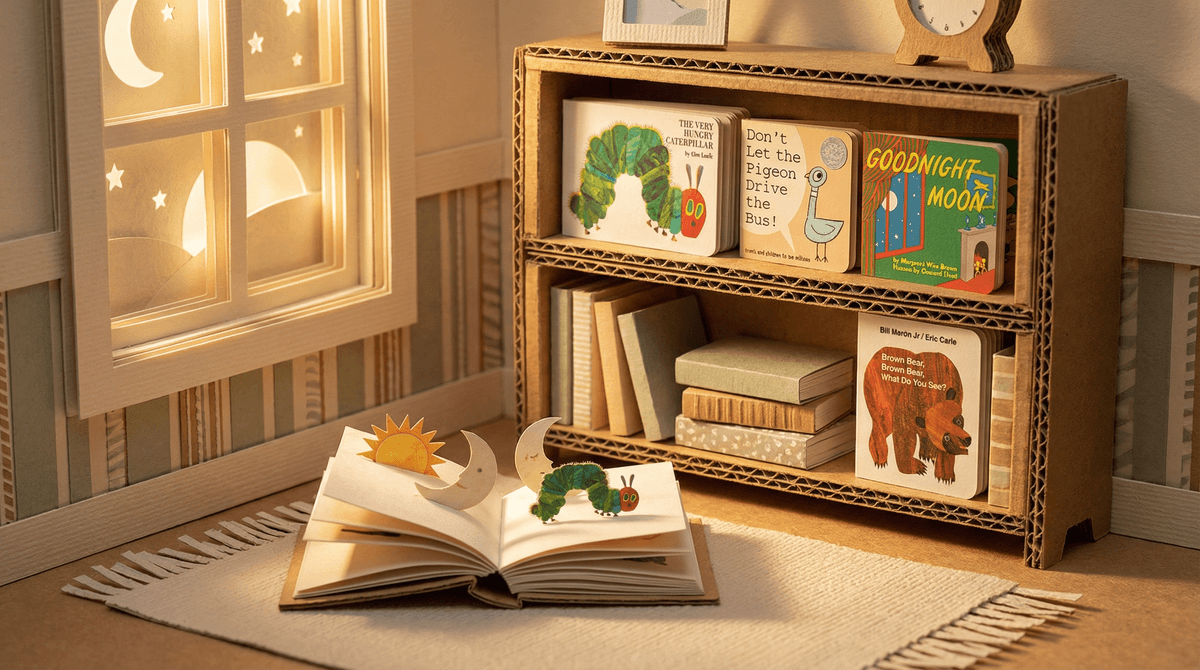
Ages 6-12 months: This is when it gets fun. Board books with simple pictures and one word per page. Touch-and-feel books. Lift-the-flap books (RIP to all the flaps that didn't make it). Books with faces—babies are obsessed with faces. Classics like Goodnight Moon and The Very Hungry Caterpillar work because they've been tested by literally millions of babies.
Ages 1-2 years: Now you can get into simple stories. Repetitive text is your friend—think Brown Bear, Brown Bear, What Do You See? Books about everyday activities (getting dressed, eating, bathtime) help toddlers make sense of their world. This is also when they'll develop Opinions about which books they want to read, and you will read those books until you can recite them in your sleep.
Ages 2-3 years: Longer picture books with actual plots. Books that introduce concepts like colors, numbers, emotions. Books with humor. Don't Let the Pigeon Drive the Bus! is a classic for a reason. This is also when you can start introducing books that deal with big feelings, transitions, or situations they're experiencing.
Durability: If it can't survive being dropped in a puddle, chewed on, and thrown across the room, it's not a baby book—it's an art installation.
Rhythm and repetition: Babies and toddlers love predictable patterns. It's soothing and helps with language acquisition. This is why you'll read the same book 400 times and they'll still want it again.
Visual appeal: Bold illustrations, clear images, not too cluttered. Babies are learning to focus and process visual information.
Interactive elements: Touch-and-feel textures, flaps to lift, holes to poke fingers through. These keep little hands engaged.
Representation: Books with diverse characters and family structures matter, even for babies. They're absorbing everything about the world, including who gets to be in stories.
Look, you will at some point hand your baby a phone with a video playing so you can pee in peace. That's not a moral failing. But here's why books matter in the screen age: books require co-engagement. You can't just prop a book in front of a baby and walk away (well, you can, but they'll just eat it). Books force interaction, conversation, pointing, questioning. That back-and-forth is literally what builds language skills.
Screen time for babies under 18 months is not recommended by the AAP, except for video chatting with grandparents. And while there are some decent book apps for older toddlers, they don't replace physical books. The tactile experience matters. The lack of notifications and autoplay matters. The fact that you're fully present instead of half-monitoring your own phone matters.
Consistency beats perfection. Reading three books every night before bed is great. Reading one book most nights is also great. Reading at random times throughout the day works too. The goal is making books a normal, pleasant part of life.
Let them lead. If your toddler wants to skip pages or only look at one page or read books "wrong," that's fine. They're still engaging with books. They're still building positive associations.
Do the voices. Yes, it feels ridiculous. Yes, your partner will judge your pig voice. Do it anyway. It makes reading more engaging and fun.
Library cards are free. You don't need to buy 100 books. Libraries exist. Many have baby storytime programs. Use them.
Rotate books. Keep some books out, store others, swap them every few weeks. It's like getting new books without spending money.
Baby books are one of the easiest, cheapest, most evidence-based things you can do for your child's development. They're not competing with screens—they're building the foundation that helps kids navigate a world full of screens with actual literacy skills and attention spans.
Start with a handful of board books. Read them a lot. Add more as your kid grows. Don't stress about doing it "right." The fact that you're reading at all puts you ahead of the curve.
And when your kid eventually discovers Bluey or Sesame Street and wants screen time, you'll have already built a reading habit that can coexist with digital media. That's the goal—not perfection, just balance.
- Hit your local library and get a card if you don't have one. Most libraries have dedicated baby book sections and will give you recommendations.
- Start with 5-10 books in rotation. You don't need a massive collection right away.
- Pick one consistent reading time to start—bedtime is classic, but morning or after lunch works too.
- Check out book lists from sources like the American Library Association or explore age-appropriate book recommendations
 for more specific guidance.
Reading to your baby won't guarantee they become a bookworm, but it gives them the best possible start. And in a world where kids will spend plenty of time with screens, starting with books is one of the smartest investments you can make.