

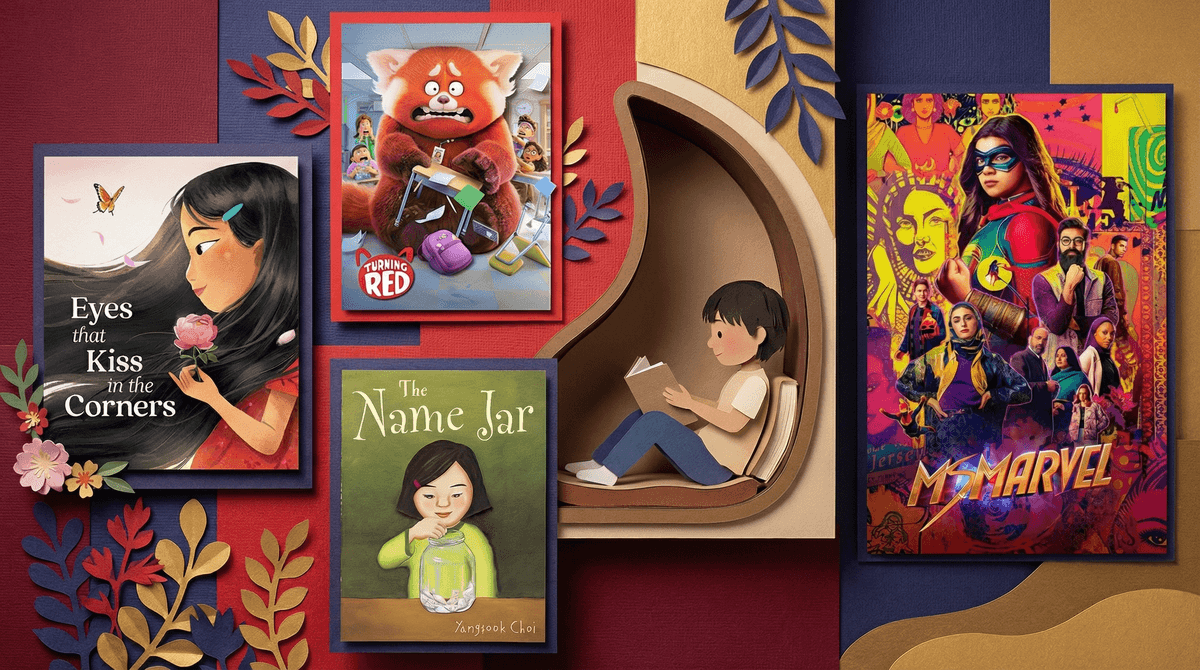
Asian-American stories are books, shows, films, and other media that center the experiences of Asian-Americans—their families, cultures, challenges, and triumphs. These aren't just stories about being Asian-American; they're stories where Asian-American kids and families get to be the heroes, the funny ones, the complicated ones, the fully realized humans at the center of the narrative.
And here's the thing: these stories matter for all kids, not just Asian-American ones. When kids see diverse experiences reflected in media, they build empathy, challenge stereotypes, and understand that there are many ways to be American, many ways to be a family, many ways to navigate the world.
For Asian-American kids specifically, seeing themselves reflected in media is huge. It's the difference between feeling like a side character in your own life and knowing that your story—your family's food, your grandparents' accents, your experience straddling two cultures—is worthy of being told.
Let's be real: Asian-Americans are still massively underrepresented in mainstream media, and when they do appear, they're often reduced to stereotypes (the nerdy sidekick, the tiger mom, the martial arts expert). The landscape is changing, but slowly.
Meanwhile, anti-Asian hate and racism have surged in recent years, and kids are absorbing these messages whether we talk about them or not. Media representation isn't a cure-all, but it's one powerful tool for building understanding and countering the "othering" that makes racism possible.
Plus, we're living in a golden age of Asian-American storytelling. From Turning Red to Everything Everywhere All at Once to books like Front Desk by Kelly Yang, there are finally stories that capture the complexity, humor, and heart of Asian-American experiences. If you're not seeking these out, your kids are missing some genuinely great content.
These stories aren't monolithic. Asian-America includes dozens of distinct cultures, languages, immigration histories, and experiences. A story about a Korean-American family in the 1980s is different from a story about a third-generation Chinese-American kid, which is different from a story about a Hmong family navigating refugee resettlement. All are valuable. None represents "the" Asian-American experience.
Some stories deal with hard stuff. Racism, discrimination, family pressure, identity struggles—these are real parts of many Asian-American experiences, and some media doesn't shy away from them. That's good! But it means you'll want to preview content and be ready for conversations, especially with younger kids.
You don't need to be Asian-American to enjoy these stories. One of the best things about the current wave of Asian-American media is that it's just... good. Raya and the Last Dragon is a thrilling adventure. The Baby-Sitters Club (Netflix version) features Claudia Kishi's story beautifully. Pachinko is a sweeping family epic. These aren't "diversity homework"—they're compelling stories that happen to center Asian-American experiences.
Picture Books & Early Readers (Ages 3-7)
- Eyes That Kiss in the Corners by Joanna Ho - A gorgeous celebration of Asian features and family
- The Name Jar by Yangsook Choi - About a Korean girl navigating a new school and her name
- Dumpling Dreams by Carrie Clickard - The true story of Joyce Chen, who brought Chinese food to America
Middle Grade (Ages 8-12)
- Front Desk by Kelly Yang - A Chinese immigrant family running a motel, dealing with racism and resilience
- Amina's Voice by Hena Khan - Pakistani-American girl navigating friendship and identity (note: Pakistani-American, not Asian-American in the East Asian sense, but often grouped in broader Asian-American discussions)
- The Many Meanings of Meow by Jas Hammonds - Biracial teen (Black and Japanese-American) dealing with grief and identity
Shows & Movies (Ages 6+)
- Turning Red (Ages 8+) - Pixar's coming-of-age story about a Chinese-Canadian girl who turns into a giant red panda. It's hilarious, it's about generational trauma, it's about boy bands. It's perfect.
- Raya and the Last Dragon (Ages 6+) - Southeast Asian-inspired fantasy adventure
- Avatar: The Last Airbender (Ages 7+) - Not explicitly Asian-American, but deeply influenced by Asian cultures and philosophies
Young Adult & Family Viewing (Ages 13+)
- Everything Everywhere All at Once (Ages 14+, with parents) - Mind-bending, emotional, hilarious. Chinese immigrant family at the center of a multiverse adventure. Some violence and mature themes.
- Never Have I Ever (Ages 13+) - Indian-American teen navigating high school, grief, and identity. Funny and heartfelt, though note: some mature content.
- Ms. Marvel (Ages 10+) - Pakistani-American Muslim teen becomes a superhero. Joyful representation.
For all kids: "Why do you think it's important to see different kinds of families and experiences in the stories we watch and read?" Let them lead. They might surprise you with their insights.
For Asian-American kids: "Do you see yourself in this character? What feels familiar? What feels different?" Validation matters. So does acknowledging that not every Asian-American story will resonate—and that's okay.
When racism comes up: Don't shy away from it. "That character experienced racism. Have you ever seen or experienced something like that?" Listen more than you talk. Validate their feelings. Learn more about talking to kids about racism .
.
For non-Asian kids: "What did you learn about this family's culture or experience? What was similar to our family? What was different?" Emphasize shared humanity while honoring differences.
Asian-American stories aren't a checkbox on your diversity to-do list. They're an opportunity to expose your kids to great storytelling, build empathy, and counter the narrow narratives that dominate so much of mainstream media.
Start with one book, one show, one movie. See what resonates. Talk about it. And remember: representation isn't just about seeing yourself—it's about seeing others, too. In a world that's increasingly connected and increasingly divided, that skill matters more than ever.
Next Steps:
- Browse Asian-American stories for kids to find age-appropriate recommendations
- Check your local library—many have curated lists of diverse books
- Watch something together this weekend and talk about it afterward