

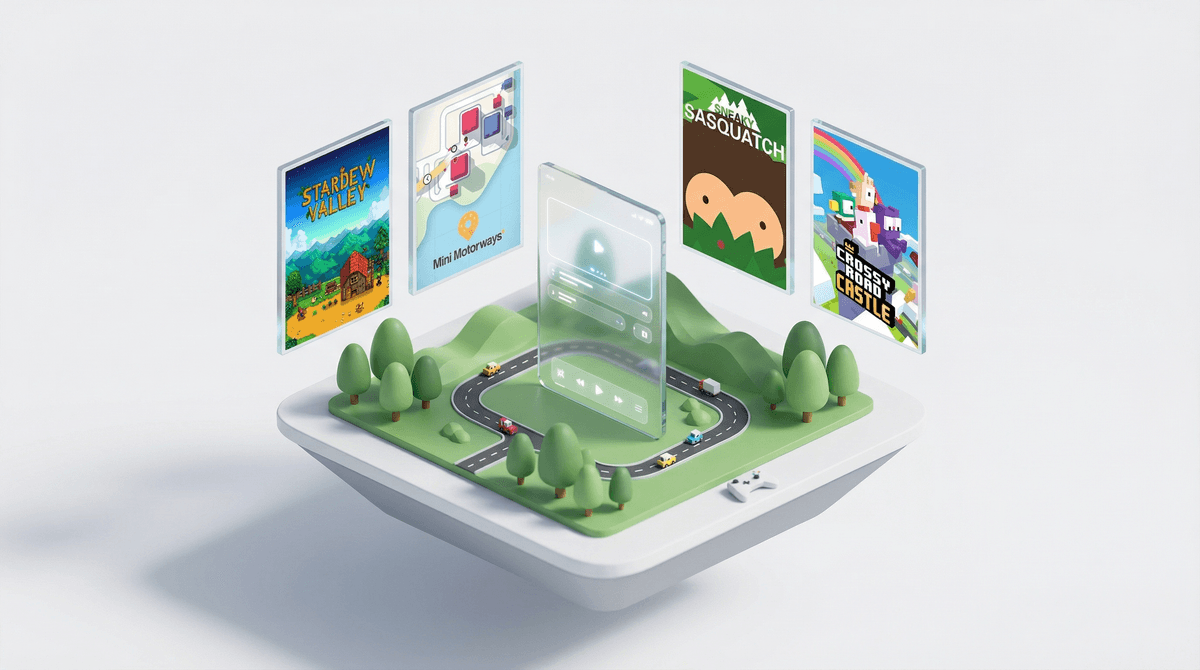
Apple Arcade is Apple's gaming subscription service—think Netflix, but for games. For $6.99/month (or bundled with Apple One), you get unlimited access to 200+ games across iPhone, iPad, Mac, and Apple TV. No ads. No in-app purchases. No microtransactions.
That last part is kind of revolutionary in 2026, when most "free" games are designed to nickel-and-dime kids (and let's be honest, adults too) into spending way more than $7/month on gems, skins, battle passes, and whatever currency Roblox is calling Robux this week.
The games are curated by Apple, which means they've theoretically been vetted for quality. You download them directly to your device, so kids can play offline (hello, long car rides). And because there's no business model built on keeping eyeballs glued to screens or extracting money from impulse purchases, the games tend to be... different. Often better.
If you've ever watched your kid play a "free" mobile game, you know the drill. They're having fun, building something cool, making progress—and then suddenly they hit a wall. Out of energy. Out of lives. Out of whatever arbitrary resource the game uses to stop you from playing unless you watch an ad or spend real money.
These games aren't designed for fun. They're designed for engagement and monetization. The psychological tricks are the same ones used in casinos—variable rewards, artificial scarcity, FOMO, social pressure.
Apple Arcade games don't have that incentive structure. Developers get paid based on engagement time, not purchases, which means they're motivated to make games people actually want to play, not games that manipulate people into spending.
Does this mean every Apple Arcade game is a masterpiece? Absolutely not. But it does mean your kid isn't being psychologically manipulated while playing Sago Mini Trips or Sneaky Sasquatch.
The library is genuinely diverse:
For younger kids (ages 4-8):
- LEGO Builder's Journey - Gorgeous puzzle game
- Sago Mini collection - Open-ended play, no objectives
- Frogger in Toy Town - Modern take on the classic
For middle elementary (ages 8-12):
- Sneaky Sasquatch - Goofy open-world adventure (wildly popular)
- Mini Motorways - Strategy puzzle that's actually educational
- Crossy Road Castle - Great for siblings playing together
For teens (and parents):
- What the Golf? - Absurdist physics puzzler
- Stardew Valley+ - Yes, the full game, no extra purchases
- NBA 2K24 Arcade Edition - Simplified but legit sports game
There are also Apple Arcade versions of games that exist elsewhere (Minecraft isn't on there, but plenty of similar creative builders are). The "+" versions of popular games are often stripped of their predatory elements.
You need Apple devices. If your family is Android-based, this isn't for you. Though if you have even one iPad floating around, that might be enough.
The games aren't "cool." Your middle schooler isn't going to find Fortnite or Dress to Impress on here. Apple Arcade games don't have the social cachet of whatever's trending on YouTube Gaming. If your kid's digital life is driven by playing what their friends play, this probably won't replace their main games—but it might be a nice alternative.
Quality varies wildly. Some games are indie darlings that won awards. Others feel like they were made in a weekend. You'll need to do some curation, which is where checking out specific game guides can help.
It's still screen time. An ad-free game is still a game. Apple Arcade doesn't magically make gaming "better" for development or family connection—it just removes some of the most manipulative elements. You still need boundaries.
Here's my honest take: If you're already paying for Apple One, it's a no-brainer to explore. If you're not, it depends on your family's gaming situation.
Consider it if:
- You're tired of games that constantly ask for money
- You have younger kids (under 10) who are just getting into gaming
- You want downloadable games for travel
- You're looking for alternatives to YouTube for screen time
- You value games that actually end (many Apple Arcade games have conclusions!)
Skip it if:
- Your kids only want to play what their friends play
- You don't have Apple devices
- Your family doesn't game much anyway
- Your teens are deep into competitive multiplayer games
Apple Arcade isn't going to solve digital parenting. But in a landscape where most mobile games are essentially gambling simulators dressed up with cartoon characters, it's a genuinely different option.
The business model is aligned with what most parents actually want: games that are fun to play, don't manipulate kids into spending money, and end when they're supposed to end. That's rare enough in 2026 to be worth considering.
Next step: If you're curious, the first month is usually free. Download a few games that match your kids' interests, try them together, and see if it fits your family. Sneaky Sasquatch is a good litmus test—if your kid loves it, Apple Arcade might be worth keeping. If they're bored in 10 minutes and asking to get back on Roblox, you have your answer.
And hey, even if it doesn't work for your kids, you might find yourself sneaking in a few rounds of What the Golf? after bedtime. No judgment.