

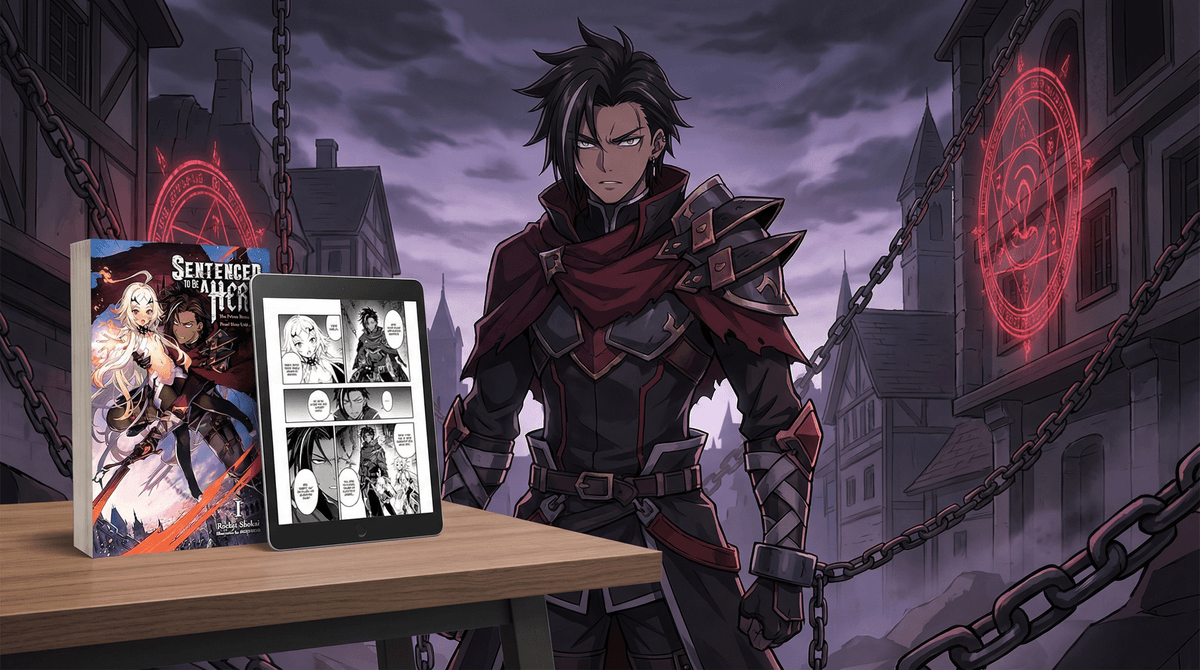
Age Rating Guide for Sentenced to be a Hero Manga: What Parents Need to Know
TL;DR: Sentenced to be a Hero is a darker isekai manga with significant fantasy violence, mature themes including slavery and political intrigue, and occasional suggestive content. Best for ages 15+ due to graphic combat scenes, morally complex situations, and psychological themes. If your teen loves That Time I Got Reincarnated as a Slime or Re:Zero but you want something with more edge, this might work—but read ahead first.
Sentenced to be a Hero (also known as "Yuusha ni Zenka wa Iranai" in Japanese) is an isekai manga series where the protagonist isn't your typical wide-eyed hero transported to a fantasy world. Instead, the main character is a convicted criminal who gets a second chance by being summoned to another world—but with a catch. He's forced to become a hero whether he wants to or not, and the story explores what happens when someone with a dark past and questionable morals is thrust into the "chosen one" role.
Screenwise Parents
See allThe series subverts typical isekai tropes by focusing on a morally gray protagonist who uses manipulation, strategic violence, and his criminal background to navigate this new world. Think less Sword Art Online and more anti-hero fantasy with political intrigue.
Violence and Combat
This is where Sentenced to be a Hero earns its mature rating. The fight scenes aren't sanitized anime-style clashes—they're brutal and graphic. We're talking:
- Detailed depictions of sword wounds, blood spray, and fatal injuries
- Strategic violence where the protagonist uses lethal force without hesitation
- Torture scenes (not gratuitous, but present as part of interrogation/political plot)
- Monster battles that show graphic dismemberment
- Psychological manipulation that leads to character deaths
The violence isn't there for shock value—it serves the story's darker tone—but it's definitely not appropriate for younger teens who are used to My Hero Academia levels of combat.
Mature Themes
Beyond the violence, the story tackles some heavy subject matter:
Slavery and Human Trafficking: The fantasy world includes slavery as a plot element, and while the protagonist often works against these systems, the depiction is present and uncomfortable (as it should be, but still—heads up).
Moral Ambiguity: The main character regularly makes choices that aren't "heroic" in the traditional sense. He lies, manipulates, and kills when it serves his goals. This can be fascinating for older teens who can process complex morality, but younger readers might struggle with the lack of clear good/evil boundaries.
Political Intrigue: Court politics, assassination plots, and power struggles are central to the story. Not inappropriate, but dense and mature in execution.
Trauma and PTSD: Characters deal with the psychological aftermath of violence and betrayal in ways that are more realistic than typical shonen fare.
Sexual Content
Relatively tame compared to many seinen manga, but present:
- Occasional fanservice with female characters (revealing outfits, suggestive angles)
- Implied sexual situations (nothing explicit shown)
- Some crude humor and innuendo
- Romance subplots that stay mostly PG-13
This isn't High School DxD territory, but it's not squeaky clean either.
Language
Depending on the translation, expect:
- Strong language including occasional profanity
- Crude jokes and insults
- Dark humor that might land wrong with younger audiences
Ages 15+: This is the sweet spot. Teens who are:
- Already reading seinen or mature shonen manga
- Comfortable with Attack on Titan or Tokyo Ghoul level content
- Interested in morally complex stories and anti-heroes
- Mature enough to discuss the difference between fiction and real-world ethics
Ages 13-14: Maybe, with significant parental involvement. Consider:
- Reading it yourself first (it's not that long)
- Discussing the moral complexity as you go
- Being prepared for questions about violence, slavery, and ethical gray areas
- Checking in about their emotional response to darker content
Ages 12 and under: Hard pass. The violence alone is too graphic, and the moral complexity requires a level of emotional maturity most middle schoolers haven't developed yet. If they're looking for isekai adventures, steer them toward Ascendance of a Bookworm or The Faraway Paladin instead.
If your kid is asking about this series, they're probably:
-
Tired of "pure hero" narratives: After years of protagonists who always do the right thing, stories with morally complex characters feel more realistic and mature
-
Into strategic/tactical stories: The protagonist wins through planning and manipulation, not just power levels—appeals to kids who love Death Note or Code Geass
-
Looking for "adult" content: Let's be real—teens want to feel grown up, and darker manga signals maturity (even if they're not always ready for it)
-
Following the isekai trend: Isekai is huge right now, and kids who've exhausted the lighter options are looking for something with more edge
This isn't gateway content to problematic behavior: Reading about an anti-hero doesn't make your teen want to become one. In fact, engaging with complex morality in fiction can help develop ethical reasoning—as long as you're available to talk about it.
The criminal protagonist angle is nuanced: The story doesn't glorify crime—it explores how someone's past shapes their present and whether redemption is possible. That's actually pretty sophisticated storytelling.
Translation matters: Fan translations can be significantly cruder than official releases. If you're buying this, stick with official English releases from legitimate publishers.
It's incomplete: Like many manga series, this one is ongoing. You're not getting a complete story with a neat moral conclusion—something to consider if you want a clear resolution to the ethical questions raised.
Community matters: Your teen is probably discussing this with friends or online. See what teens are reading in the manga community and what the appeal is—it opens better conversations than just saying yes or no.
If your teen is reading this (or wants to), try these conversation starters:
"What do you think about the main character's choices?" - Opens discussion about moral complexity without being preachy
"How would you handle that situation differently?" - Helps them engage critically rather than just consuming
"What makes this different from other isekai you've read?" - Shows you're interested in their media literacy, not just policing content
"Are there parts that made you uncomfortable?" - Creates space for them to process difficult content with you
"Do you think the story is saying his methods are right, or just showing what he does?" - Helps distinguish between depiction and endorsement
If you're not comfortable with Sentenced to be a Hero but want to support their interest in isekai with depth:
For similar moral complexity but less violence:
- The Saga of Tanya the Evil - morally gray protagonist, war setting, but more strategic than graphic
- Log Horizon - isekai with political intrigue but lighter violence
For darker fantasy but clearer morality:
- Fullmetal Alchemist - tackles war, death, and ethics but with heroic protagonists
- Vinland Saga - violent but explicitly anti-violence in its themes
For anti-hero stories with less graphic content:
- Overlord - morally questionable protagonist in isekai setting, but more comedic tone
- The Rising of the Shield Hero - wronged protagonist with darker edge, but more traditional heroism
Sentenced to be a Hero is legitimately mature content—not just "mature for anime" but actually dealing with adult themes in sophisticated ways. The 15+ recommendation isn't arbitrary pearl-clutching; it reflects the genuine complexity and graphic nature of the content.
That said, if your 15-17 year old is interested, this could be an opportunity for meaningful engagement rather than a hard no. The story raises interesting questions about redemption, the nature of heroism, and how our past shapes our present—all valuable discussions to have with your teen.
Read it yourself first. Seriously. It's the only way to know if it aligns with your family's values and your specific kid's maturity level. What's fine for one 15-year-old might be too much for another, and you know your teen better than any rating system.
And if you decide it's a no? Explain why specifically rather than just "you're too young." Teens respect reasoning way more than arbitrary rules, and it keeps the door open for them to come to you about future content questions instead of just reading it behind your back.
- Check it out yourself: Read the first few chapters to get a feel for the content
- Talk to your teen: Ask what appeals to them about this series specifically
- Set boundaries: If you approve it, establish check-ins to discuss what they're reading
- Join the conversation: See guidance on navigating mature manga with teens
- Explore alternatives: If this isn't the right fit, find something that scratches the same itch at an appropriate level
Remember: the goal isn't to shield teens from all challenging content—it's to ensure they're developmentally ready to process what they're consuming and that you're available to help them think critically about it.