

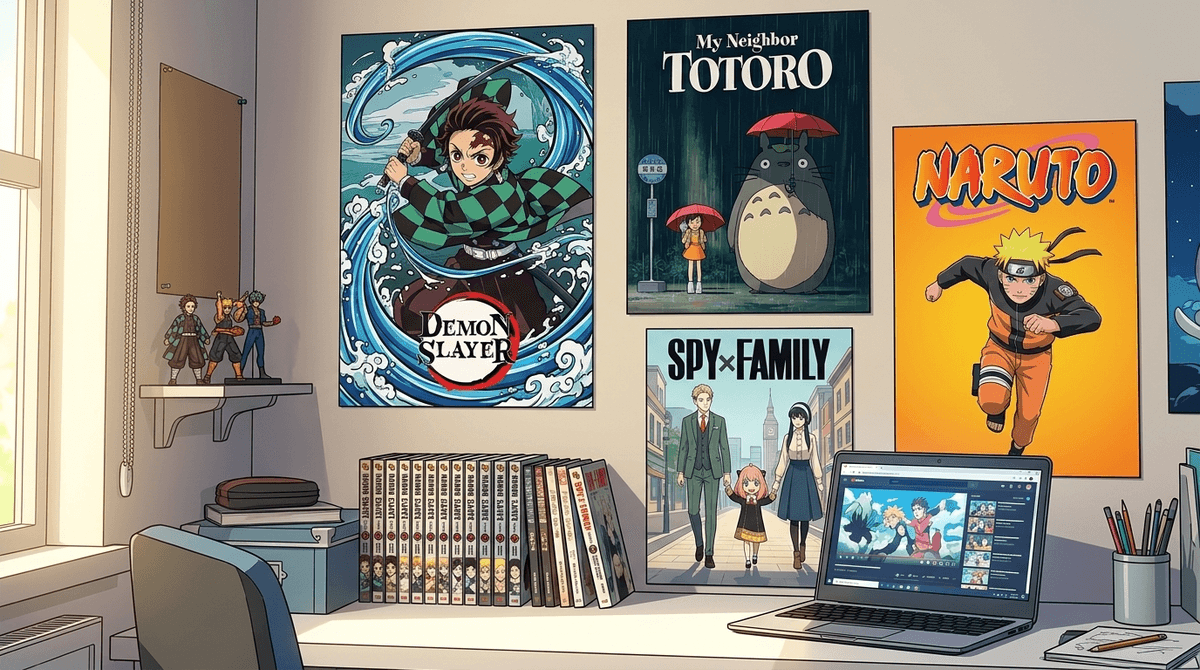
TL;DR: Manga (comics) and Anime (animation) are incredible gateways to literacy and global culture, but the "it’s just a cartoon" rule does not apply here. While Pokémon is safe for everyone, hits like Demon Slayer feature intense gore and decapitation despite their "cool" look. Focus on Kodomomuke for little kids and Shonen/Shojo for the 10+ crowd, but always check the specific rating—Japanese media often skews older than Western animation.
Quick Picks:
- Best for Ages 5-8: Ponyo, My Neighbor Totoro, Pokémon.
- Best for Ages 9-12: Spy x Family, Little Witch Academia, Haikyu!!.
- The "Proceed with Caution" (13+): Demon Slayer, Naruto, My Hero Academia.
If you’ve walked into a middle school lately, you’ve seen the graphic novels with the bright covers and the kids reading them "backward." You’ve probably also heard your kid talk about "breathing styles" or seen them wearing a green-and-black checkered hoodie.
Welcome to the world of Manga and Anime. For a lot of us, our exposure was limited to Speed Racer or maybe Sailor Moon after school. But today, it’s a massive cultural force. About 70% of Gen Z and Alpha identify as anime fans, and it’s not just a hobby—it’s the primary way they consume stories.
The problem? In the West, we have this lingering bias that "animation = for kids." In Japan, manga and anime are treated like any other medium—there’s stuff for toddlers, and there’s stuff for middle-aged salarymen that would make a HBO producer blush.
Here is how to navigate the "Demon Slayer" dilemma and find the stuff that actually fits your family’s boundaries.
When you’re looking at a book cover or a streaming description, you’ll often see these terms. Knowing them is 90% of the battle:
- Kodomomuke: Literally "intended for children." Think Pokémon or Hello Kitty. Safe, wholesome, and usually moral-heavy.
- Shonen: Aimed at young teen boys (ages 12-18). This is the most popular category. It’s action-heavy, focused on "the power of friendship," and features lots of fighting. Think Naruto or One Piece. Warning: These often have "fan service" (mildly sexualized female characters) and significant blood.
- Shojo: Aimed at young teen girls. These focus more on interpersonal relationships, romance, and emotions. Think Fruits Basket.
- Seinen & Josei: These are for adults. If you see these labels, put the book back unless you’re okay with your 10-year-old seeing gritty realism, psychological horror, or explicit content.
Let’s talk about the elephant in the room. Demon Slayer: Kimetsu no Yaiba is arguably the biggest anime in the world right now. The art is breathtaking, the protagonist is incredibly kind, and the "breathing" sword techniques are objectively cool.
But here’s the no-BS take: It is violent. We aren’t talking "Looney Tunes" violence. We are talking about demons eating humans and main characters losing limbs. In Japan, it’s rated for older kids, but in the US, it’s often rated TV-14 or R (for the movies).
If your 9-year-old is begging to watch it because "everyone at school is," you need to know that while the themes of family loyalty are top-tier, the gore is real. It’s the "Ohio" of anime—everything about it is extreme.
Beyond the cool fights, manga and anime offer something Western media often misses: Emotional Complexity.
Characters in anime fail. They cry. They deal with grief and the feeling of not being "enough." For a kid navigating the social pressures of 2025, seeing a hero like Deku in My Hero Academia struggle with anxiety is incredibly validating.
There’s also the Visual Literacy aspect. Reading manga requires kids to follow complex paneling and read from right to left (the "back" of the book is the front). It’s a workout for the brain that keeps reluctant readers engaged.
Ages 6-9: The "Gateway" Era
At this age, we want high whimsy and low trauma.
- My Neighbor Totoro: The gold standard. It’s a gentle, magical story about two sisters. No villains, just vibes.
- Ponyo: Basically a Japanese reimagining of The Little Mermaid but much cuter and with more ramen.
- Chi’s Sweet Home: A manga about a kitten. It’s adorable, easy to read, and 100% safe.
Ages 10-12: The "Action & Humor" Era
This is where they start wanting "cool" stories but might not be ready for the heavy stuff.
- Spy x Family: A masterclass in "all-ages" entertainment. A spy, an assassin, and a telepathic kid pretend to be a family. It’s hilarious, sweet, and has just enough action to keep them hooked.
- Haikyu!!: A volleyball anime. I know, it sounds boring, but it’s one of the most inspiring shows ever made. It teaches teamwork better than any PE teacher ever could.
- Little Witch Academia: Think Harry Potter, but with more heart and a female-led cast.
Ages 13+: The "Epic" Era
If they can handle some intensity, these are the classics.
- Fullmetal Alchemist: Brotherhood: Often cited as the best anime of all time. It deals with sacrifice and science, but it’s heavy.
- My Hero Academia: Superheroes in high school. It’s the perfect transition from Marvel to Anime.

When you’re vetting a new series, keep an eye out for these three "Anime Tropes" that often catch parents off guard:
- Fan Service: This is the industry term for unnecessary sexualization. It might be a camera angle, a character’s outfit, or a "nosebleed" (which in anime culture signifies a character is... excited). Even "clean" shows like One Piece have a lot of this.
- The "Sadness" Spike: Anime loves a tragic backstory. Don’t be surprised if a show that looks like a fun romp about magical girls suddenly takes a dark turn into existential dread.
- Cultural Differences in Humor: Some Japanese humor involves "pervy" older characters (the "Master Roshi" trope). It’s often played for laughs, but many modern parents find it dated and gross.
Sub vs. Dub
- Dubbed: The voices are re-recorded in English. Great for younger kids or those with dyslexia.
- Subtitled: Original Japanese audio with English text. This is how most "purists" watch it. It’s actually a great way to improve reading speed!
You might notice your kid playing Anime Adventures or other anime-themed games on Roblox. This is often how they discover these shows. If they are obsessed with a specific character in a game, use that as a jumping-off point to research the show together.
Also, a heads-up: Anime merch is a black hole for your bank account. From "blind boxes" to $200 figurines, the marketing is aggressive. Set those boundaries early.
Manga and anime are not "brain rot." In fact, they are often much more sophisticated and artistically significant than the standard fare on Western streaming networks.
The key is to move past the "it’s a cartoon" assumption. Treat a new anime like you would a new PG-13 movie. Watch the first episode with them. Look at the manga at the bookstore. If you see a lot of blood or characters in bikinis on the cover, it’s probably not for your 8-year-old.
But if you find a show like Spy x Family or a movie like Spirited Away, you aren't just giving them "screen time"—you're giving them a window into a beautiful, complex world.
- Check the "Big Three": Most kids start with Naruto, One Piece, or Dragon Ball Z. Read our guides on those first.
- Try a "Ghibli Night": Start with My Neighbor Totoro. If they like it, move through the Studio Ghibli catalog.
- Ask them to explain the "Lore": Nothing builds a connection like letting your kid explain why a character has blue hair or how their "quirk" works.