

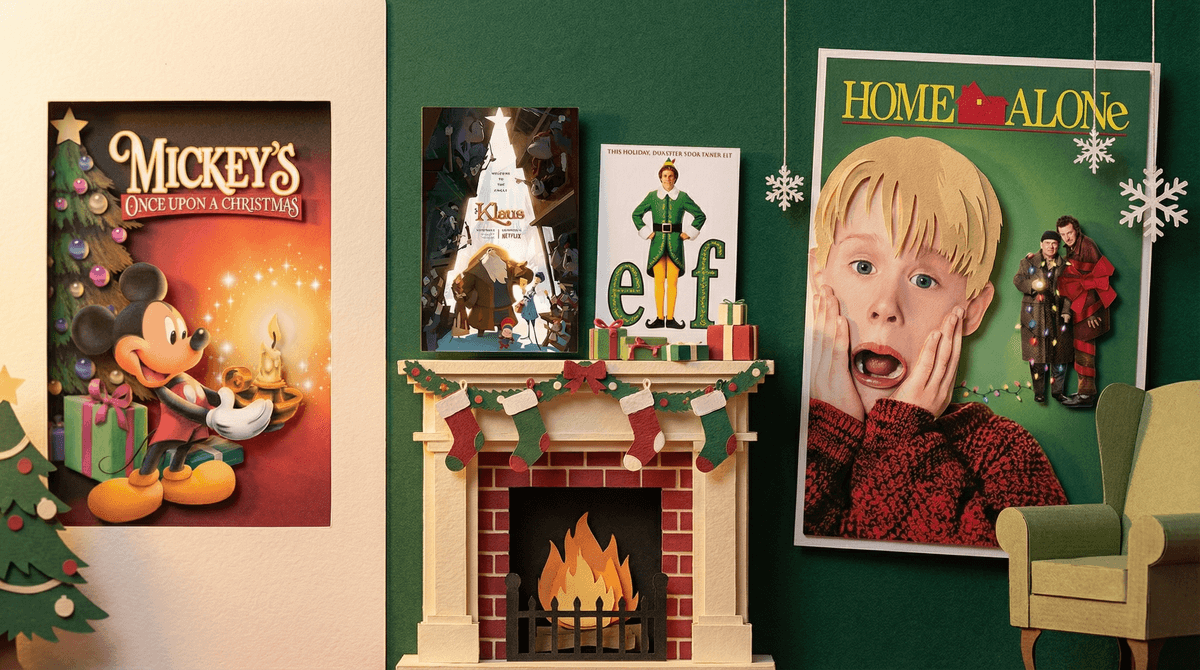
Holiday movies are a huge part of family traditions—but here's the thing: what feels magical and cozy to a 5-year-old might bore a 12-year-old to tears, and what's hilarious to a teen might give your preschooler nightmares about scary snowmen or evil elves.
The challenge isn't just about content ratings (though those matter). It's about developmental readiness—can your kid handle the emotional beats? Will they get the humor? And honestly, will you survive watching it on repeat for the 47th time?
With 92% of families in our community using TV as part of their media diet, and streaming services like Netflix (80% of families), Disney+ (80%), and Amazon Prime (62%) making thousands of titles accessible, the paradox of choice is real. Let's break this down by developmental stage so you can actually enjoy movie night instead of fielding questions about why the Grinch is so mean or explaining death during Rudolph the Red-Nosed Reindeer.
Holiday movies aren't just entertainment—they're often emotional experiences wrapped in nostalgia, music, and family togetherness. But a movie that's too scary, too boring, or too complex can turn cozy family time into meltdown city.
Plus, with about 50% of families in our community watching Disney+ together and 40% letting kids independently choose on Netflix, understanding what's actually appropriate for your kid's stage helps you make intentional choices—not just clicking whatever the algorithm suggests.
Ages 2-5: Simple Stories, Big Feelings
What works: Short runtimes (under 45 minutes ideal), clear good vs. bad characters, happy endings, minimal scary moments, lots of music and repetition.
Top picks:
- Mickey's Once Upon a Christmas - Three short stories, perfect attention span match
- Peppa Pig: Festival of Fun - If they're in a Peppa phase, this delivers
- Bluey: Verandah Santa - The special episode that makes parents cry (in a good way)
- Daniel Tiger's Neighborhood: Daniel's Winter Adventure - Emotional regulation lessons wrapped in songs
Skip for now: The Polar Express (those eyes are nightmare fuel for littles), How the Grinch Stole Christmas (Jim Carrey version) (too intense and long), anything with Santa being "in danger."
Ages 6-8: Ready for Story Arcs (and Mild Peril)
What works: Full-length movies with clear narratives, mild conflict that resolves happily, humor they can understand, characters learning lessons, some emotional complexity.
Top picks:
- Elf - Physical comedy gold, though heads up for some adult-aimed jokes that'll fly over their heads
- The Muppet Christmas Carol - Surprisingly faithful to Dickens but with Gonzo narrating
- Klaus - Gorgeous animation, origin story vibes, some emotional depth
- Arthur Christmas - Clever, sweet, underrated
- Home Alone - Controversial take: the violence is so cartoonish most kids this age are fine, but you know your kid
Watch together first: The Nightmare Before Christmas - Some kids love it, some are genuinely scared. The vibes are specific.
Ages 9-12: Complex Themes, Real Emotions
What works: Layered stories, humor with timing and wordplay, characters with flaws, themes about belonging and identity, some sadness that leads to growth.
Top picks:
- The Christmas Chronicles - Kurt Russell as Santa, enough said
- Jingle Jangle: A Christmas Journey - Musical, visually stunning, themes about creativity and belief
- Noelle - Santa's daughter taking over the family business, surprisingly feminist
- A Christmas Carol (2009) - The Jim Carrey motion-capture version hits different when they're old enough for Dickens
- Spirited - Musical reimagining with Will Ferrell and Ryan Reynolds, some adult humor but mostly accessible
Real talk: This is the age where kids might start saying holiday movies are "babyish." Let them explore what they're curious about while keeping some traditions alive.
Ages 13+: Satire, Subversion, and Sentimentality
What works: Everything from nostalgic classics they can now appreciate on a new level to edgier content that plays with holiday tropes.
Top picks:
- Die Hard - Yes, it's a Christmas movie, fight me (but note the R rating for violence and language)
- Happiest Season - LGBTQ+ rom-com with family dynamics that feel very real
- Violent Night - If they're into action and you're okay with R-rated violence
- Love Actually - Multiple storylines, British humor, some mature themes worth discussing
- Tokyo Godfathers - Anime, beautiful, deals with homelessness and found family
Conversation starters: Teens can handle complexity—use holiday movies to talk about consumerism, family expectations, what traditions mean to them now.
The "we watch it together" vs. "kids choose independently" divide matters here. Our data shows 50% of families watch Disney+ together, while 40% let kids independently choose on Netflix. For holiday movies specifically, co-viewing is your friend—especially for first watches.
Autoplay is not your friend. Streaming services will queue up whatever keeps kids watching. Just because Netflix suggests it doesn't mean it's right for your family.
Ratings aren't everything. G-rated Rudolph has some genuinely dark moments (the Island of Misfit Toys hits different as an adult). Meanwhile, PG-13 Spirited might be totally fine for your mature 11-year-old.
Holiday movie watching should feel intentional, not automatic. With 92% of families using TV and easy access to thousands of titles, the default is often "whatever plays next." But taking five minutes to choose something actually appropriate for your kid's stage means less "Mom, I'm scared" at bedtime and more actual cozy family moments.
The best holiday movie is the one that matches where your kid is developmentally, holds their attention, and doesn't make you want to fake a work emergency to escape the room.
- Make a shortlist - Screenshot 3-5 movies from the appropriate age range above so you're not scrolling for 20 minutes while kids melt down
- Preview when possible - Common Sense Media has detailed reviews if you want to check content first
- Create a family tradition - Let each family member pick one movie during the season
- Check your streaming setup - Know which service has what so you're not paying for four subscriptions you barely use
Want to understand your family's streaming habits compared to others in your community? Screenwise can help you see where you fall in the spectrum and make more intentional choices for your family's media diet.