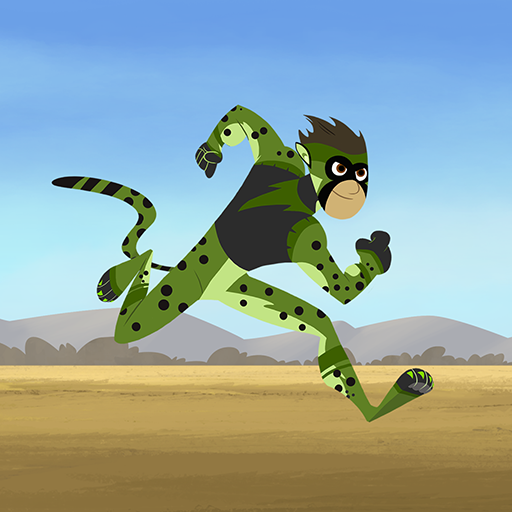
This isn't just another 'sit and stare' app. By moving the experience to a smartwatch, PBS Kids has created something that feels more like a piece of spy gear than a video game. It’s a fantastic use of wearable tech for the kindergarten set.
If your kid is already a Wild Kratts fan, this is a no-brainer. It takes the 'Creature Power' fantasy they already play out in the backyard and gives it a digital layer that actually encourages them to run and jump more, not less. It’s clean, smart, and genuinely educational without being preachy.
Age Fit
Best for kids ages 4 to 8. Younger kids will love the sounds and movement but might struggle with the tiny watch icons, while kids over 9 might find the mini-games a bit too simple.
WISE Breakdown
Wholesome
95
PBS Kids and the Kratt brothers are the gold standard for age-appropriate, curiosity-driven content. It models a genuine love for nature without any of the snark or 'attitude' found in typical modern kids' media.
Imaginative
88
The core mechanic is roleplay. By 'activating' creature powers on their wrist, kids aren't just tapping a screen; they are physically jumping like lemurs or howling like wolves, which bridges the digital-physical gap effectively.
Safe
98
PBS Kids has some of the strictest privacy and safety standards in the industry. No ads, no third-party tracking, and no social features that would expose a child to strangers.
Enriching
92
It turns abstract biology facts—like cheetah speed or lemur locomotion—into kinesthetic learning. It's science education that requires a kid to actually move their body to understand the concept.
Parent Info
✓
Why It Might Be Great
Physical play is the main event here, using the watch's accelerometer to track jumps, runs, and 'howls' rather than just screen-tapping.
Zero-distraction learning means no ads, no pop-ups, and no 'buy more coins' prompts to derail the educational vibe.
PBS Kids quality ensures the animal facts are scientifically accurate and presented by the actual Kratt brothers' voices.
Wearable convenience makes it a solid 'waiting in line' tool that doesn't feel like handing over a whole tablet or phone.
⚠
What to Watch For
The small screen interface can be frustrating for kids with developing motor skills; it's a lot of swiping on a tiny surface.
Battery drain is real when using a smartwatch for gaming; expect to charge the watch immediately after a long session.
It's a single-player experience that might lead to some 'my turn' drama if you only have one compatible wearable.
Conversation Starters
"If you could have any animal's 'creature power' for a whole day, which one would you pick and why?"
"Why do you think a cheetah needs to run so fast? Is it for hunting or for escaping?"
"How does jumping like a lemur feel different than just jumping like a human?"
"Which animal power was the hardest to master in the game?"
Deep Dive
The Wrist-Based Revolution
For years, we've seen 'educational' apps that basically amount to digital flashcards. The Wild Kratts World Adventure (specifically this WearOS version) is doing something much more interesting. By leveraging the sensors in modern watches like the Pixel Watch or Galaxy Watch, it turns the child's own movement into the game controller.
Why Wearables Matter for Kids
Most parents are hesitant to hand a $800 smartphone to a four-year-old. But as 'kid-safe' smartwatches become more common, this app provides a blueprint for what that content should look like. It's bite-sized. You don't play Wild Kratts for an hour; you play it for three minutes while waiting for the bus or sitting in a doctor's office. It’s an 'activity snack' rather than a 'screen-time meal.'
The Kratt Brothers Pedigree
What makes this work is the consistency with the show. Martin and Chris Kratt have a specific way of talking to kids that is high-energy but never manic. They treat science like a superpower. When the app asks a kid to 'Leap like a Lemur,' it’s tying a physical action to a biological trait. This is exactly how the Reading Rope works for background knowledge—building a library of concepts that make future reading and learning easier to stick.