Our reviews and ratings are 100% unbiased. As an Amazon Associate, Screenwise earns from qualifying purchases, so if you buy a book or game through one of our links, we may earn a commission. We don't get any credit if you just Google it instead :)
Screenwise Verdict
Warhammer 40k is less of a game and more of a lifestyle choice. If your kid is into it, say goodbye to their dining room table and hello to a sea of grey plastic and tiny paint pots.
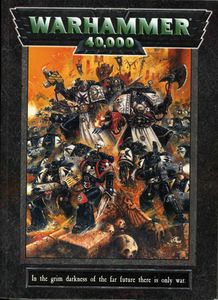
It’s one of the best 'anti-brain-rot' hobbies out there because it demands physical presence, artistic effort, and genuine social interaction. The 1998 version specifically was a turning point that made the game more playable, but honestly, unless you're a retro collector, you're better off pointing your kid toward the current edition.
Just be prepared for the 'grimdark' tone—it’s heavy on skulls, gothic horror, and war, but it’s all so over-the-top that most kids see it for the sci-fi fantasy it is.
Age Fit
While the box might say 17+, most kids with the patience to read a 100-page rulebook can start around 11 or 12. It’s perfect for the kid who loves LEGOs but wants something more 'metal' and competitive.
WISE Breakdown
Wholesome
42
The 'Grimdark' setting is intentionally the opposite of wholesome—it's a dystopian nightmare of endless war, religious fanaticism, and xenophobia. However, the actual hobby of painting and playing with others is a deeply social, positive experience.
Imaginative
97
This is the gold standard for creative hobbies. Between kitbashing miniatures, painting complex color schemes, and inventing 'homebrew' lore for your own army, the creative ceiling is nonexistent.
Safe
82
It's a tabletop game, so there's no predatory algorithm or unmoderated chat. The 'safety' concern is purely thematic: the artwork and lore feature body horror, demons, and intense sci-fi violence that might be too much for sensitive younger kids.
Enriching
94
It's a secret workout for the brain. Players juggle complex probability (dice math), strategic positioning, and fine motor skills through painting. It requires a level of focus and patience that digital games rarely demand.
Parent Info
✓
Why It Might Be Great
Develops incredible fine motor skills and patience through miniature painting and assembly.
Requires heavy-duty strategic thinking and 'on-the-fly' math to calculate odds and points.
The hobby community is massive, offering a great way for kids to socialize offline at local game stores.
Building an army provides a massive sense of ownership and long-term project completion.
⚠
What to Watch For
The 'Grimdark' lore is bleak; we’re talking about a universe where there are no 'good guys' and everything is pretty much doomed.
The 1998 rules (3rd Edition) are significantly clunkier than the modern 10th Edition; most kids will want the current version to actually find people to play with.
It’s nicknamed 'Plastic Crack' for a reason—the cost of entry and the urge to buy 'just one more squad' is a real lesson in budgeting.
Conversation Starters
"Which faction do you think has the coolest look, and why do they think they're the heroes of the story?"
"If you had to spend 4 hours painting one tiny soldier, what color would you pick to make it stand out?"
"How do the different factions' philosophies (like the Orks vs. the Eldar) compare to how people act in the real world?"
"Is it more fun to play a game where you win, or a game where something crazy and cinematic happens even if you lose?"