Beyond the Blocky Surface
At first glance, Vintage Story looks like just another blocky voxel world, but five minutes in reveals a completely different beast. Where most sandbox titles simplify survival down to a hunger bar and punchable trees, this game treats real-world science and primitive history with genuine respect. To make a simple stone axe, a player has to forage for loose flint, lay out the stone on the ground, and manually chip away at the edges using a knapping mechanic. Making pottery requires digging clay, shaping a vessel piece-by-piece, pit-firing it in the ground with dry grass and logs, and waiting hours for it to cool.
This granularity changes how a kid plays. Instead of sprinting around building giant monuments in an afternoon, they spend time planning crop rotations to manage soil nutrients, constructing underground cellars to prevent meat from spoiling, and gathering firewood before the snow rolls in. The satisfaction comes from earning every single technological advance through trial, error, and foresight.
Managing the Horror and Multiplayer
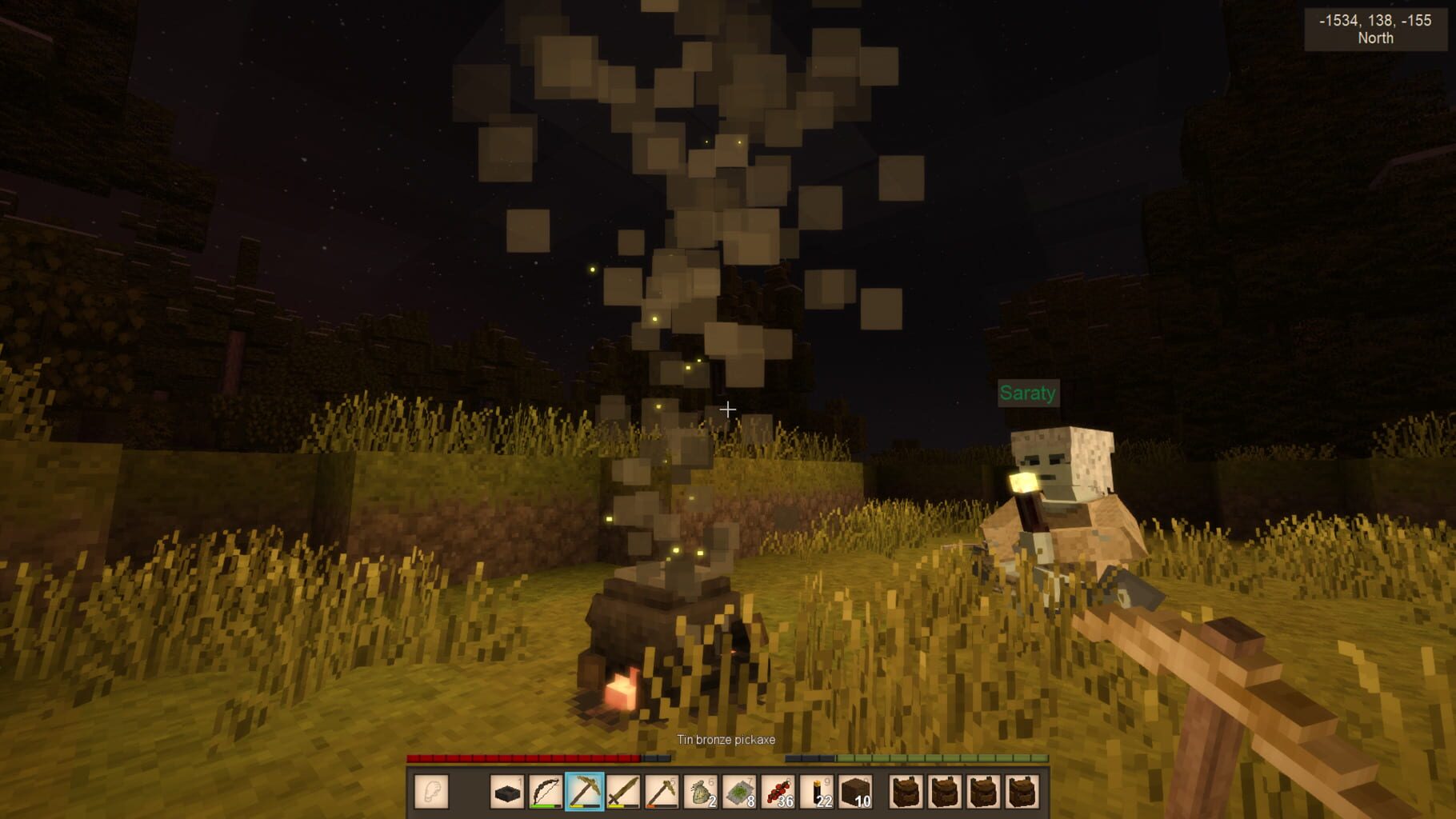
The main friction point for parents is the lore layer. The game features temporal distortions, rust-covered monsters called Drifters, and eerie sound design during in-game storms. While it is nowhere near explicit gore, the atmosphere can get genuinely spooky. Fortunately, the developers built exhaustive world-generation toggles. If your kid wants a pure wilderness survival experience without eldritch monsters interrupting their blacksmithing, you can disable hostile mobs entirely during world setup.
As a PC-only title sold directly through its own storefront rather than Steam, Vintage Story operates outside standard app-store dynamics. There are no virtual currencies or daily login streaks to manage. Multiplayer exists, but because servers are self-hosted by players, keeping your kid on local single-player or a private server with friends is the safest play.