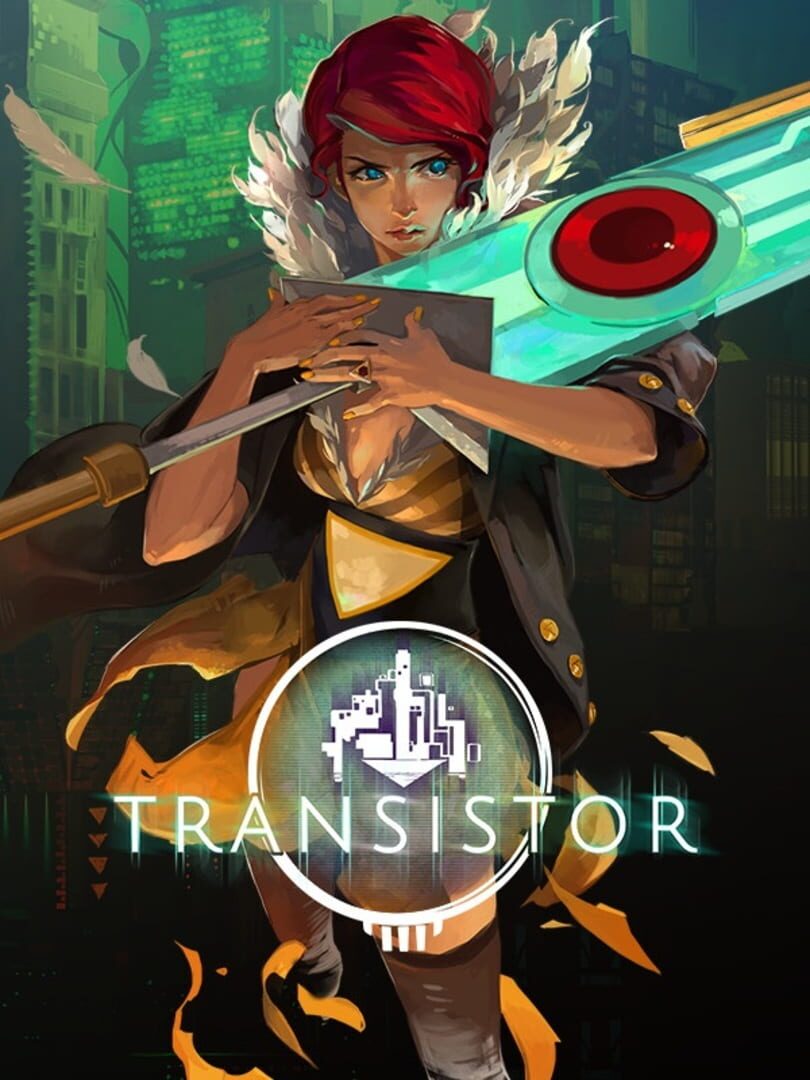
The blueprint for Supergiant's best ideas
If a teenager in your house has sunk fifty hours into Hades or Hades II, going back to Transistor is like listening to a favorite band's sophomore album and realizing it has no skips. Released in 2014 after Bastion, it trades fast arcade button-mashing for something much more deliberate.
The star of the show is the Turn() system. At any point during a fight against the Process (the white, geometric robots erasing the city), you can hit a button to stop time. A resource bar at the top of the screen lets you plot out your exact footsteps and attacks, showing you a preview of how much damage you'll deal and where enemies will get knocked back. Unpause, and Red executes the whole choreography in a flash, leaving you to dodge in real-time for a few seconds while your cooldown recharges. It bridges the gap between action games and turn-based strategy in a way few games ever have.
How the Function system teaches tinkering
Where most RPGs ask players to grind for higher numbers, Transistor asks them to experiment with combinations. Each of the 16 Functions is named like a computer subroutine—Breach(), Spark(), Jaunt(), Mask()—and represents a citizen of Cloudbank absorbed by the sword.
- Active slot:
Spark() fires a fast, splitting projectile.
- Upgrade slot: Attach
Spark() to Breach() (a long-range sniper shot), and your sniper shot now splits into multiple beams.
- Passive slot: Equip
Spark() as a passive, and enemy attacks have a chance to spawn decoy clones of Red.
Because the game locks character biographies behind using each Function in all three slot types during battle, players are constantly nudged out of their comfort zone. Even losing health feeds into this: instead of a frustrating 'Game Over' screen, losing your health bar temporarily breaks one of your equipped Functions, forcing you to survive the rest of the encounter with your backup powers and rethink your build at the next access point.
A note on the ending and atmosphere
Transistor is an unapologetically melancholy game. Darren Korb's soundtrack—featuring vocalist Ashley Barrett as Red's singing voice—drives the whole atmosphere. There is even a dedicated button on the controller whose sole purpose is to make Red stop and hum an improvised melody over whatever track is currently playing.
The narrative deals with what happens when a technocratic society becomes obsessed with endless polling, consensus, and optimization until the system literally eats itself. At the end of the story, after defeating the final boss in an empty, rebuilt city, Red impales herself on the Transistor so her consciousness can join her companion inside the weapon's digital world. Within the sci-fi logic of the game, the credits imagery shows them reunited inside the country cottage within the sword, so it reads as a tragic, romantic sacrifice rather than bleak nihilism—but if a kid in your house is sensitive to themes of suicide or loss, play alongside them or talk through the ending together.