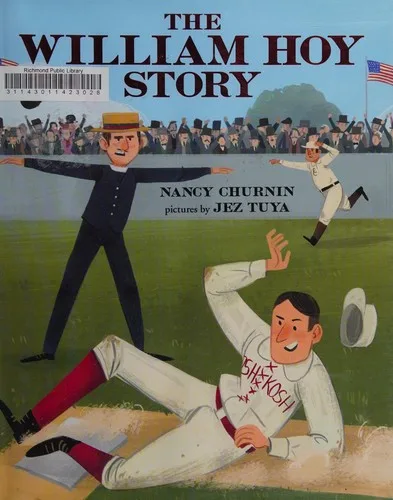
Most kids think baseball has always looked the way it does now. The William Hoy Story shatters that by showing a time when players had to yell at the umpire to know if a pitch was a ball or a strike. For a deaf player like Hoy, that system was impossible.
What makes Nancy Churnin's book stand out is that it doesn't treat Hoy's deafness as a tragedy. Instead, it’s a catalyst for innovation. Hoy didn't just 'fit in'; he improved the game for everyone. This is a crucial distinction in how we talk about disability with kids—it's not just about being 'nice' to people, it's about recognizing that different perspectives lead to better solutions for the whole group.
The 'Dummy' Conversation
You can't talk about this book without addressing the name. In the 19th century, 'dumb' simply meant 'unable to speak.' Hoy famously corrected people who called him William, insisting on 'Dummy.' For a modern kid, this word is a Tier 1 insult.
Use the author’s note at the back to explain that language evolves. It’s a perfect opportunity to talk about how words that were once descriptive can become hurtful over time, and why we use different terms today. It adds a layer of 'word history' to the 'sports history' already in the book.
Why it works for reluctant readers
If you're trying to build the language comprehension strand of the reading rope, this is your tool. The narrative is linear and high-stakes (will he make the big leagues?), which keeps kids engaged. For kids with dyslexia or those still mastering decoding, the clear, expressive illustrations by Jez Tuya provide enough context clues to keep them moving through the text without frustration.
It’s a quick read—maybe 15 minutes—but it sticks. You'll find yourself mentioning Hoy the next time you see a strikeout on TV, and that’s the mark of a biography that actually landed.