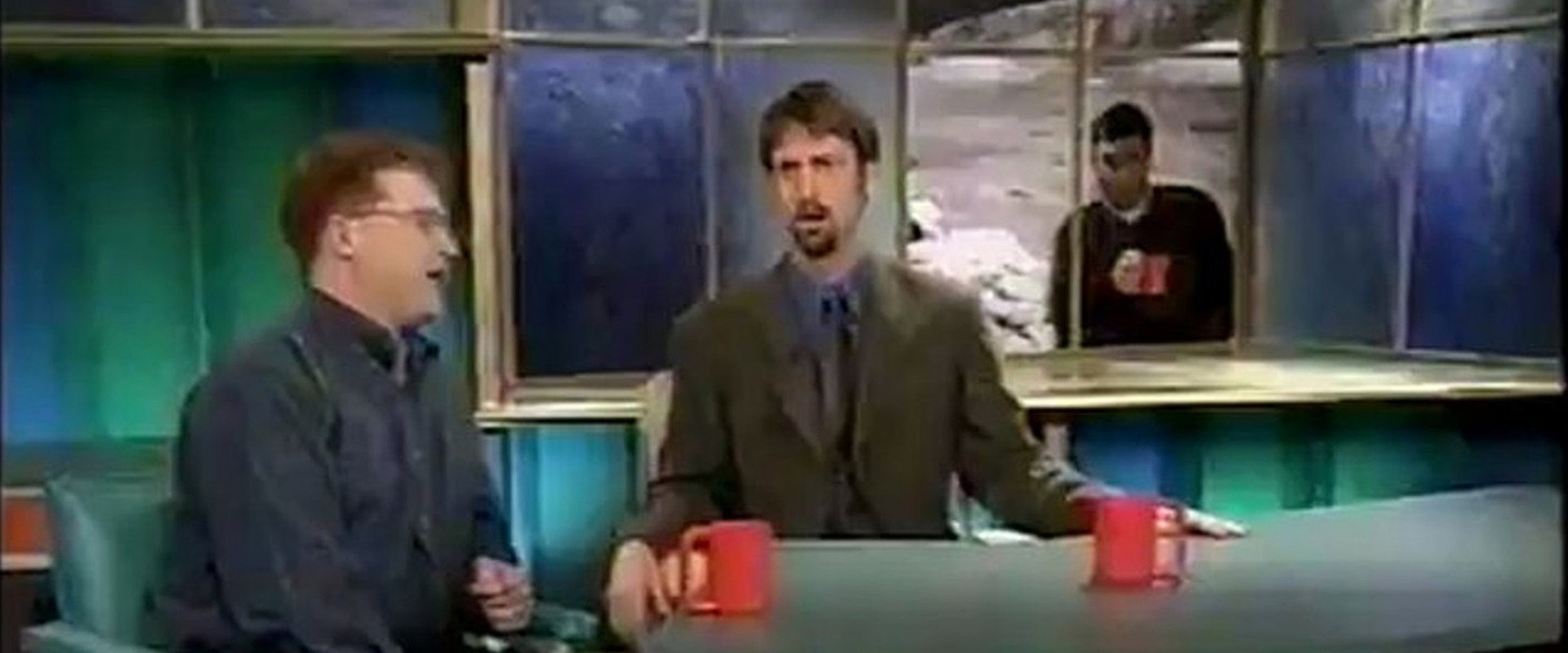
The Patient Zero of Prank Culture
If you want to understand why your teenager thinks it’s funny to film themselves bothering strangers in a Target, you have to look at the 1998 iteration of The Tom Green Show. Before the high-production stunts of modern creators, there was just a guy from Canada with a camcorder and a complete lack of a shame reflex.
Tom Green didn't just push the envelope; he mailed the envelope to his parents' house and then set the mailbox on fire. While the show is technically a "talk show," that label is a total misnomer. The desk and the guests were just a flimsy framework for the field segments where Green would do things like paint his parents' house while they slept or fill their living room with live farm animals. It was guerrilla filmmaking at its most abrasive.
The Critics vs. The Cringe
There is a massive disconnect between the 91% Rotten Tomatoes critic score and the fact that TV Guide ranked this the 41st worst show of all time. Critics today look back at Green as a subversive genius who deconstructed the medium of television. They see a pioneer of "anti-comedy."
But for a parent watching this in 2026, the experience is less about "artistic deconstruction" and more about the sheer hostility of the humor. Unlike modern prank shows that often rely on heavy editing or staged reactions, Green’s early work feels uncomfortably real. The confusion on the faces of the people he encounters isn't "content"—it’s genuine distress. If you’re looking for a "vibe," this isn't the fun, high-energy chaos of Jackass. It’s a slow, awkward, and often mean-spirited grind.
Why the "Legacy" Matters
The show essentially died when Green was diagnosed with testicular cancer in 2000, but its DNA is everywhere now. It’s the direct ancestor of every "social experiment" video on the internet.
"I loved his show even though some of his pranks on his parents were so OTT wrong... like filling their house with farm animals." — Reddit user
That quote sums up the central conflict of the show: it’s hard to look away, but you feel greasy for watching. If you’re a parent trying to explain why "pranking" isn't just an excuse to be a jerk, this show is the ultimate cautionary tale. It captures a specific moment in the late 90s when we were all so bored that we mistook cruelty for edge.
If you decide to revisit this, do it for the historical context, not the laughs. You’ll likely find that the "shock" has evaporated, leaving behind nothing but a very loud man making life difficult for people who were just trying to eat their lunch. It’s a fascinating artifact, but as entertainment, it’s mostly just exhausting.